


High Productivity
- PIQE maintains high image quality even with abbreviated scan times.
- The combination of advanced imaging technologies reduces total examination time
- Address challenging patients with motion-resistant imaging
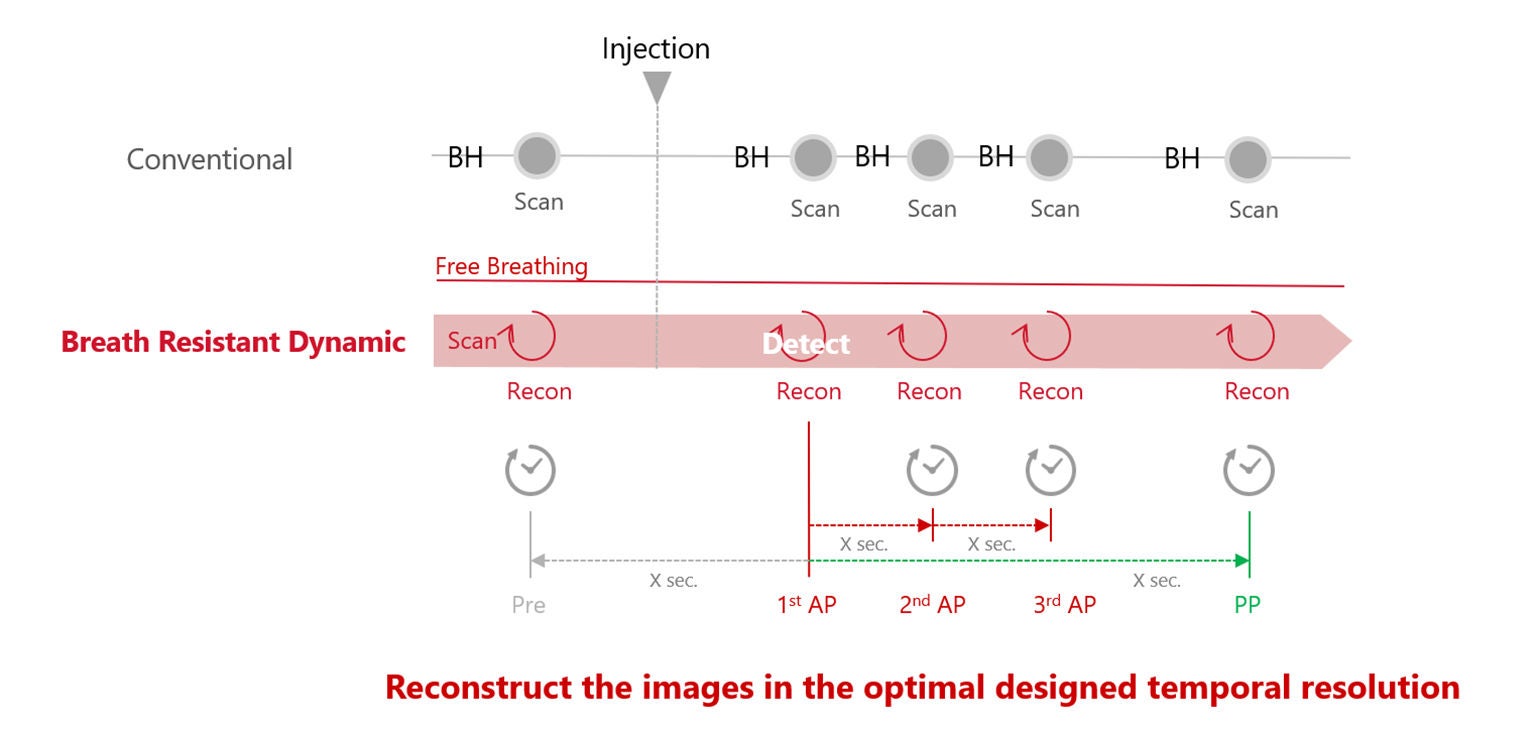
- Breath Resistant Dynamic relieves patients from the burden of breath-holding and eliminates the need for precise contrast timing
Quick Examination
Elevating fast imaging to a new standard
PIQE elevates image obtained with single-shot FASE sequence by compensating for SNR and resolution limitations, delivering fast yet diagnostically robust images.
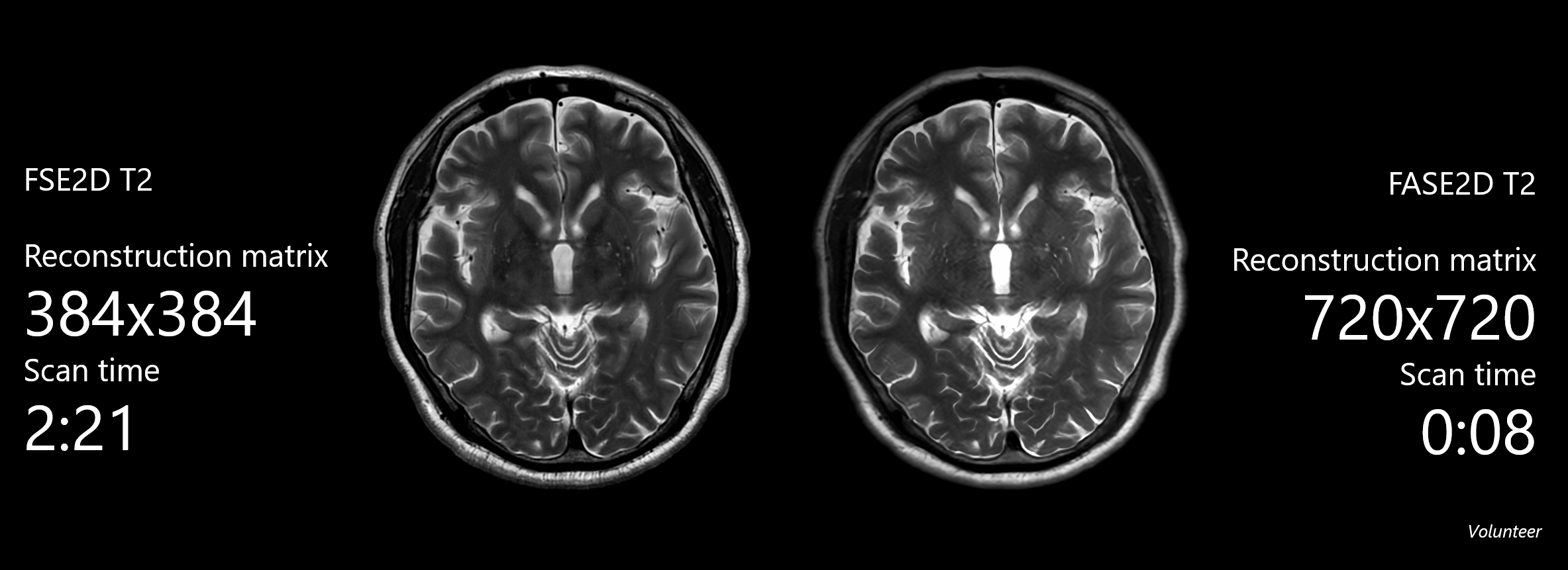
Accelerating the entire routine with Combined Intelligence
By combining advanced Imaging technologies, high-speed imaging extends across the entire workflow - enabling fast, robust routine exams.
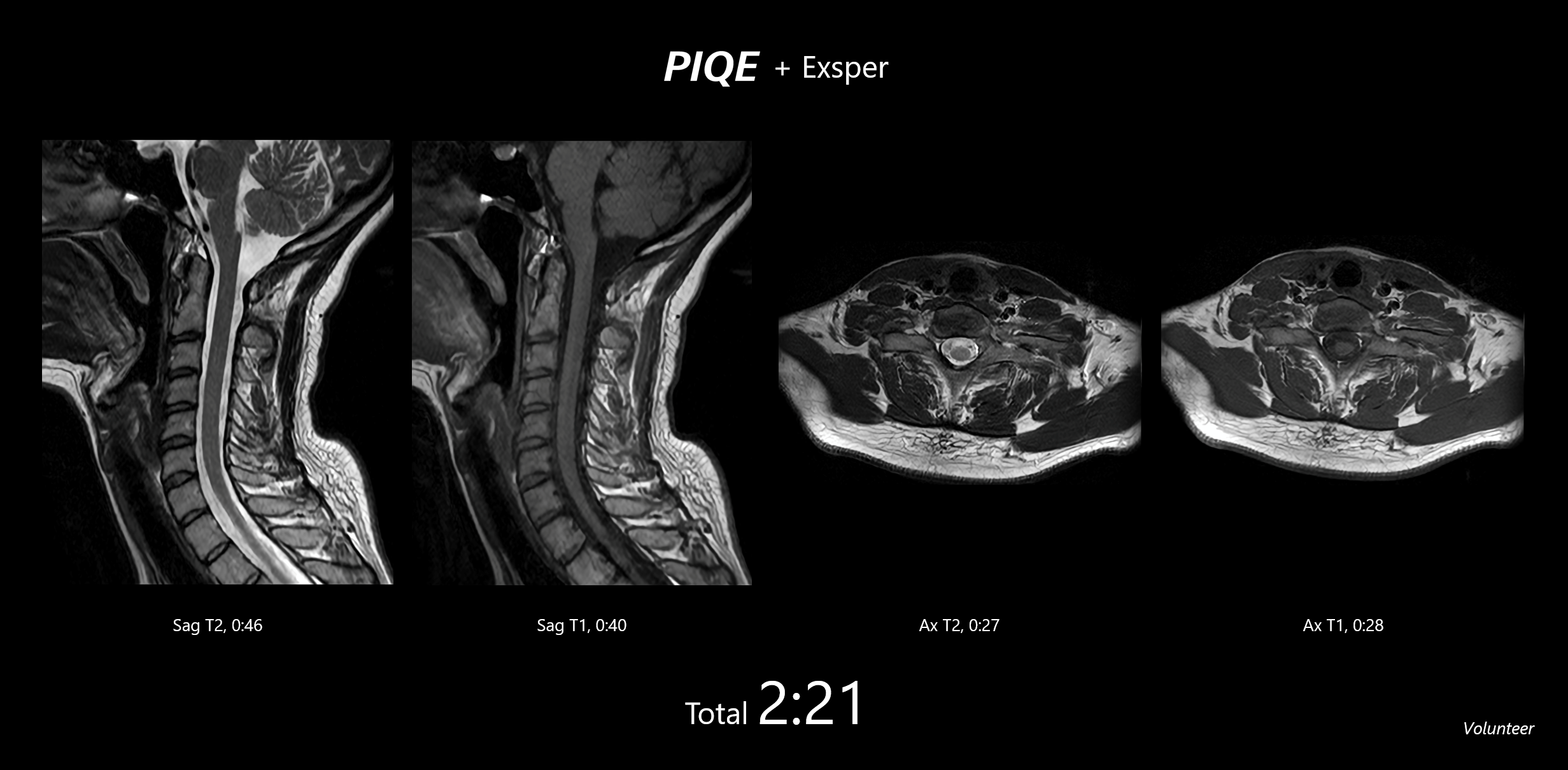
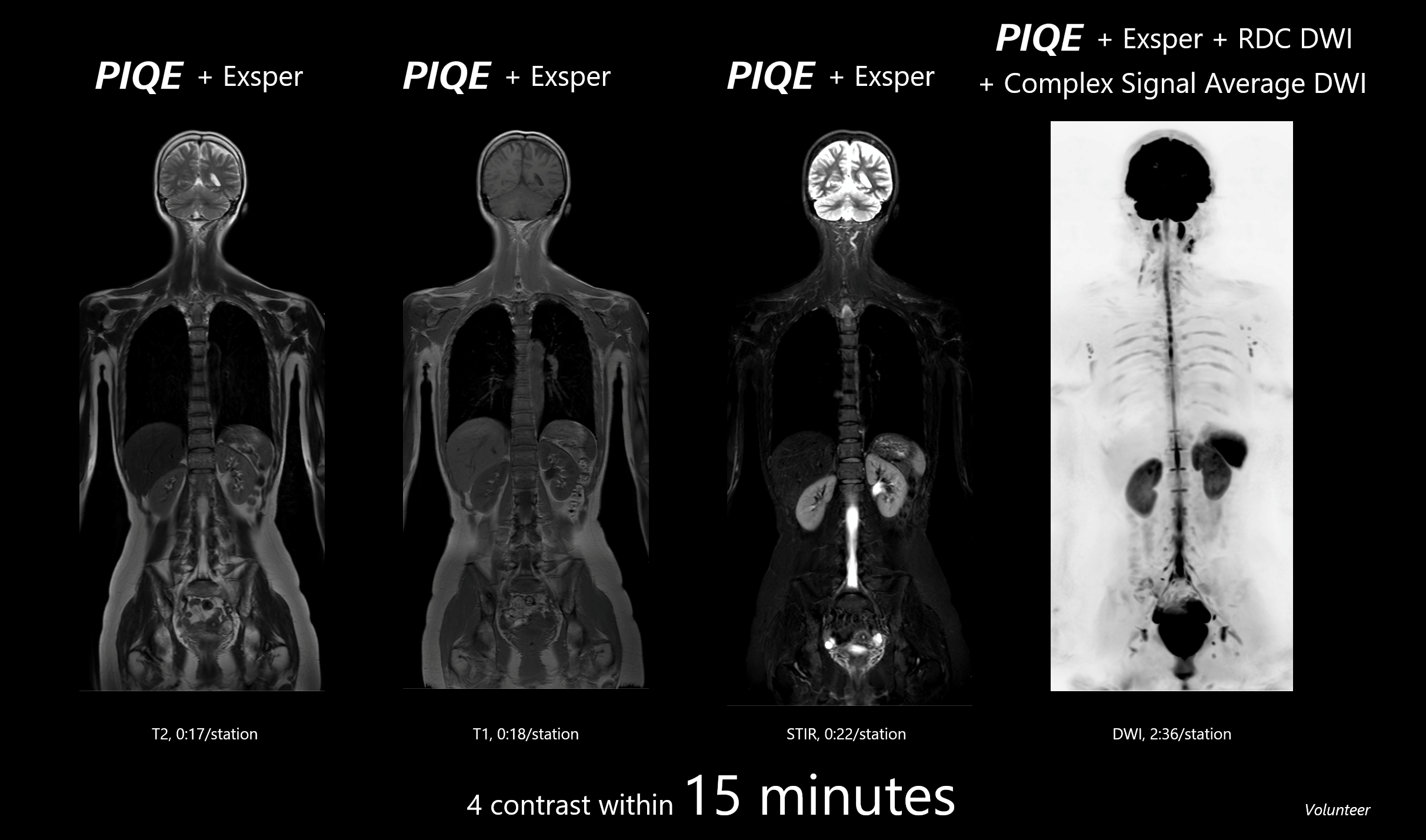
Achieving quick and high SNR images is now possible with Canon’s intelligent new technologies
AiCE combines with rapid scanning to boost productivity In combination with unique Canon scan acceleration technologies like Compressed SPEEDER, you have the ability to focus on faster scans and restore SNR by removing noise during image.
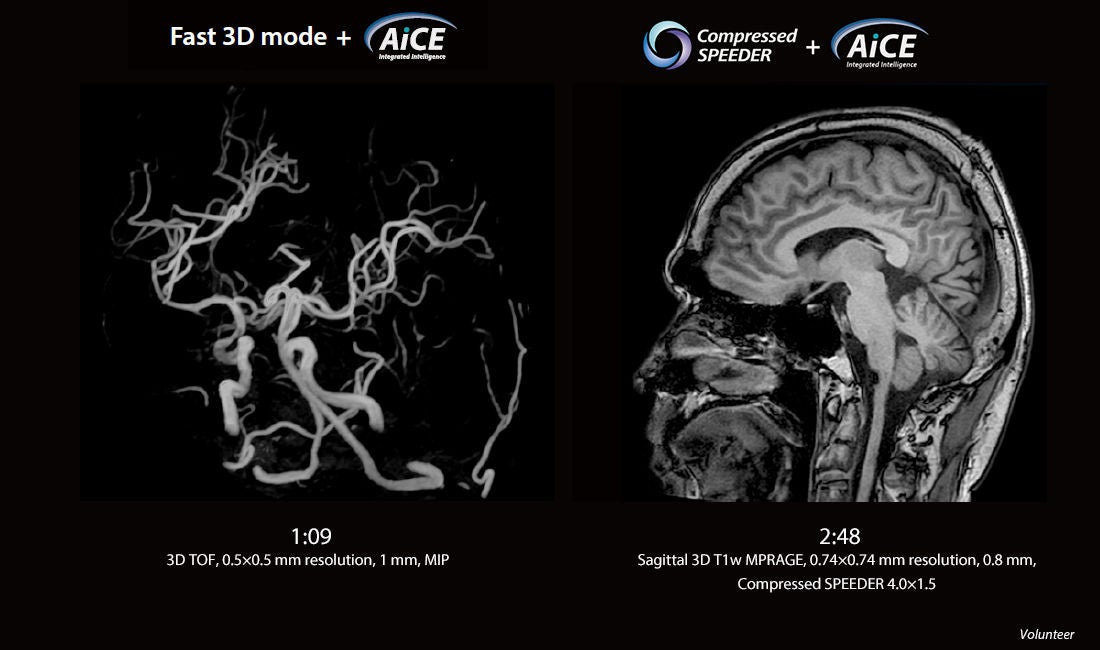
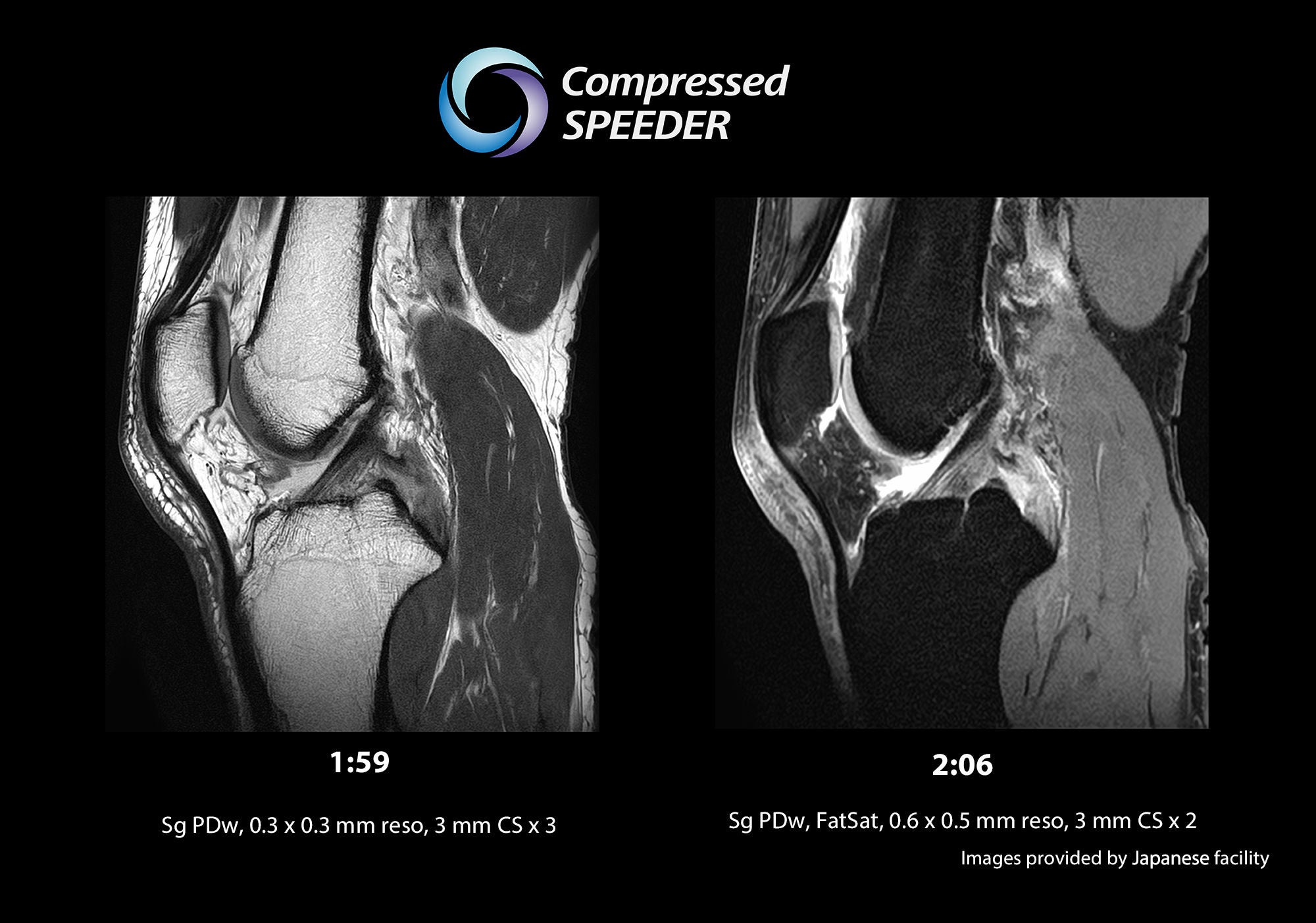
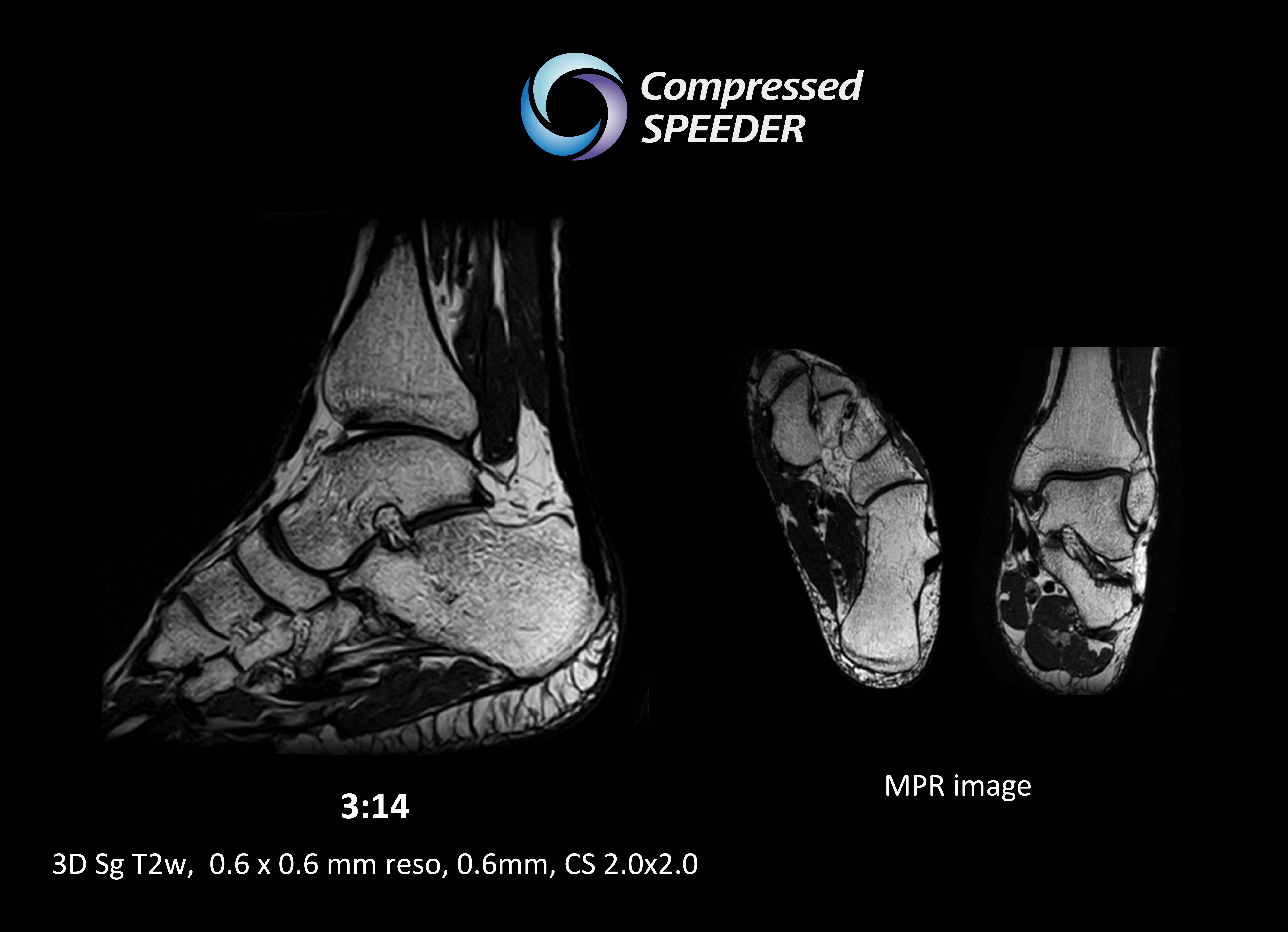
Compressed SPEEDER accelerated scanning in 2D and 3D
Compressed SPEEDER is a unique approach which maintains excellent imaging performance while enabling high-speed imaging at up to four times current scan speeds by combining with 2D scans, or while enabling high resolution imaging by combining with 3D scans.
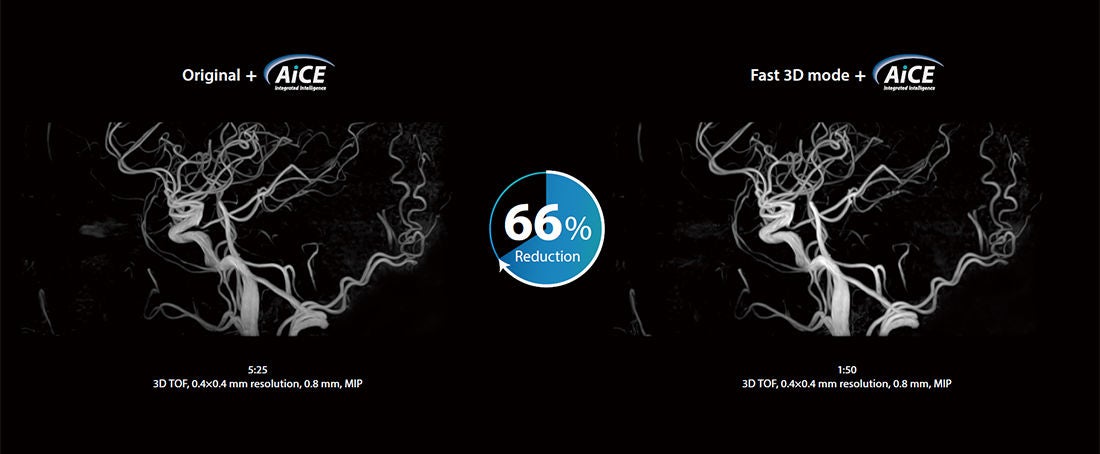
Fast 3D mode reduces scan times up to 50%
Fast 3D mode reduces scan times up to 50%** for different contrast weighted images while maintaining homogeneity and fat suppression.
- as compared to standard sequence.
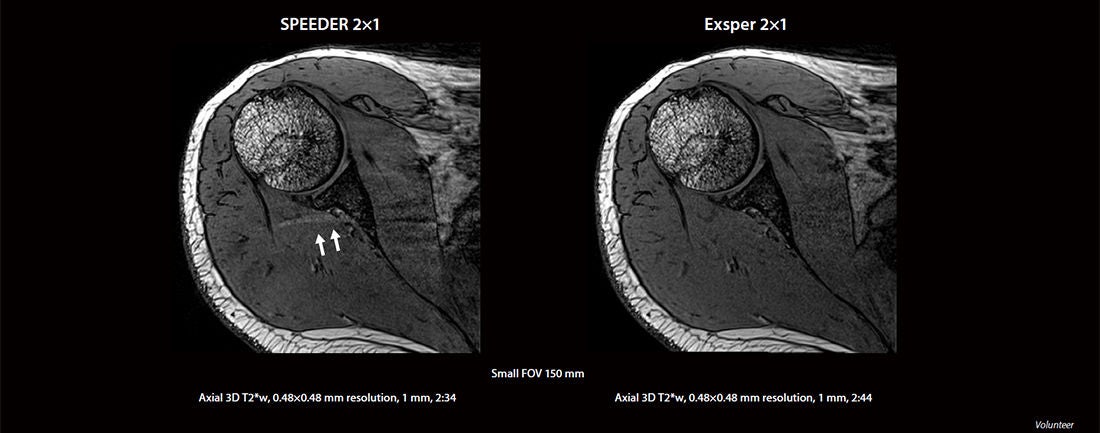
Accelerate scans with unique Exsper parallel imaging
Exsper is a unique parallel imaging scan acceleration technique enabling reduced scan time for a broad range of sequences. Robust imaging capability is expanded to increase scan resolution, while reducing the chance for aliasing artifacts (white arrow).
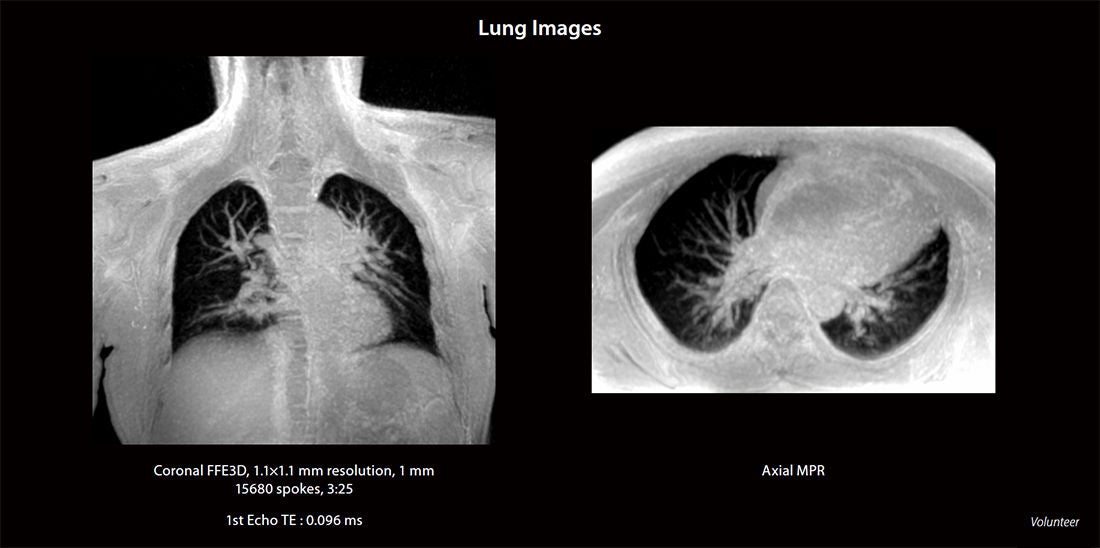
Accelerated UTE enables ultra-short imaging for lung and bone
Accelerated ultrashort TE MRI incorporates an advanced parallel imaging algorithm to boost scan efficiency in short TE applications. Enhanced imaging speed empowers radial UTE, a promising tool for clinical applications such as lung and bone imaging.
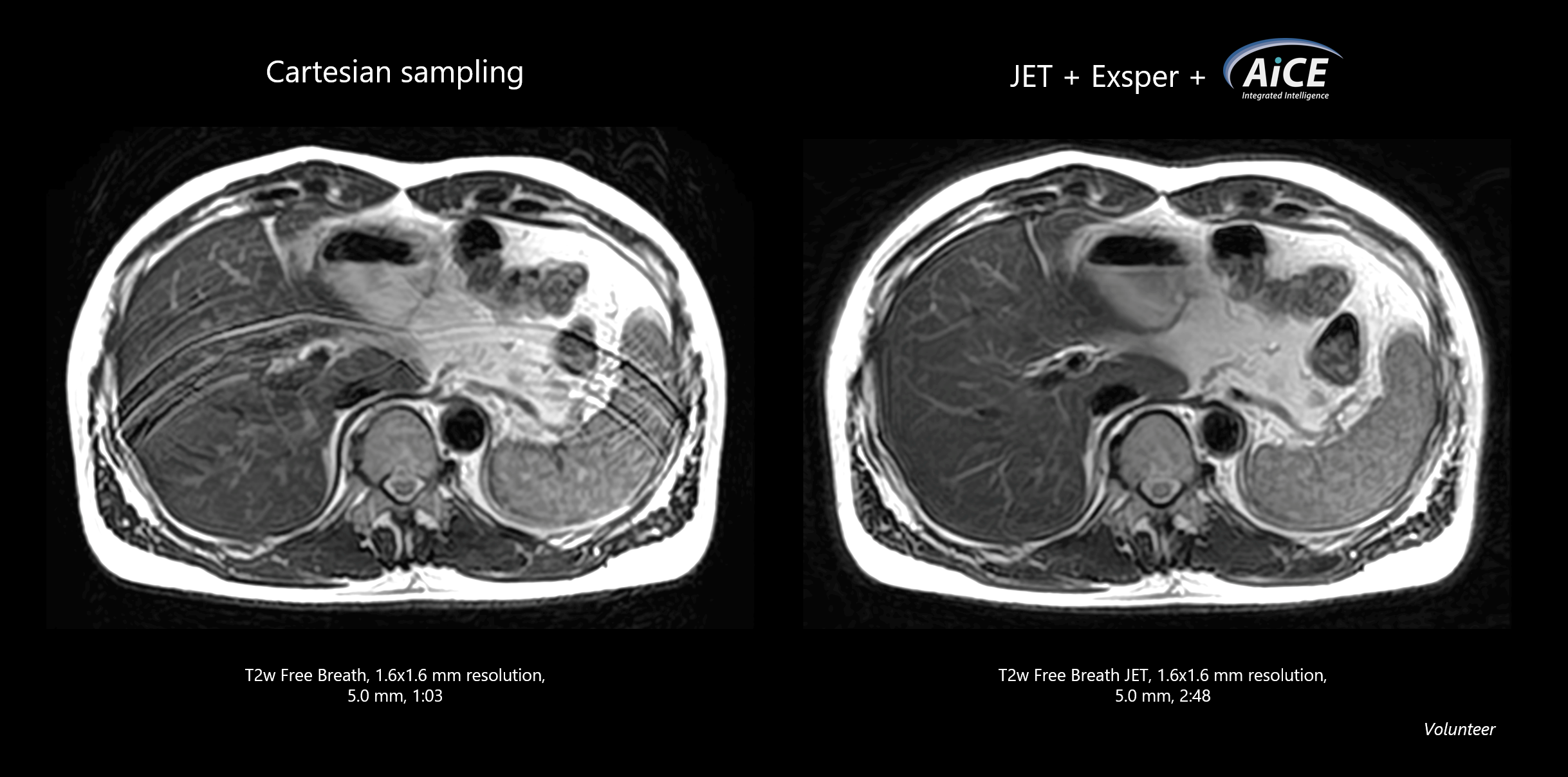
Motion-resilient Imaging
The combination of JET and AiCE enable robust imaging without breath-holding, reducing motion-related variability and supporting efficient, high-productivity workflows
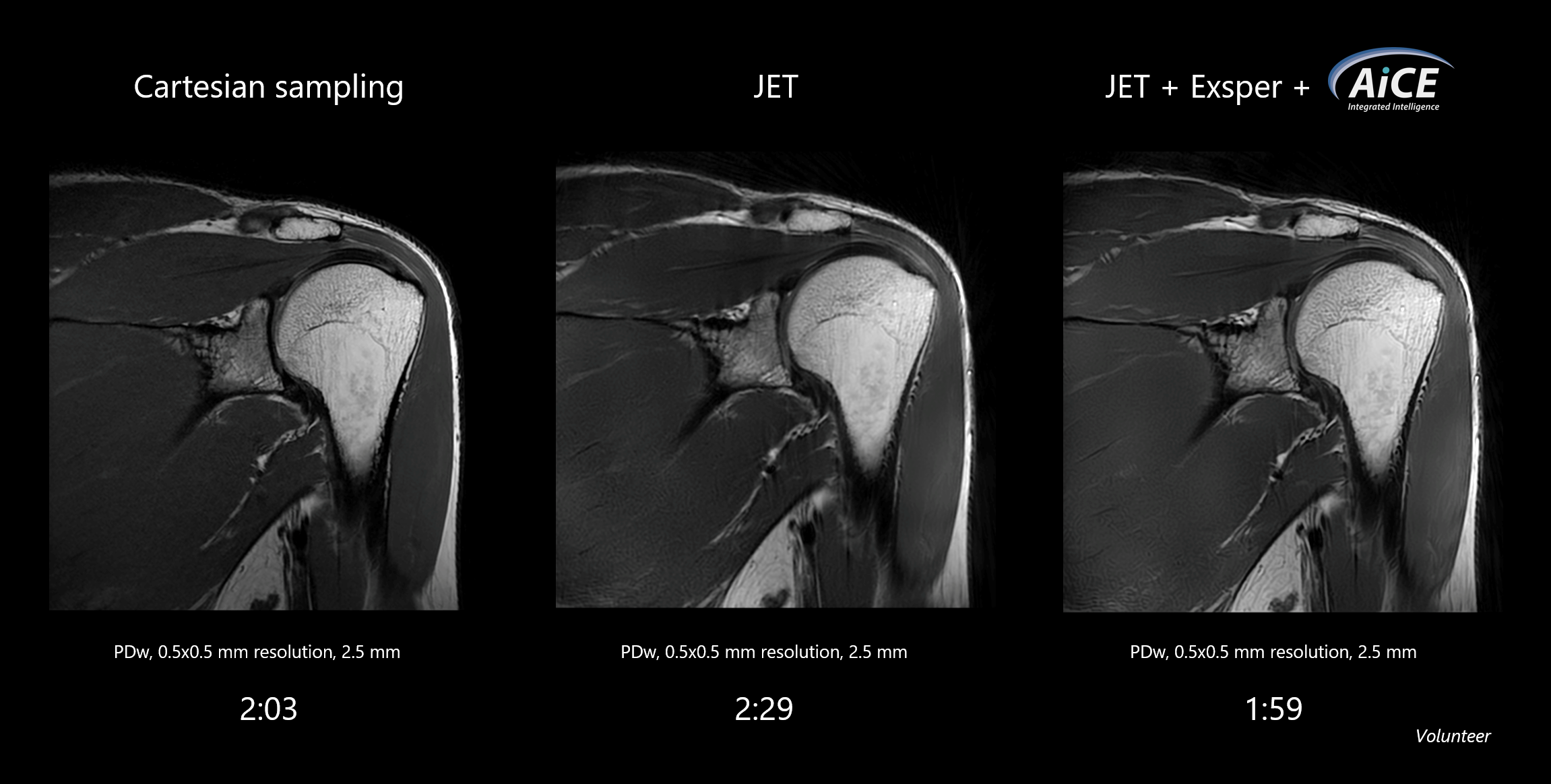
Speeding up motion-robust imaging
When Exsper is applied to JET, Echo factor remains unchanged and blade width becomes thicker.
Applying Exsper increases the blade width, thereby reducing the number of blades required for a given k-space fill ratio and consequently shortening the imaging time.
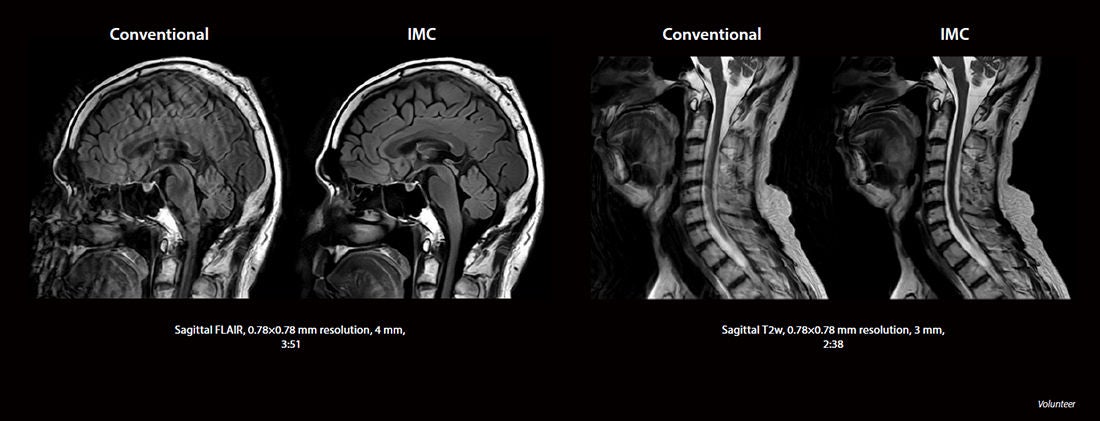
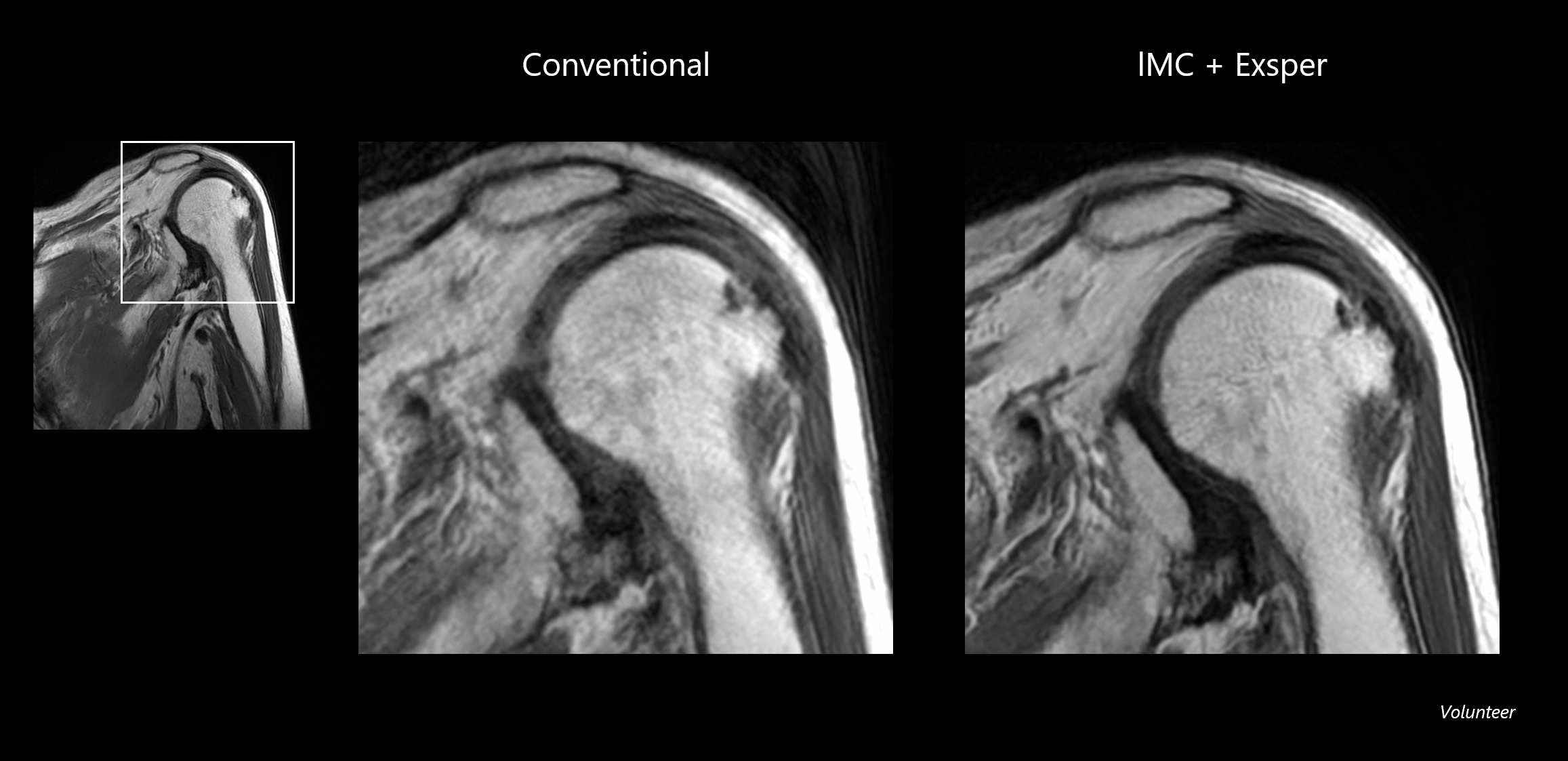
Iterative Motion Correction (IMC)
IMC is a motion correction technology for reducing motion artifacts caused by sporadic movements. Powered by Altivity, IMC utilizes Deep Learning based methods for motion correction in addition to traditional model-based correction.
Breath Resistant Dynamic
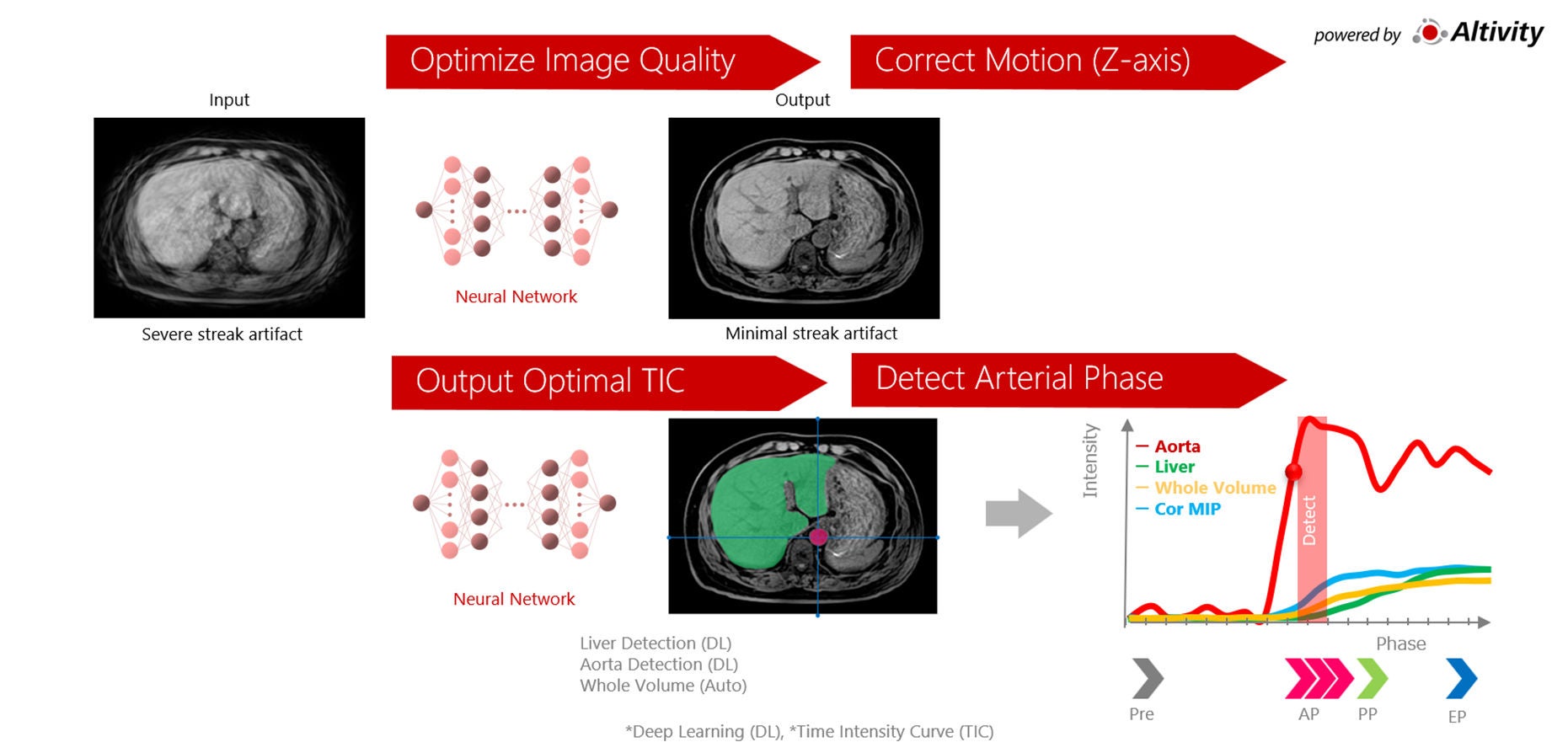
Free-breathing for challenging patient with Breath Resistant Dynamic
Breath Resistant Dynamic enables a free-breathing, single continuous scan for contrast-enhanced liver imaging. Utilizing deep learning reconstruction, high-quality, robust images at optimal time points can be produced without contrast timing adjustment, making it possible to accommodate challenging patients who have difficulty in holding their breath.
Social Media


