


Solutions for management of chronic coronary artery syndromes
The diagnosis of coronary artery disease often begins when a patient presents with chest pain or other signs of ischemia. As a first step the patient’s risk and clinical likelihood of coronary artery disease is established, which includes laboratory biochemical testing, ultrasound at rest to assess left ventricular function and resting ECG. Thereafter, anatomical evaluation can be performed with coronary CT angiography to visualize the coronary lumen and wall, while functional imaging techniques such as stress echocardiography or stress MR allow identification of myocardial ischemia. For decisions on revascularization, information on both anatomy and ischemia is required. Canon Medical supports you along each step of the diagnostic and therapeutic pathway in your efforts to improve the outcome for patients through our innovative imaging solutions.

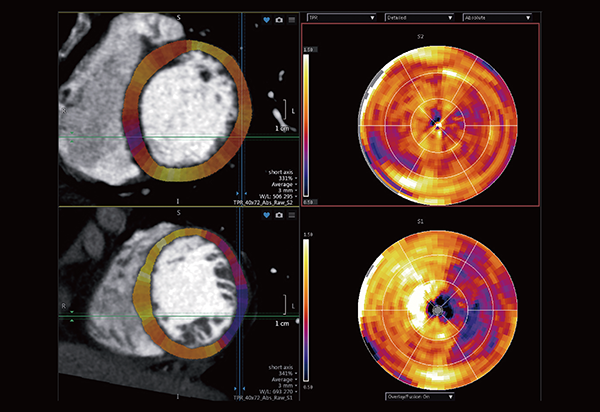
- Sørgaard, M. H., Linde, J. J., Kühl, J. T., Kelbæk, H., Hove, J. D., Fornitz, G. G., ... & Abdulla, J. (2018). Value of myocardial perfusion assessment with coronary computed tomography angiography in patients with recent acute-onset chest pain. JACC: Cardiovascular Imaging, 11(11), 1611-1621.
US
2D / 3D Wall Motion Tracking
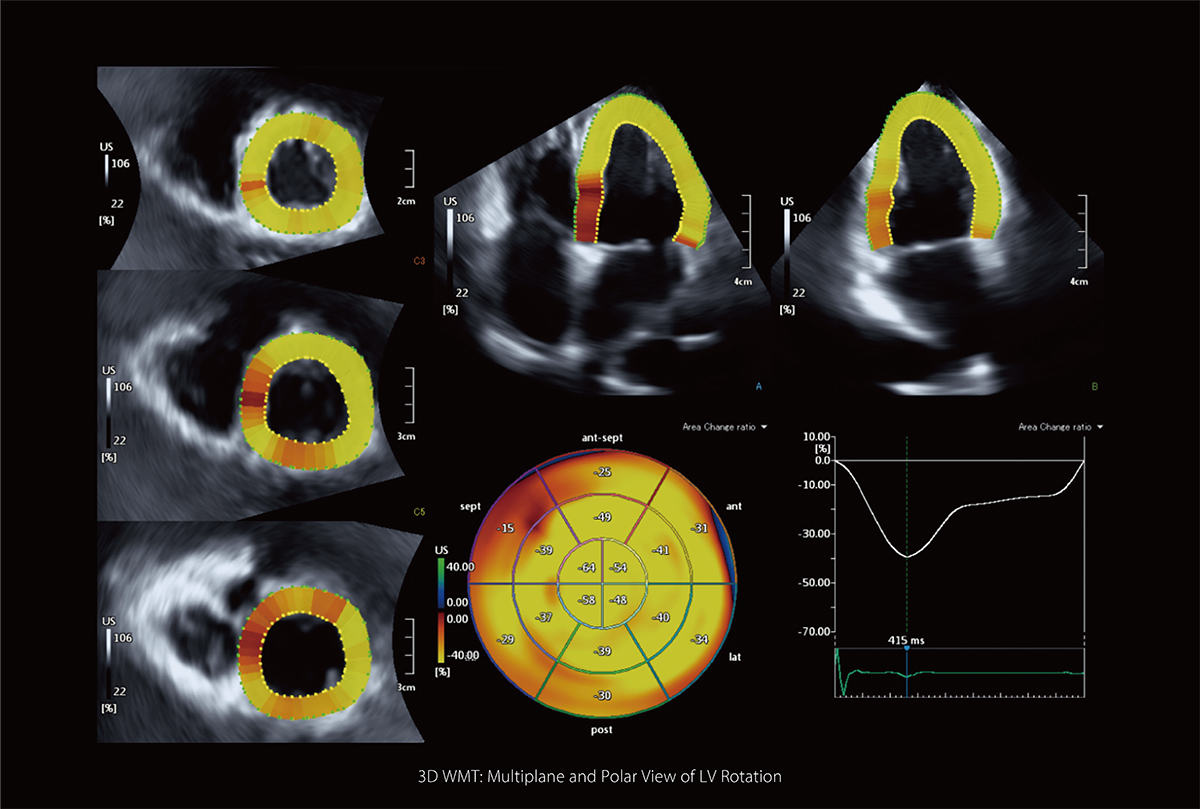
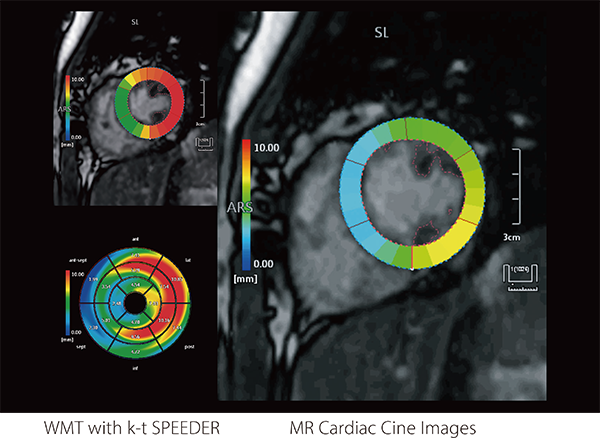
Aplio’s advanced Wall Motion Tracking technology provides visual and quantitative access to global and regional myocardial wall motion dynamics in 2D and 3D. What’s more, you can assess and quantify parameters such as strain, strain rate or displacement either during the examination or anytime later, on the console or workstation.
White paper
Evaluation of Cardiac Function Using Myocardial Strain Analysis
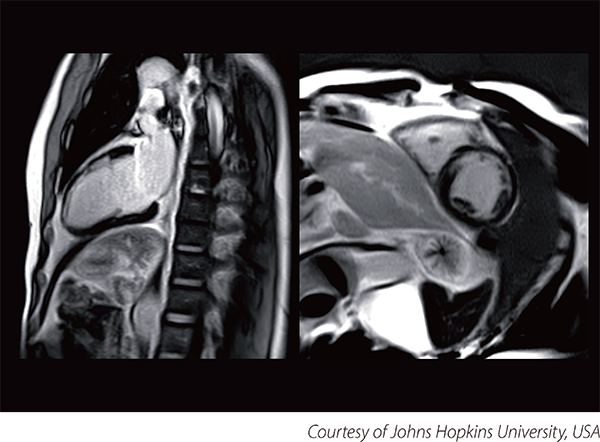
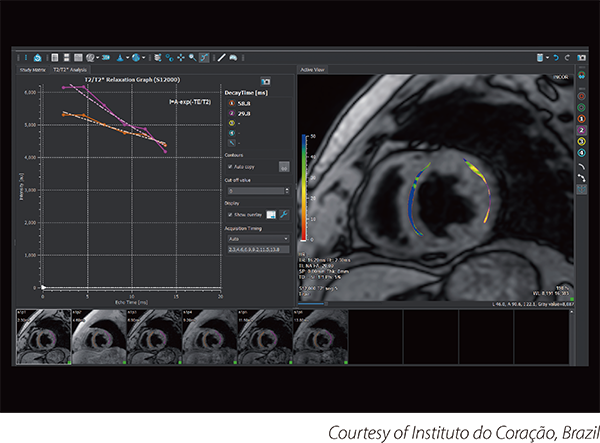
“With Wall Motion Tracking, local wall motion abnormalities associated with ischemia or cardiomyopathy can be evaluated using automatically calculated myocardial strain values. The presence of cardiac motion dyskinesia, which is an indication for cardiac resynchronization therapy, can also be detected by analyzing multiple myocardial strain curves. In addition, global strain, which is a useful index for prognostic assessment and treatment planning in patients with cardiac failure, can be calculated automatically using both short-axis and long-axis images.”
Dr. Michinobu Nagao
Department of Diagnostic Imaging and Nuclear Medicine,
Tokyo Women’s Medical University, Tokyo, Japan

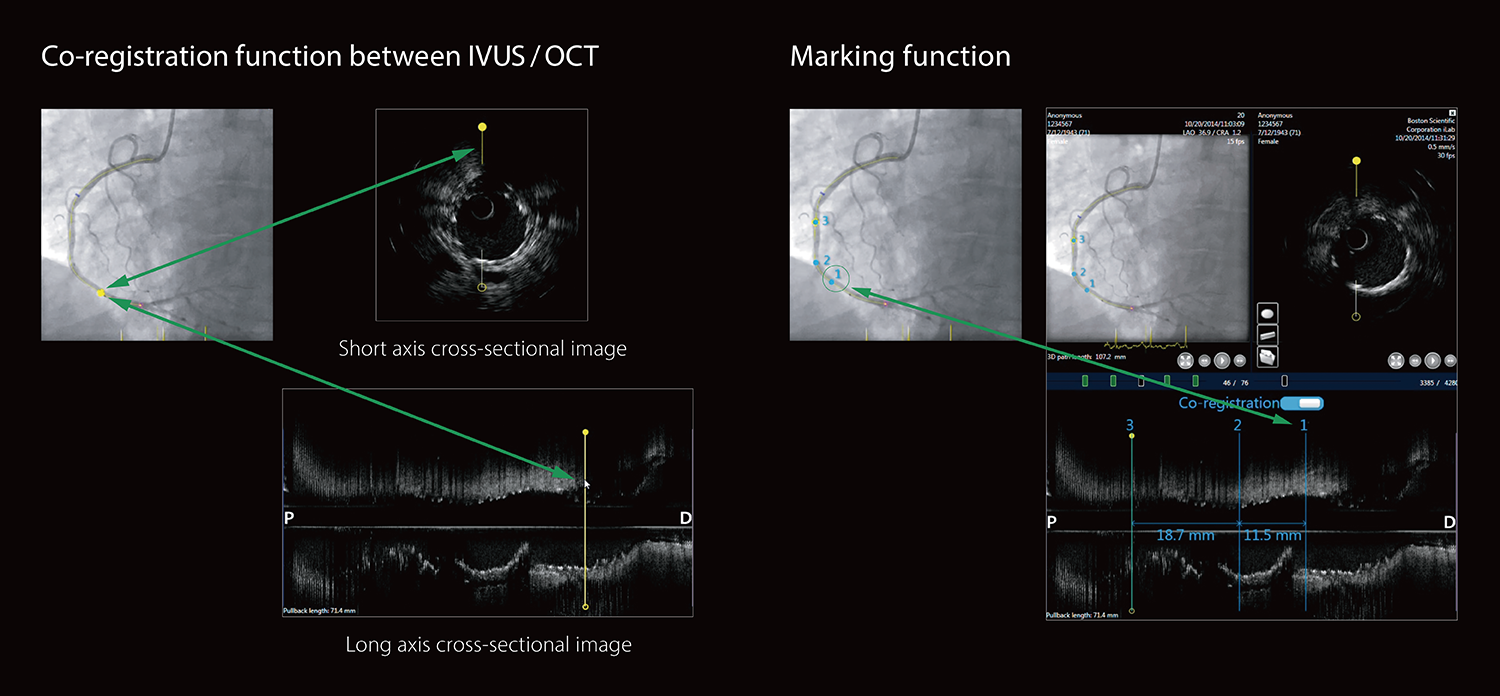
IV-LINQ*
IGT
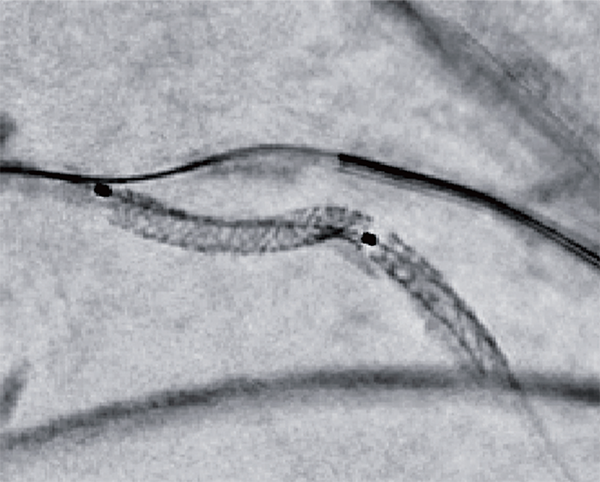
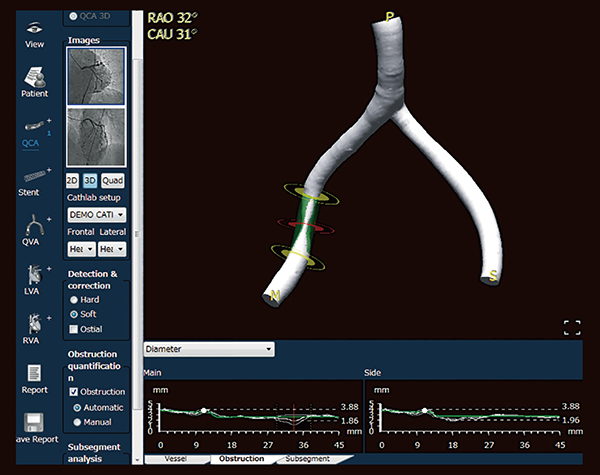
This technology lets you position the IVUS / OCT relative to the angiographic image, while annotating it with markers to better facilitate stent planning and placement.
*Designed and manufactured by Pie Medical Imaging
Social Media


