

The Vantage Galan 3T / Supreme Edition Makes its Own Path in 3-Tesla MRI Systems?
Takanobu Yamashiro, RT, PhD
Minoh City Hospital is a 317-bed core community hospital located in the northern region of Osaka Prefecture. Since its opening in 1981, our hospital has provided patient-centered, safe, and highquality medical care, based on our hospital’s philosophy, contributing to community healthcare. In April 2024, our hospital replaced our existing 3T MRI system manufactured by another vendor with the Vantage Galan 3T / Supreme Edition manufactured by Canon Medical Systems Corporation. In this case study we summarize our experience as a user of the Vantage Galan 3T / Supreme Edition, complemented by the presented clinical MR images.
Why Vantage Galan 3T / Supreme Edition?
There are three main reasons why we decided on the Vantage Galan 3T / Supreme Edition from several candidates:
The first is that it employs a high-quality 3T magnet with the superior static magnetic field (B0) homogeneity (0.05 ppm over a 30 cm DSV), which is newly developed by Canon Medical Systems Corporation. We expected that the 3T system employing the new magnet would allow larger field of view (FOV) imaging (up to 55×55×50 cm3), more homogenous fat suppression, and distortion-reduced diffusion-weighted image acquisition, compared to the previous 3T system (Figure 1).
The second reason is that the 3T system incorporates two types of deep learning-based reconstruction (DLR) technologies: one is Advanced intelligent Clear-IQ Engine (AiCE) for the noise reduction1, the other is Precise IQ Engine (PIQE) for the super resolution2. In particular, PIQE enables highsignal-to-noise ratio (SNR) and high-resolution images to be generated from low-SNR and low-resolution images via two deep convolutional neural networks (DCNNs) not only for denoising but also for upsampling (Figure 2). PIQE might be a groundbreaking approach to accelerate the acquisition or to improve the image quality compared to conventional techniques, since it allows a more flexible adjustment of the number of phase-encoding steps contributing to the acquisition time and image quality. Also, since PIQE permits the retrospective reconstruction for previously acquired images, it seemed to be user-friendly to be able to efficiently optimize the image quality, adjusting the denoising level after acquisition.
The third reason is that the 3T system employs the MR Theater, which allows patients to watch virtual reality videos projected onto the dome-shaped screen inside the bore during MRI examinations. With the MR theater, we wondered if the claustrophobic or pediatric patients could undergo the MRI examinations without anxiety. For these reasons, our decision-makers concluded that the 3T system was the most suitable for our hospital’s philosophy.
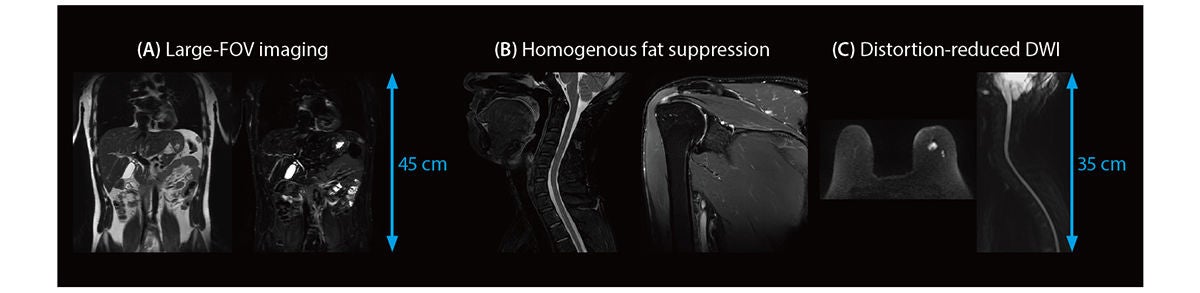
- Figure 1: Expectations for the high-quality magnet with the superior static magnetic field homogeneity
(A) T2-weighted image (left) and STIR image (right) of the abdomen in the coronal plane with FASE 2D. (B) Fat-suppressed T2-weighted image with SPAIR of the cervical spine in the sagittal plane (left) and of the shoulder in the coronal plane (right) with FSE 2D. (C) Diffusion-weighted image with SPAIR of the breast in the axial plane (left) and of the cervical spine in the sagittal plane (right) with SE-EPI.
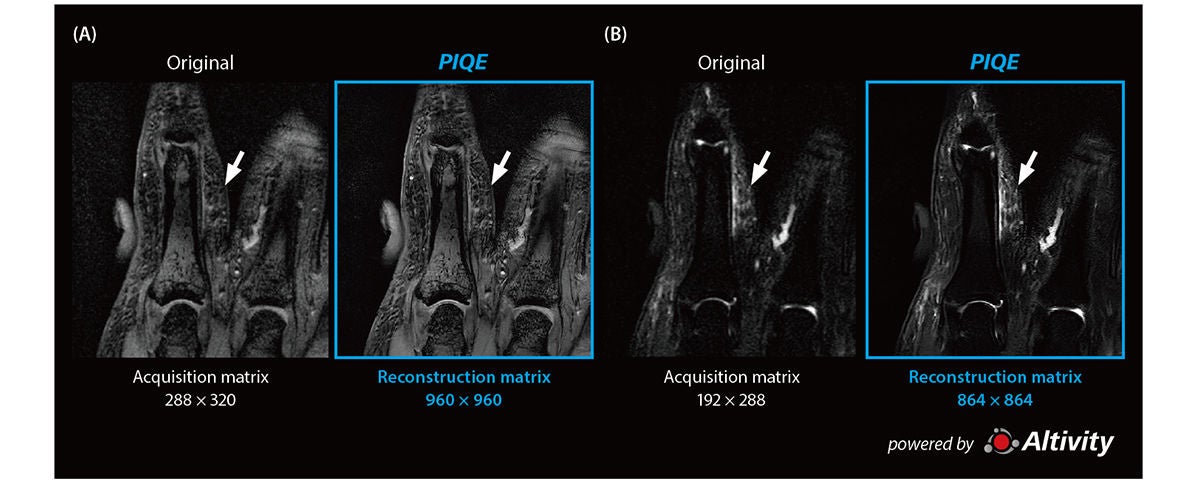
- Figure 2: The effect of Precise IQ Engine (PIQE) on small-FOV imaging
(A) T2*-weighted image of the fingers in the coronal plane without PIQE (left) and with PIQE (right). (B) Fat-suppressed T2-weighted image with SPAIR of the fingers in the coronal plane without PIQE (left) and with PIQE (right). White arrows in (A), (B) indicate lesions.

“As expected, we receive benefits from the high-quality magnet on the Vantage Galan 3T / Supreme Edition, especially in fat-suppressed images.”
Takanobu Yamashiro, RT, PhD
Assistant Chief Radiological Technologist
Department of Radiology
Minoh City Hospital, Osaka, Japan
The effects of the superior B0 homogeneity of the magnet on clinical MR images
The B0 homogeneity of the MRI magnet is directly related to the image quality.
As expected, we receive benefits from the high-quality magnet on the Vantage Galan 3T / Supreme Edition, especially in fat-suppressed images.
Generally, with fat saturation techniques based on CHESS or SPAIR, fat suppression is not likely to be homogenous and robust, especially in the complex-shaped regions containing a lot of air (e.g., neck, breast, pelvis)3, and in the off-centered regions (e.g., shoulder).
Figure 3 shows the MR images in a case of recurrent breast cancer, which were acquired on the first day of MRI examinations.
The fat suppression on the T2-weighted images with SPAIR seemed to be homogeneous and effective enough to observe the lesion. In this case, the breast shape was anatomically asymmetric, because the patient had undergone a segmental mastectomy for left breast cancer.
On conventional MRI systems, we would often struggle with fat suppression inhomogeneity, especially in the asymmetrically shaped breast, where it is difficult to separate the spectral peaks between fat and water due to B0 inhomogeneity. However, on the Vantage Galan 3T / Supreme Edition, we can acquire more homogeneous and effective fat-suppressed images as shown in Figure 3.
Therefore, we are confident that the homogenous fat suppression can be attributed to the superior B0 homogeneity of its magnet and precise active shimming to separate the spectral peaks.
In addition, there are various robust fat suppression techniques including Dixon techniques on the 3T system, in which Enhanced Fat Free is the most useful in the dynamic contrast-enhanced MRI of the breast because it is a unique technique with a dual CHESS pulse to reduce fat suppression inhomogeneity4.
We have observed that the strongest point on this 3T system is robust fat suppression due to the superior B0 homogeneity and many options for the suppression.
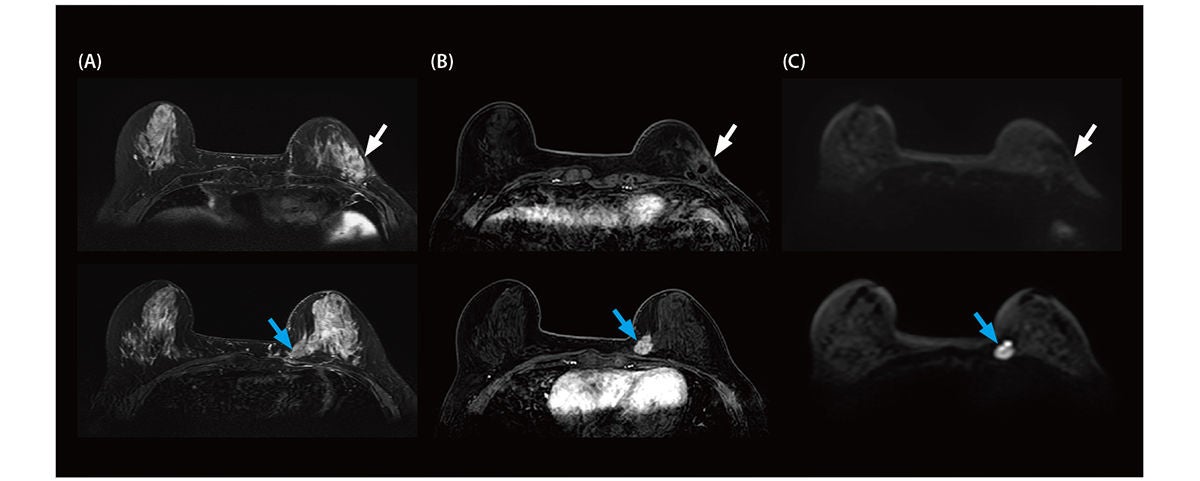
- Figure 3: Homogenous fat-suppressed images with robust fat suppression techniques in breast MRI
(A) Fat-suppressed T2-weighted images with SPAIR of the breast in the axial plane. (B) Fat-suppressed dynamic contrast-enhanced MR images with Enhanced Fat Free of the breast in the axial plane. (C) Diffusion-weighted images with SPAIR of the breast in the axial plane. The white arrows in the upper images indicate the region undergoing a segmental mastectomy. The blue arrows in the lower images indicate the lesion of recurrent breast cancer.
The new approach to high-acceleration imaging revolutionized by PIQE
One of the biggest issues in MRI examinations is long acquisition time. Furthermore, there is a trade-off between acquisition time and image quality.
To accelerate the MRI acquisition, it is common to use some acceleration techniques such as parallel imaging and compressed sensing, which regularly or randomly undersample phase-encoding steps contributing to the acquisition time.
However, since these techniques result in SNR degradation on the acquired images, it is desirable to use them for the protocols maintaining SNR to a certain level.
As an alternative to accelerate the acquisition, we often reduce the number of phase-encoding steps which leads to a decrease in the in-plane resolution. PIQE seems to be the most useful in this case because it can improve the resolution down to one-ninth of the pixel size by its reconstruction. In other words, PIQE enables highly accelerated acquisition while maintaining in-plane resolution.
More interestingly, this approach conversely allows an increase in SNR unlike conventional acceleration techniques since the acquired pixel size is increased by reducing the number of phase-encoding steps. Previously there has been no such approach to enable the ability to flexibly adjust the number of phase-encoding steps contributing to the acquisition time and image quality. Additionally, there is no artifact particular to the conventional acceleration techniques in this approach, since the number of phase-encoding steps are adjusted just before the acquisition.
Thus, PIQE has broken the mold in terms of simultaneously improving acquisition time, in-plane resolution, SNR, and artifact generation.
The balance between high acceleration and high quality in prostate MRI with PIQE
In the diagnosis of prostate cancer, MRI is one of the major modalities for locoregional cancer staging and targeted prostate biopsy. Therefore, to standardize the acquisition and interpretation in prostate MRI, Prostate Imaging-Reporting and Data System (PI-RADS®) has been published5.
As shown in PI-RADS v2.1 scoring system, multiparametric MRI (mpMRI), which combines morphologic assessment (i.e., T2-weighted image) with functional assessment (i.e., diffusion-weighted image and dynamic contrast-enhanced MRI), has a major role in prostate MRI. It has been reported that the image quality in mpMRI is associated with the diagnostic quality of prostate cancer6. Therefore, it is critical for us to acquire the high-quality images in mpMRI.
Optimizing MR image quality requires balancing trade-offs between SNR, spatial resolution, tissue contrast resolution, and acquisition time. For example, to deblur and to enhance the tissue contrast resolution in T2-weighted images, it is desirable to reduce echo train lengths (ETLs) if possible, but that results in extending the acquisition time, which is likely to generate respiratory motion artifacts. Figure 4 shows the clinical images in mpMRI of the prostate.
The high-spatial resolution T2-weighted images (reconstruction resolution: 0.2x0.2x2 mm3) were acquired with PIQE (Figure 4A), which enabled the reduction of the acquisition time by approximately two minutes while increasing the SNR, because the number of phase-encoding steps could be reduced instead of increasing ETLs. Moreover, increasing SNR broadens the options to change other imaging parameters such as receiver bandwidth to reduce the respiratory motion artifacts in the pelvic MRI.
Thus, PIQE delivers exceptional-quality T2-weighted images in mpMRI with higher-spatial resolution than PI-RADS recommends, and with shorter acquisition time than before.
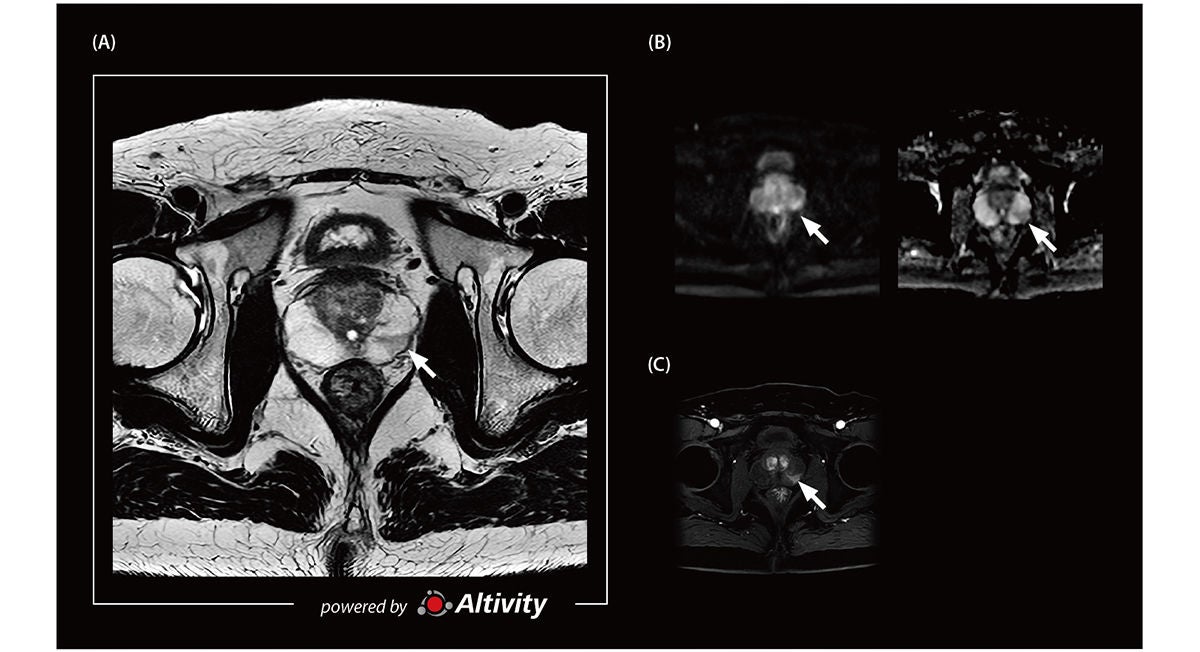
- Figure 4: Multiparametric MRI combing morphologic assessment with functional assessment in prostate MRI
(A) 2 mm-slice T2-weighted image of the prostate in the axial plane with PIQE. (B) Diffusion-weighted image with a b-value of 1400 s/mm2 of the prostate in the axial plane. (C) Fat-suppressed dynamic contrast-enhanced MR image with Enhanced Fat Free of the prostate in the axial plane. White arrows in (A)-(C) indicate the lesions of prostate cancer.
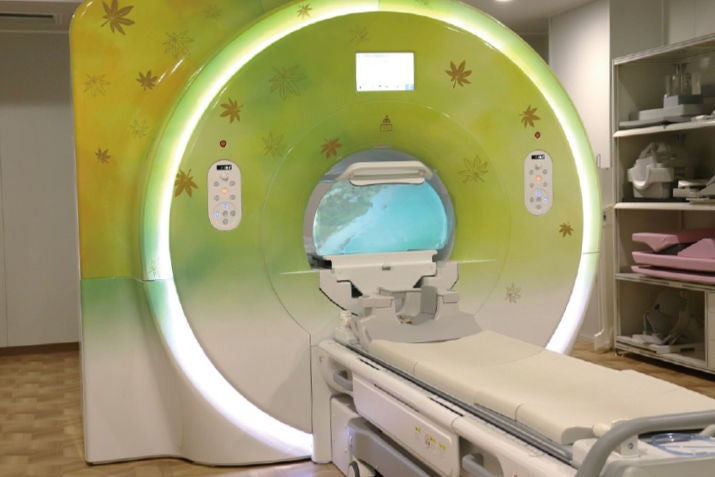
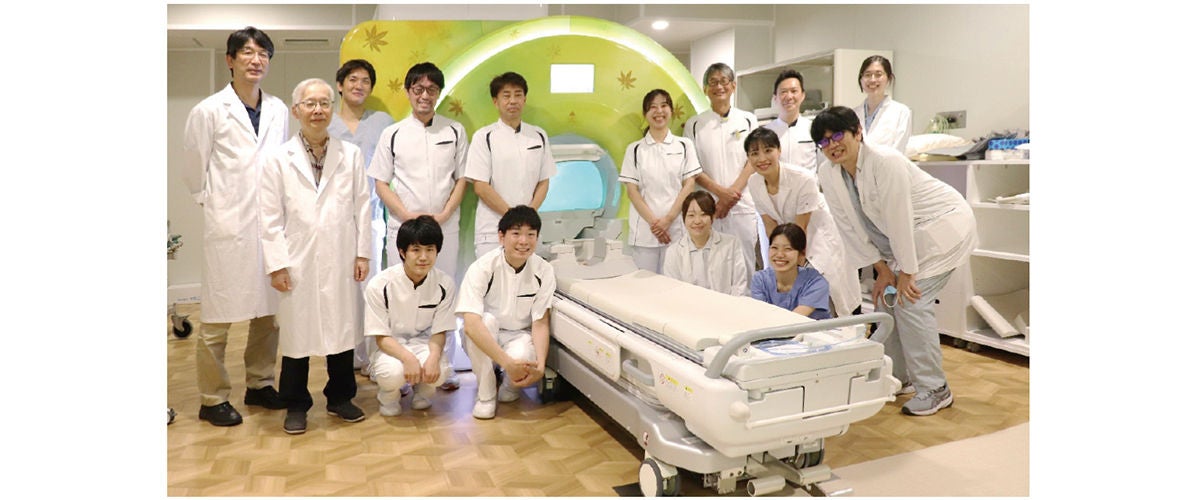
- Figure 5: The MR Theater delivering a patient-friendly environment inside the bore During the MRI examinations, the MR Theater distracts patient’s attention inside the bore. In addition to the MR Theater, the exterior of the scanner is decorated with Japanese maple leaves to calm patient’s anxiety.
Immersive experiences inside the bore to distract the patient’s attention
Our hospital has aimed to offer a patient-friendly environment to patients undergoing MRI examinations.
The MR Theater, which delivers virtual reality videos inside the bore to distract the patient’s attention during the scan has played a critical role in that respect. In addition, it allows any video content that patients like to be played, resulting in calming their anxiety. Actually, there were some cases where some patients with claustrophobia were able to undergo an MRI examination by distracting their attention, even though they had never been able to previously.
In the future we are wondering if the MR Theater will enable pediatric MRI examinations without sedation, which is associated with side effects such as respiratory depression. To realize non-sedated pediatric MRI examinations, we would like to study what kind of video content will calm pediatric patients during scanning, utilizing original content made by our hospital.
In the case study we have summarized our experience as a user of the Vantage Galan 3T / Supreme Edition. In particular, its high-quality magnet, DLR technologies, and MR Theater make a significant difference to our MRI examinations, which would not be the case with other MRI systems. However, this case study reflects only a part of our experiences of a few months since the replacement with the Vantage Galan 3T / Supreme Edition. We still have some challenges to work on with the 3T system, for which we have high expectations.
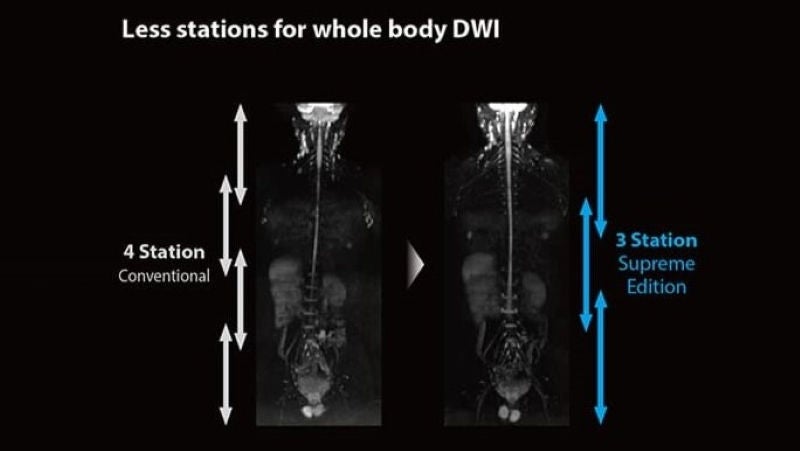
Going forward, we will continue to find unique clinical values on the Vantage Galan 3T / Supreme Edition, also utilizing other applications such as Zoom DWI, along with the rock-solid follow-up service from Canon Medical Systems Corporation. //
References
- KIDOH, Shinoda, et al. Deep Learning Based Noise Reduction for Brain MR Imaging: Tests on Phantoms and Healthy Volunteers. Magnetic Resonance in Medical Sciences, 2020, 19(3): 195-206.
- MATSUO, Kensei, et al. Feasibility study of super-resolution deep learning-based reconstruction using k-space data in brain diffusionweighted images. Neuroradiology, 2023, 65.11: 1619-1629.
- DEL GRANDE, Filippo, et al. Fat-suppression techniques for 3-T MR imaging of the musculoskeletal system. Radiographics, 2014, 34.1: 217-233.
- MIYAZAKI, Wheaton, et al. Enhanced Fat Suppression Technique for Breast Imaging. Journal of Magnetic Resonance Imaging, 2013, 38:981-986.
- TURKBEY, Baris, et al. Prostate imaging reporting and data system version 2.1: 2019 update of prostate imaging reporting and data system version 2. European Urology, 2019, 76.3: 340-351.
- GIGANTI, Allen, et al. Prostate Imaging Quality (PI-QUAL): A New Quality Control Scoring System for Multiparametric Magnetic Resonance Imaging of the Prostate from the PRECISION trial. European Urology Oncology, 2020, 3:615-619
- Disclaimer
The clinical results, performance and views described in this document are the experience of the health care providers. Results may vary due to clinical setting, patient presentation and other factors. Many factors could cause the actual results and performance of Canon’s product to be materially different from any of the aforementioned. The AI technology was trained during the development phase. When implemented into the product, the AI function no longer self-learns.
Minoh City Hospital independently decorated the exterior of the scanner. Exterior decorations are not part of the Canon product offerings.
PI-RADS is a registered trademark of the American College of Radiology.
Takanobu Yamashiro, RT, PhD
Assistant Chief Radiological Technologist
Department of Radiology
Minoh City Hospital, Osaka, Japan
For more information


The content reflects information available at the time of publication and may differ from current information.
Social Media


