

A Brave New World: The Story of Canon’s New 3T Magnet Development and Manufacture
Hajime Tanabe
Low quench rate through high quench resistance performance
It is not easy to achieve high quench resistance in a superconducting magnet. It is not a matter of calculation, but the result of years of accumulated experience and know-how.
In the past our engineers experienced quenches, however each time this happened, they investigated the causes and took measures to improve the situation. Our new magnet has achieved a low quench rate through high quench resistance performance, taking maximum advantage of this experience and efforts to consider the solutions in design.
To realize these points, high-level improvement and process management at both design and manufacturing stages were required.
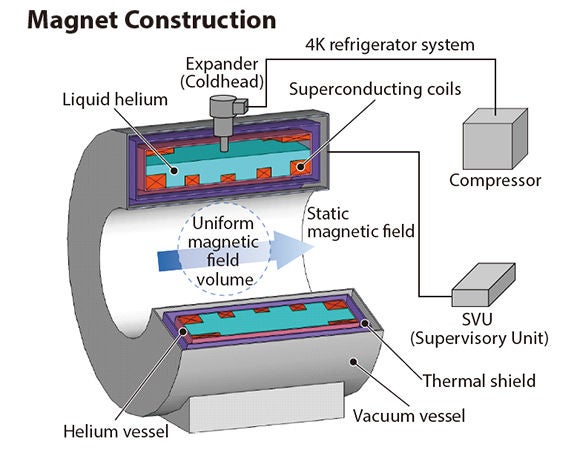
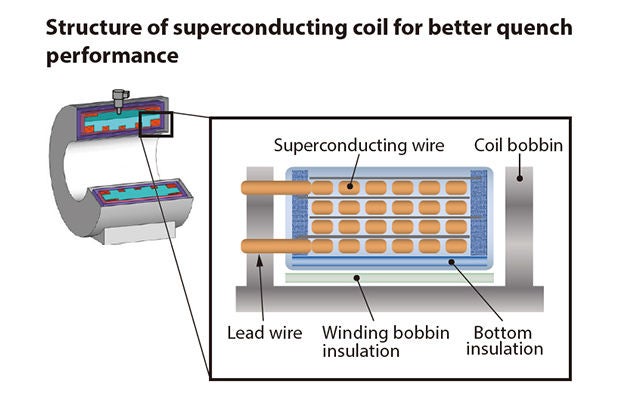
During design, an appropriate superconducting margin (quench margin) was considered. For example, the value of minimum quench energy (MQE), which is an indicator of superconducting margin, has been decided based on accumulated experience and know-how, while taking cost into account. In addition, the magnet had to satisfy magnetic field homogeneity and many other design and manufacturing requirements. Furthermore, the structure of the superconducting coil was optimized to minimize mechanical stress. The superconducting coil is used at an extremely low temperature of 4.2 K (-269 °C). Thus, the stress when cooling from room temperature to extremely low temperatures is many times higher than that caused by the electromagnetic force of 3T. The superconducting coil is made up of a variety of materials, so the stress analysis of the cooling process has been conducted with multiple patterns of a superconducting coil model. Finally, the process that provides the optimal balance between stress after cooling and strength for each part has been adopted.
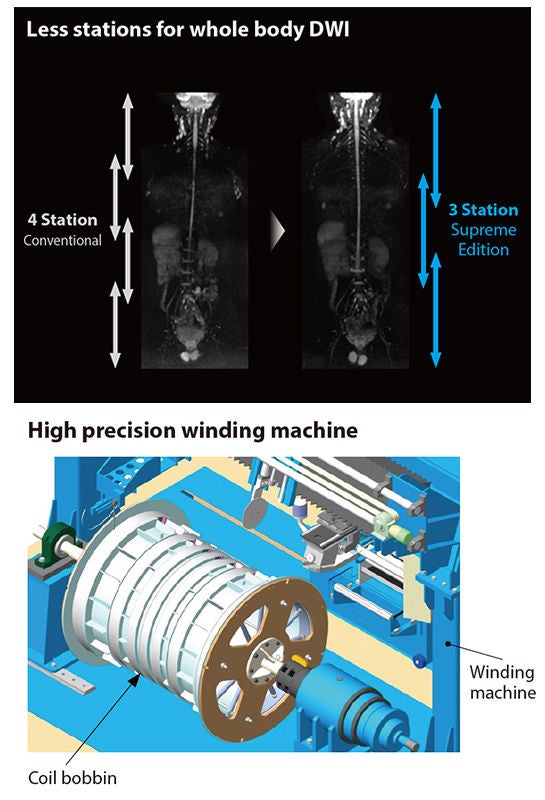
During manufacturing, appropriate processing of the superconducting coil components made it possible to double the adhesive strength of the epoxy that solidifies and fixes the superconducting magnet properly compared to conventional methods. The management of the epoxy and solidification process is also based on the accumulated experience and know-how of our engineers.
There is a risk of quench if the temperature rises by just 1 °C from 4.2 K (-269 °C) due to heat generated by cracking of the epoxy or friction caused by movement. Moreover, under an extremely low temperature, the specific heat is lower by two to three orders than at room temperature, which makes it easier for the temperature to increase. The new magnet has quite a high quench resistance even under extreme conditions, so customers can scan with confidence and peace of mind.
Conclusion
When developing Vantage Galan 3T / Supreme Edition, several technical matters have been addressed during development, even though there were no issues with the superconducting magnet itself. Engineers from each department worked closely together and were able to discover unique solutions. This is one of the benefits of Vantage Galan 3T / Supreme Edition being developed in-house, which we like to refer to as All Canon 3T MRI system.
The quest to improve magnet design and performance never ends. We aim to continue to maintain high quality and develop products that will satisfy customer's clinical requirements even further. //
Disclaimer
Some features presented in this article may not be commercially available on all systems shown or may require the purchase of additional options. Due to local regulatory processes, some commercial features included in this publication may not be available in some countries. Please contact your local representative from Canon Medical Systems for details and the most current information.
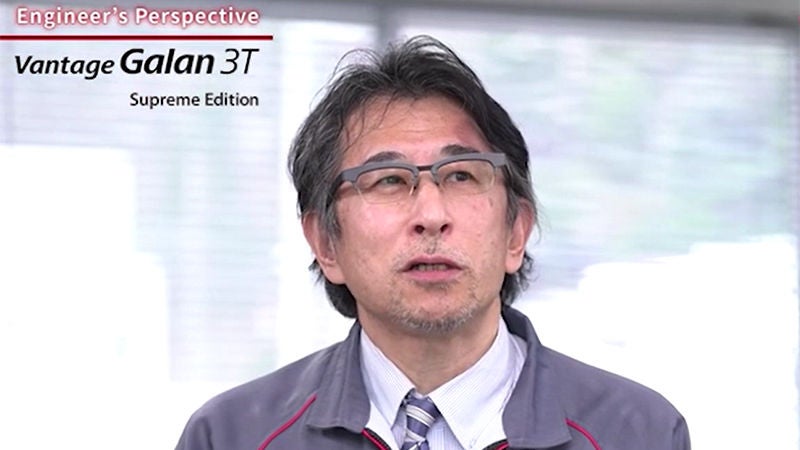
Hajime Tanabe
Group Manager
Magnet Development Group
MRI Systems Development Department, MRI Systems Division
Canon Medical Systems Corporation
For more information

The content reflects information available at the time of publication and may differ from current information.
Social Media


