

Glioblastoma
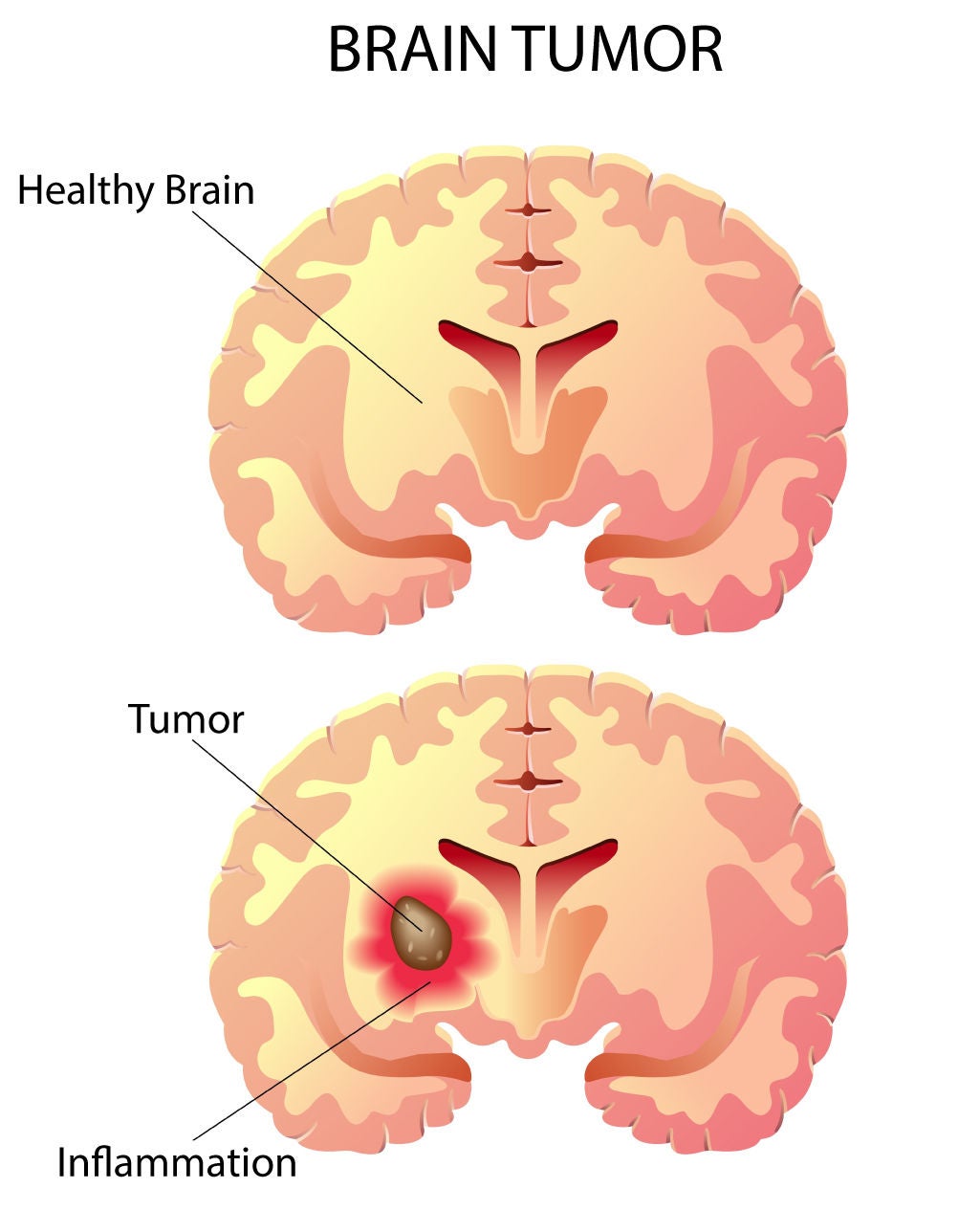
Complications
- Hemorrhage
- Hydrocephalus
- Cerebral commitment
– Temporal commitmen
– Extension to cerebellar tonsils in the occipital fossa
- Tumor meningitis
- Thromboembolic pathology
- Infectious complications
Possible treatments
- Surgery, including a more or less complete excision of the tumor
- In situ chemotherapy with Carmustine implants (Gliadel®)
- Radiotherapy 4 to 6 weeks after surgery
- Association of Nitrosourea chemotherapy such as Temozolomide (Temodal®)
- Second-line chemotherapy with VEGF inhibitors, Bevacizumab (Avastin®)
- New type of immunotherapy-based treatment
In Vitrea
The Perfusion (DSC) and Diffusion plugins can be used in addition to conventional sequences to assess brain tumors.
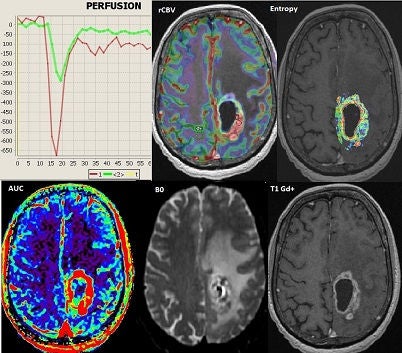
In this Glioblastoma case (Figure 2) we note an increase of rCBV to 7.57 mL/100mL at the level of the fleshy tissue of the tumor, 8 times higher than the healthy contralateral value. The presence of necrosis being noticeable, a T1 perfusion (DCE) was also added to the protocol, increased AUC (Area Under the Curve) and Ktrans values can be found.
A texture analysis with the Entropy study makes it possible to assess the spectrum of singularities of the image of the different levels of gray (Figure 2).
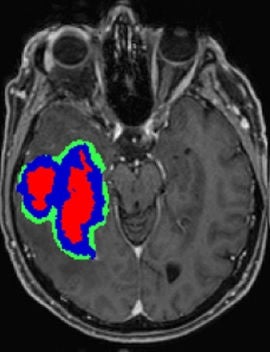
The longitudinal analysis plugin makes it possible to compare all sequences and parametric maps over time using a suitable registration. We can follow, in this case, the evolution of rCBV, already increasing on the first examination in March, without any contrast enhancement on T1 post gadolinium (Figure 3).
Addition
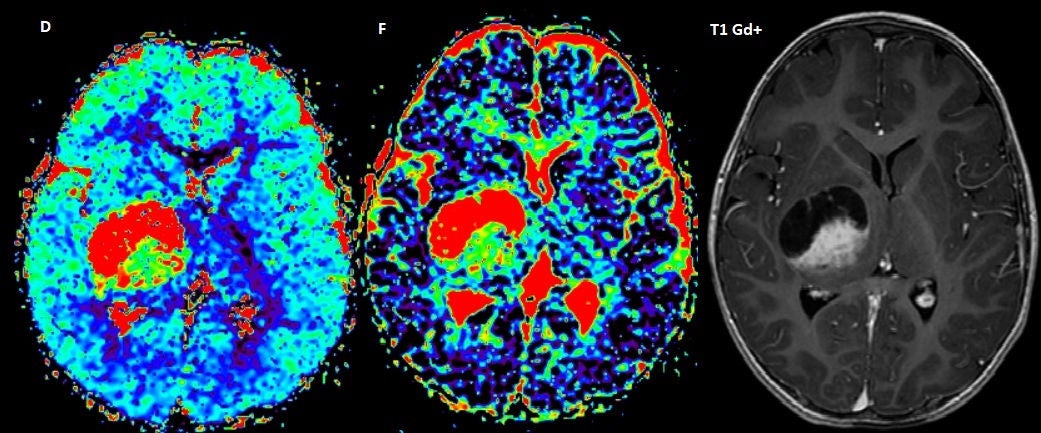
rCBV "relative Cerebral Blood Volume" is a good marker of tumor grade and useful during patient monitoring to discriminate recurrence from pseudo progression. The volumetric study of tumors seems to be robust and promising, compared to two-dimensional measurements recommended today in the follow-up (Figure 3). IVIM (intravoxel incoherent motion) parameters, calculated using diffusion imaging, are new useful biomarkers in the analysis of brain tumors (Figure 4).
References
- Baldi I, Huchet A, Bauchet L, Loiseau H. [Epidemiology of glioblastoma]. Neurochirurgie 2010;56:433-40
Social Media


