

From variability to reliability in Diffusion Weighted Imaging.
By combining advanced signal averaging, distortion control and resolution enhancement, our solution deliver stable, high quality Diffusion Weighted Imaging across a wide range of clinical scenarios.
Canon focuses on consistency –in addition to image quality
Diffusion-weighted imaging is essential for diagnosis, yet image quality often varies due to patient condition, anatomy, and acquisition parameters.
While many approaches only aim to improve image quality, Canon addresses a deeper challenge: reducing variability. By stabilizing diffusion imaging performance, Canon enables consistent and reliable results in everyday clinical practice.
Challenges in DWI
|
The power of Combined Intelligence for DWI
Canon integrates multiple advanced technologies to optimize diffusion imaging from every angle—signal, distortion, resolution, and adaptability.
This integrated approach minimizes variability and ensures stable image quality across diverse conditions.
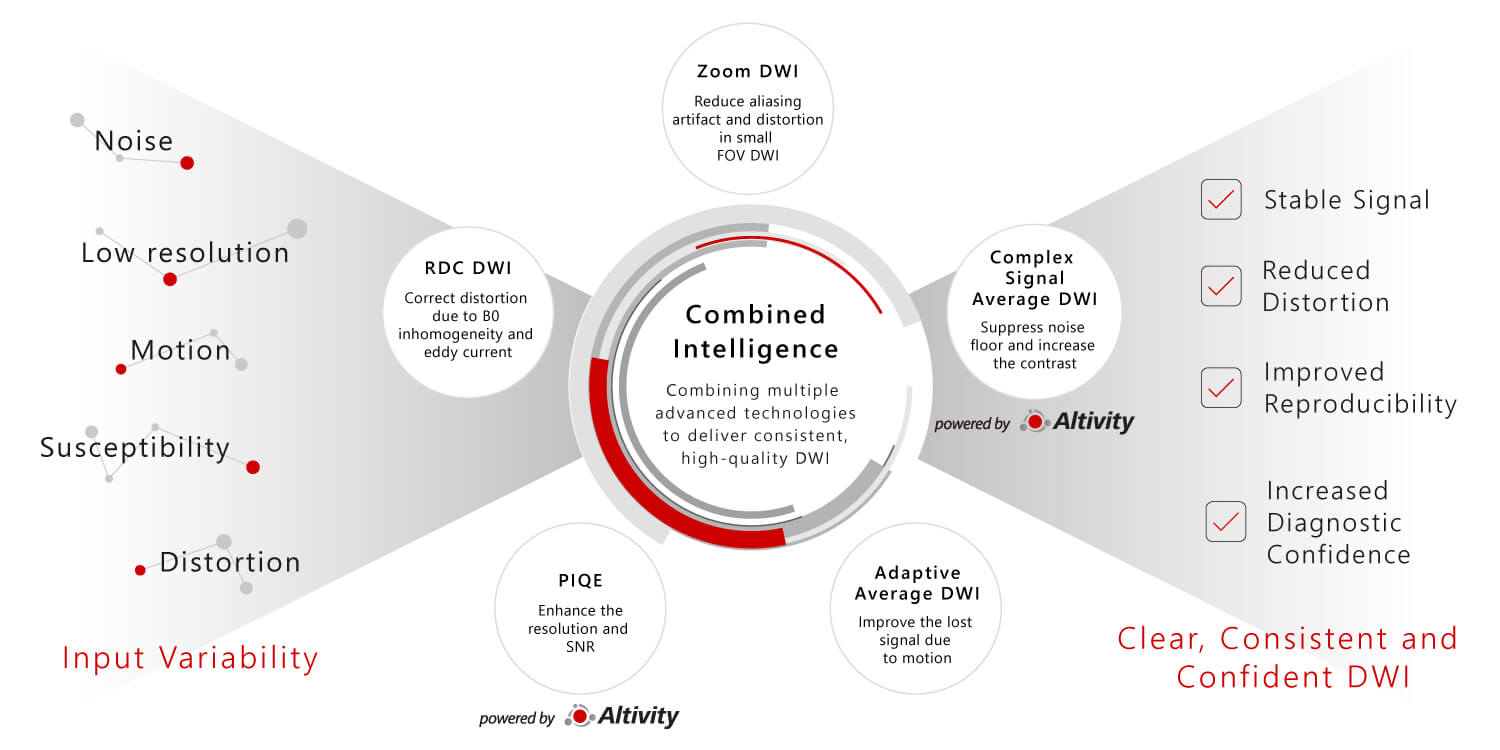
Multiple technologies. One consistent outcome.
Each technology addresses a specific challenge in diffusion weighted imaging. Together, they reduce variability and create a robust solution that delivers consistent, high-quality DWI across all clinical scenarios.
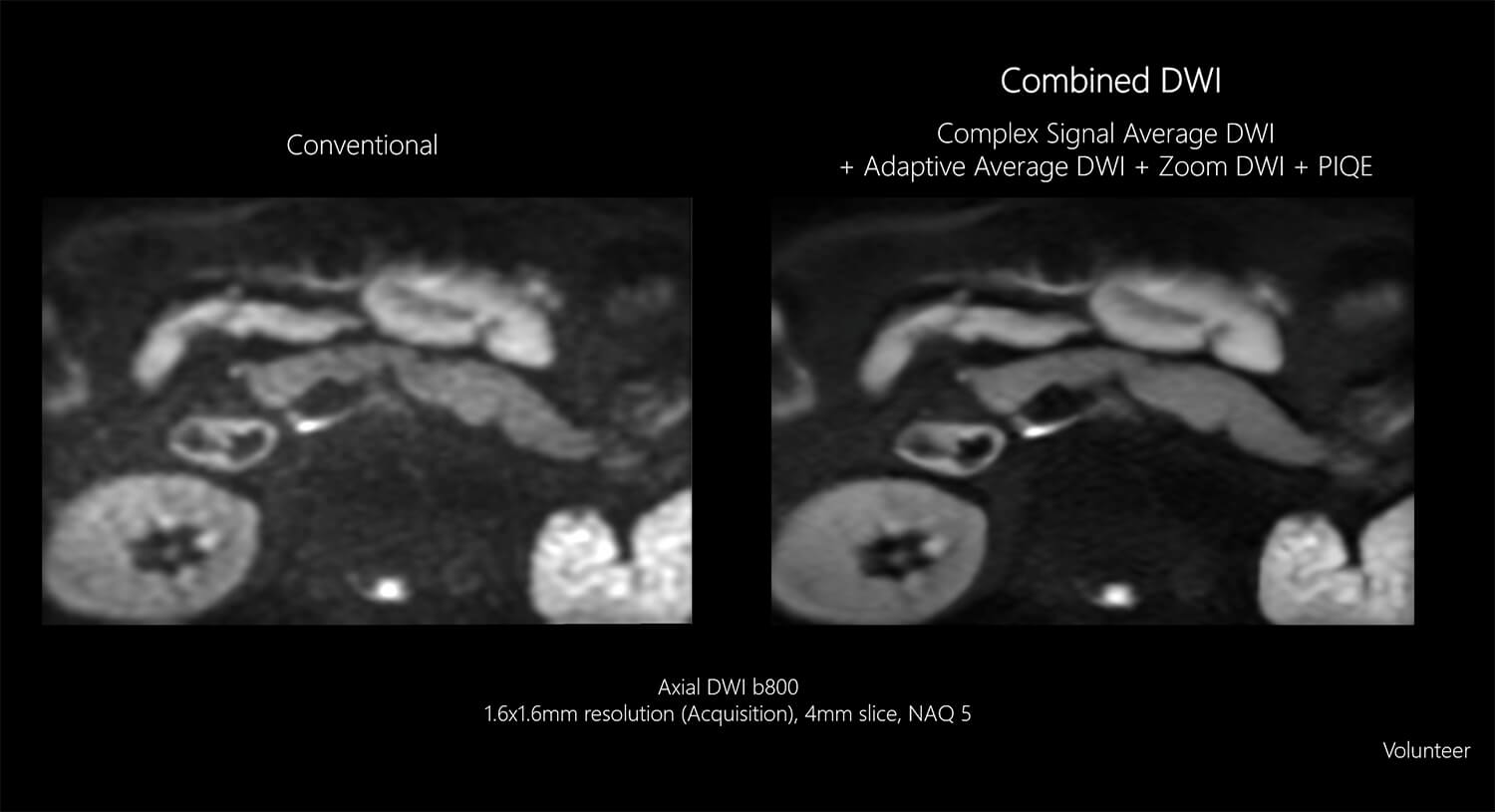
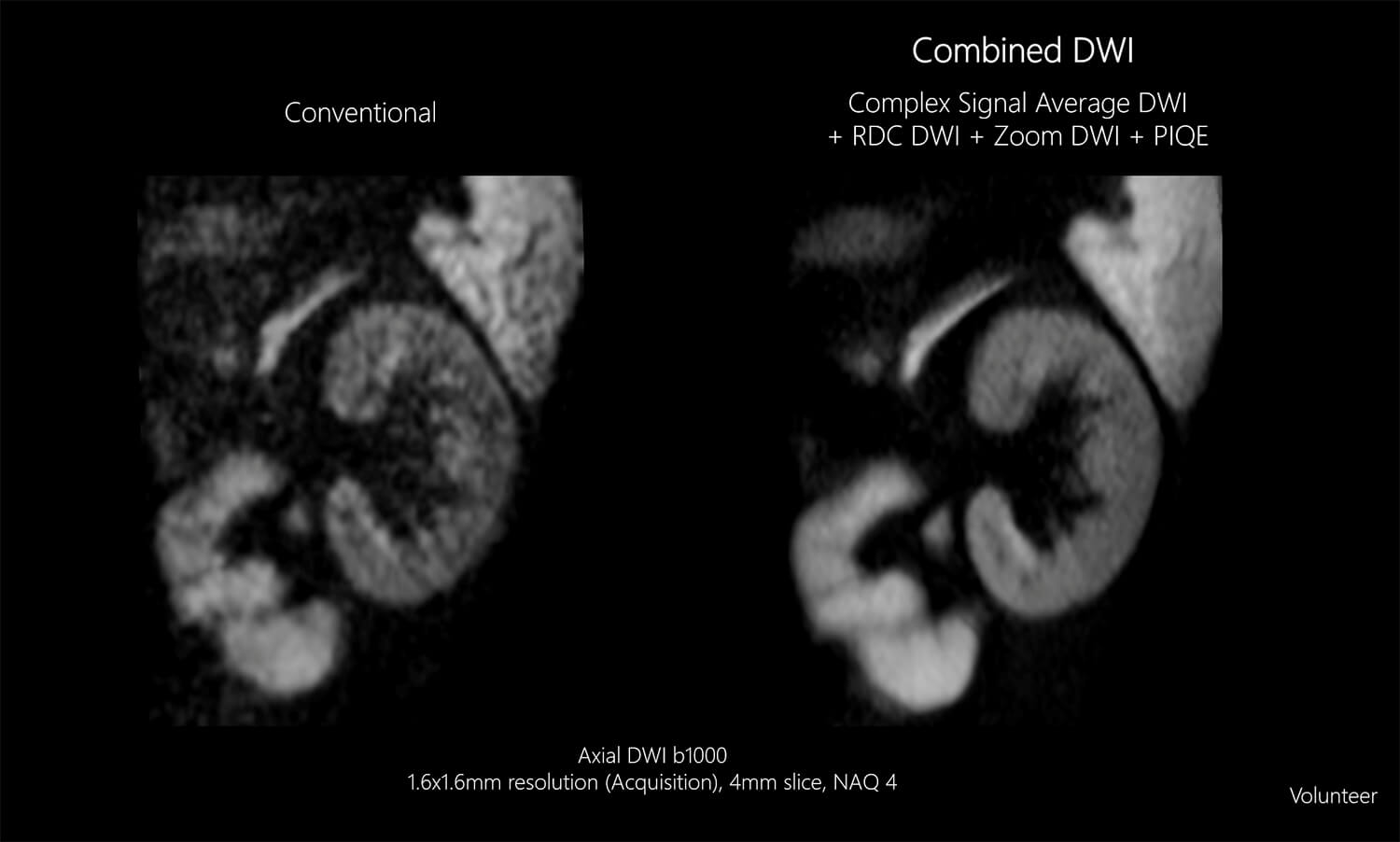
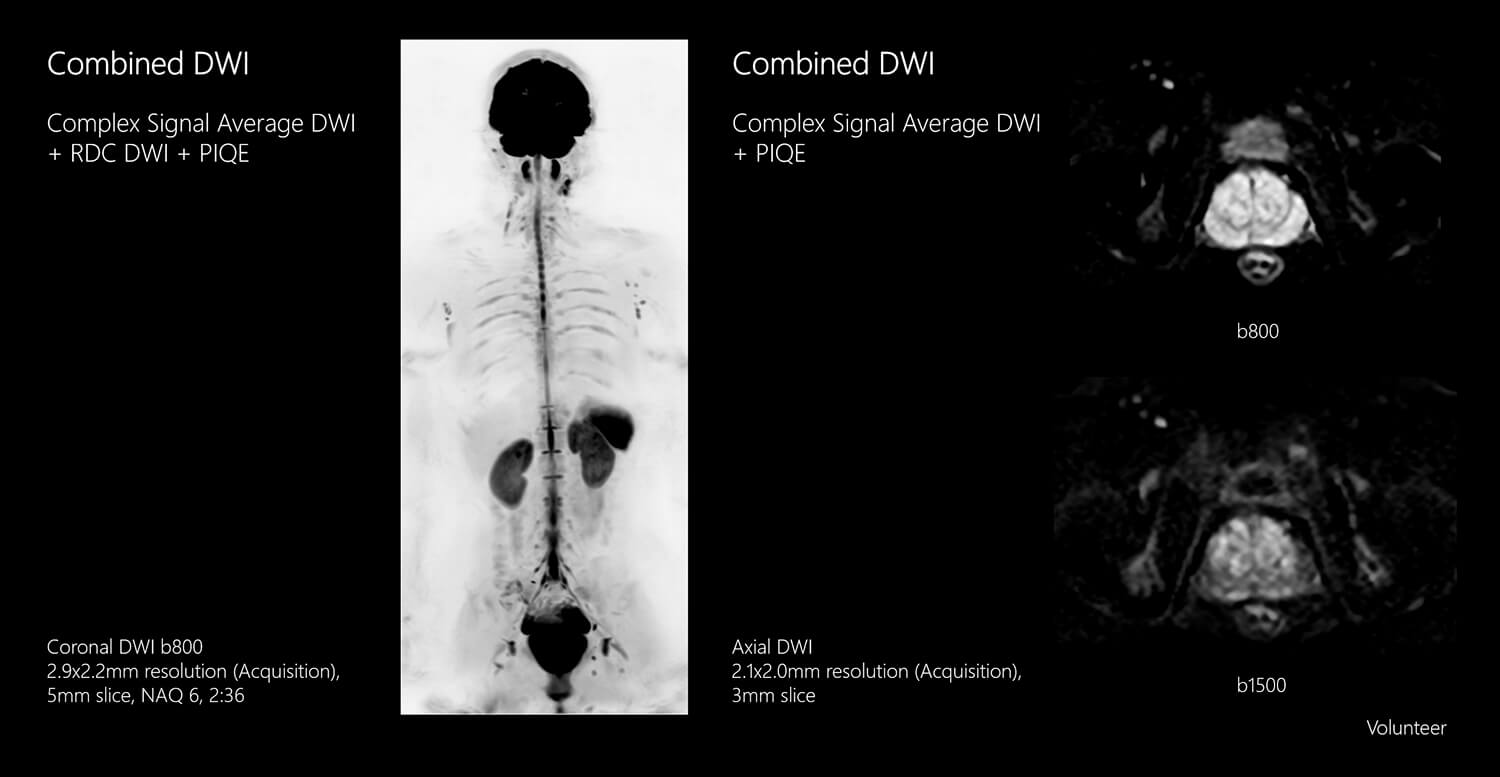
Complex Signal Average DWI

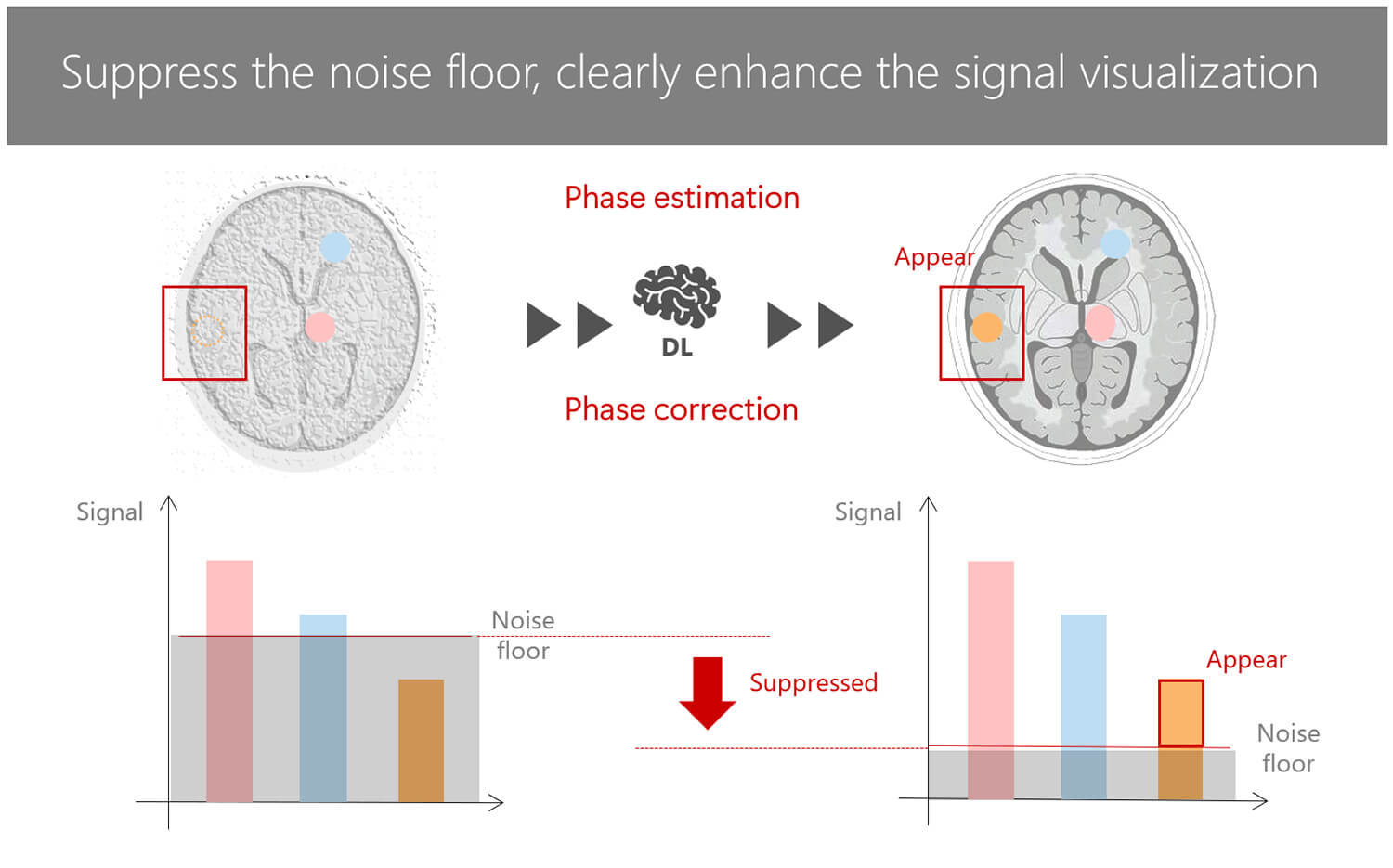
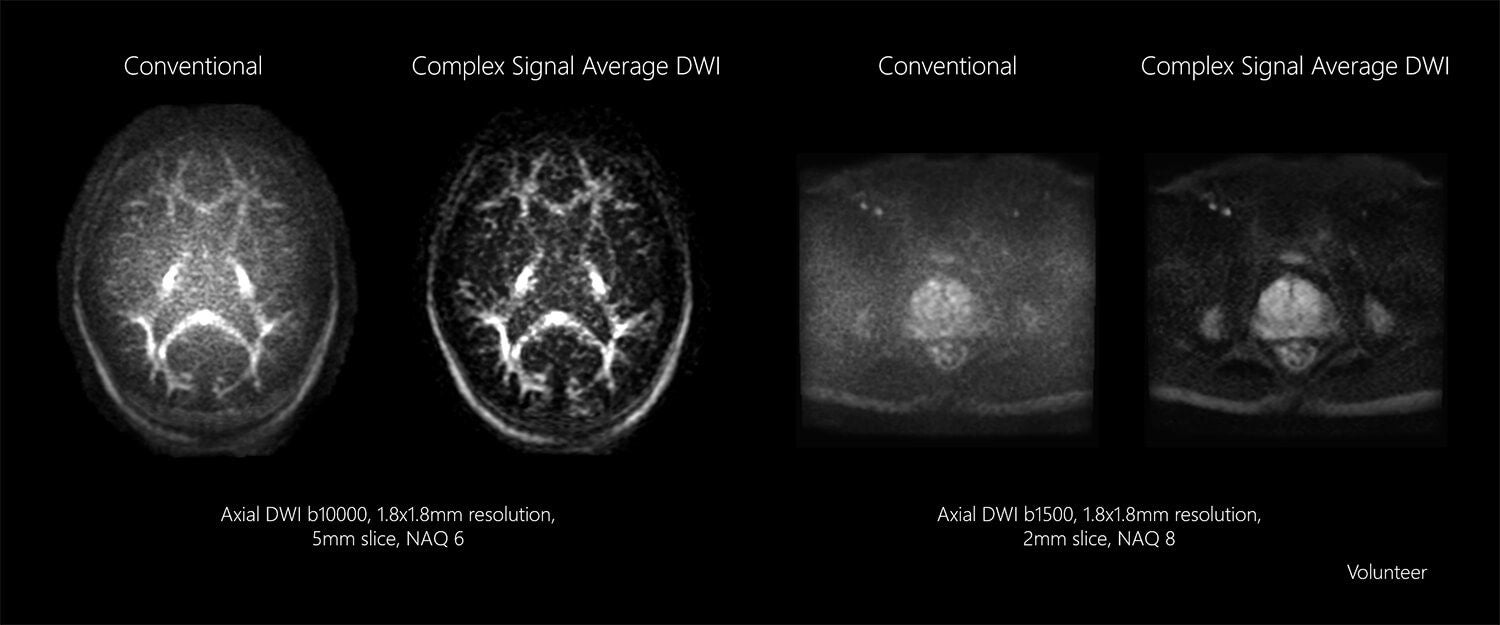
Conventional methods cannot sufficiently suppress noise floor even when the number of acquisitions (NAQ) is increased. Complex Signal Average DWI uses deep learning–based phase correction to enable true complex-domain averaging, reducing the background noise floor while preserving Gaussian noise characteristics. As a result, signals that are typically obscured by noise are visualized more clearly than with conventional magnitude averaging.
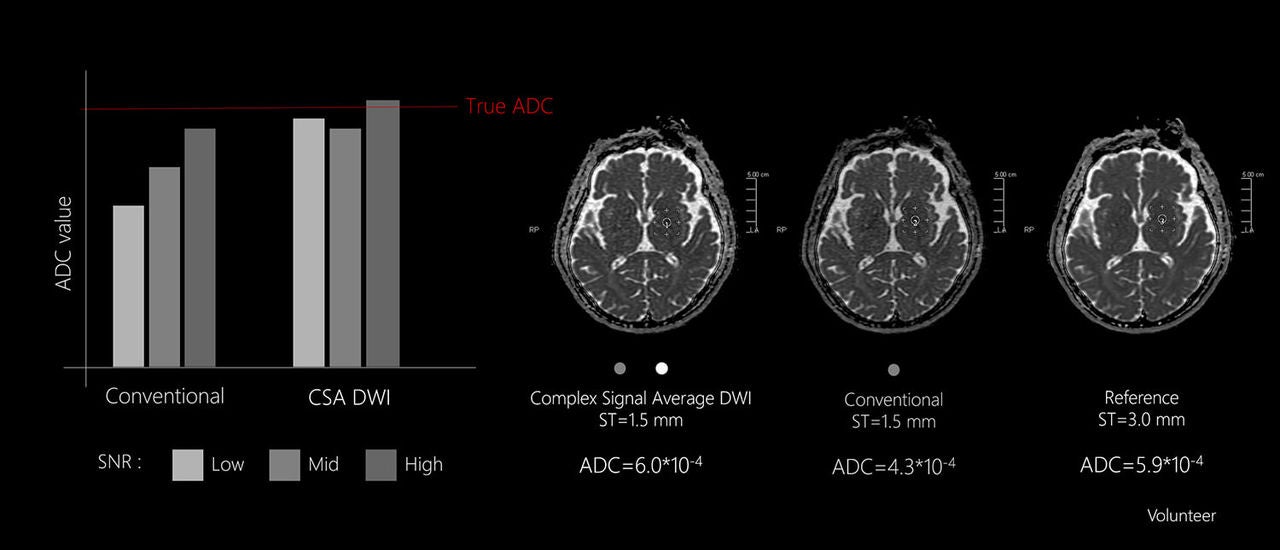
Even in high b-value and low SNR condition, noise floor is effectively suppressed. Measured ADC value in such images are stabilized.
Adaptive Average DWI
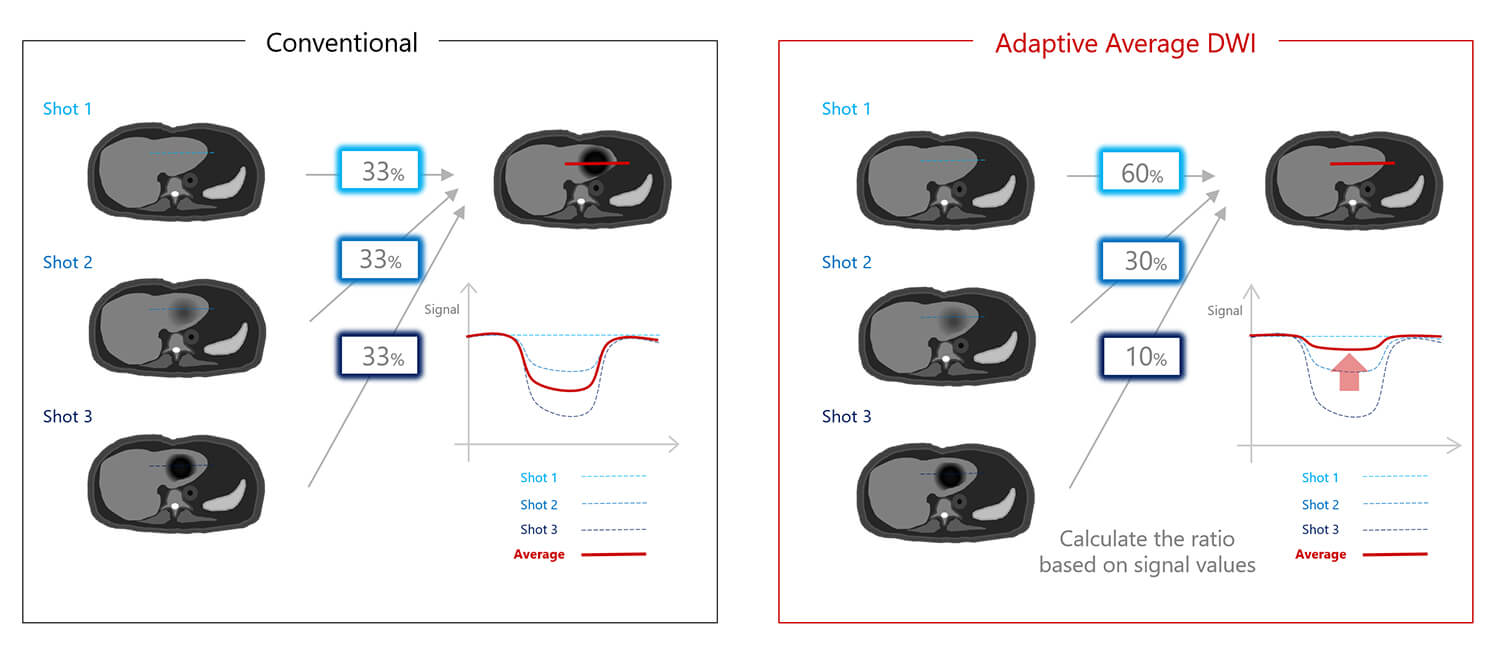
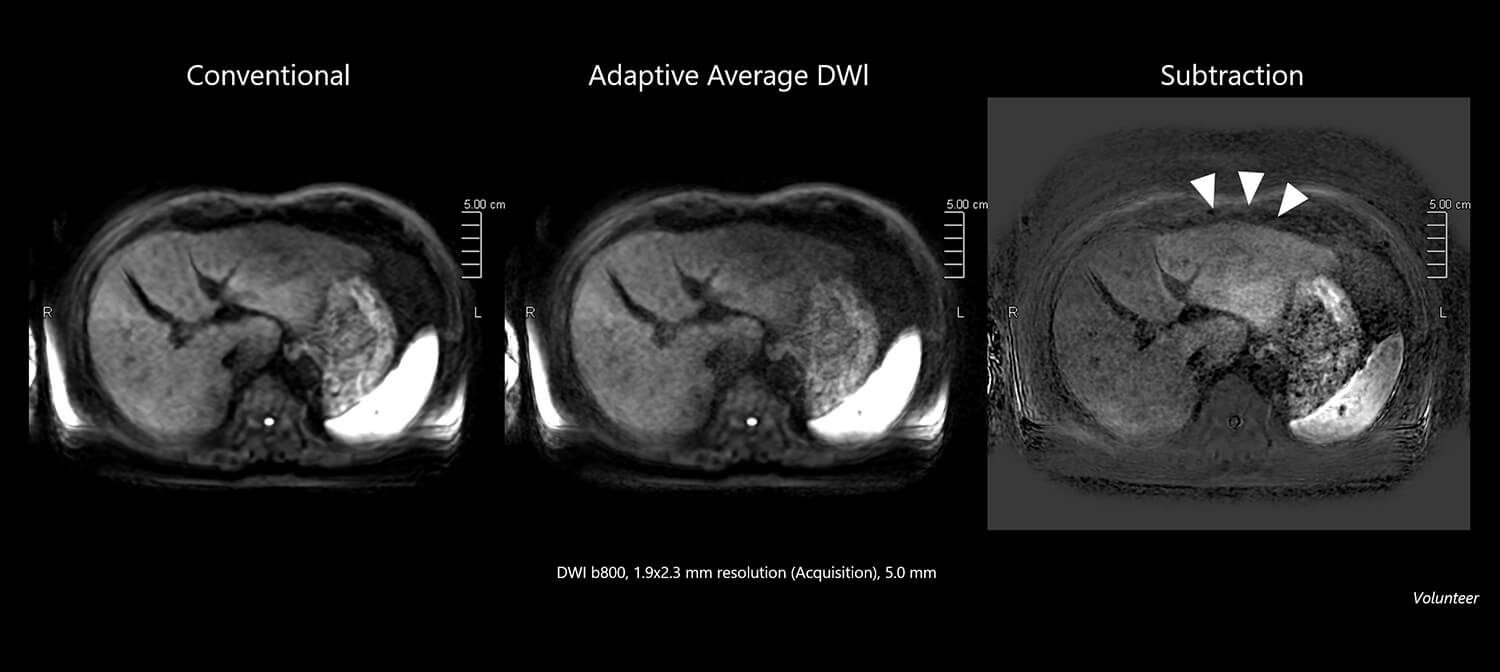
In abdominal DWI, the signal intensity from some part tends to be lower than that from the other parts due to factors such as the timing of the imaging, respiratory motion and pulsation.
With Adaptive Average DWI, by weighting the signal intensity for each addition, it is expected that the reduced signal intensity will be improved.
RDC DWI
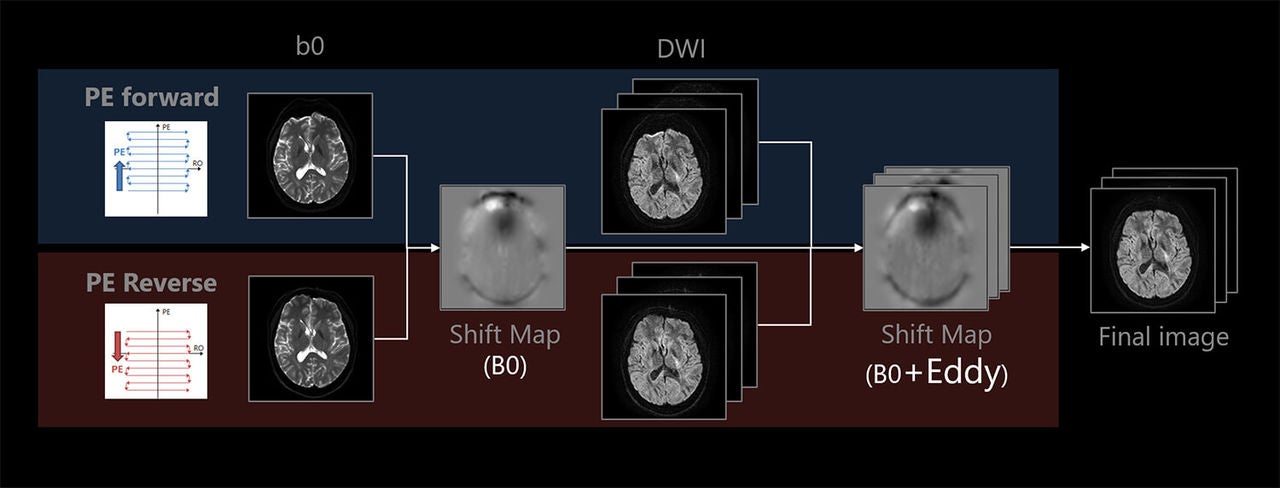
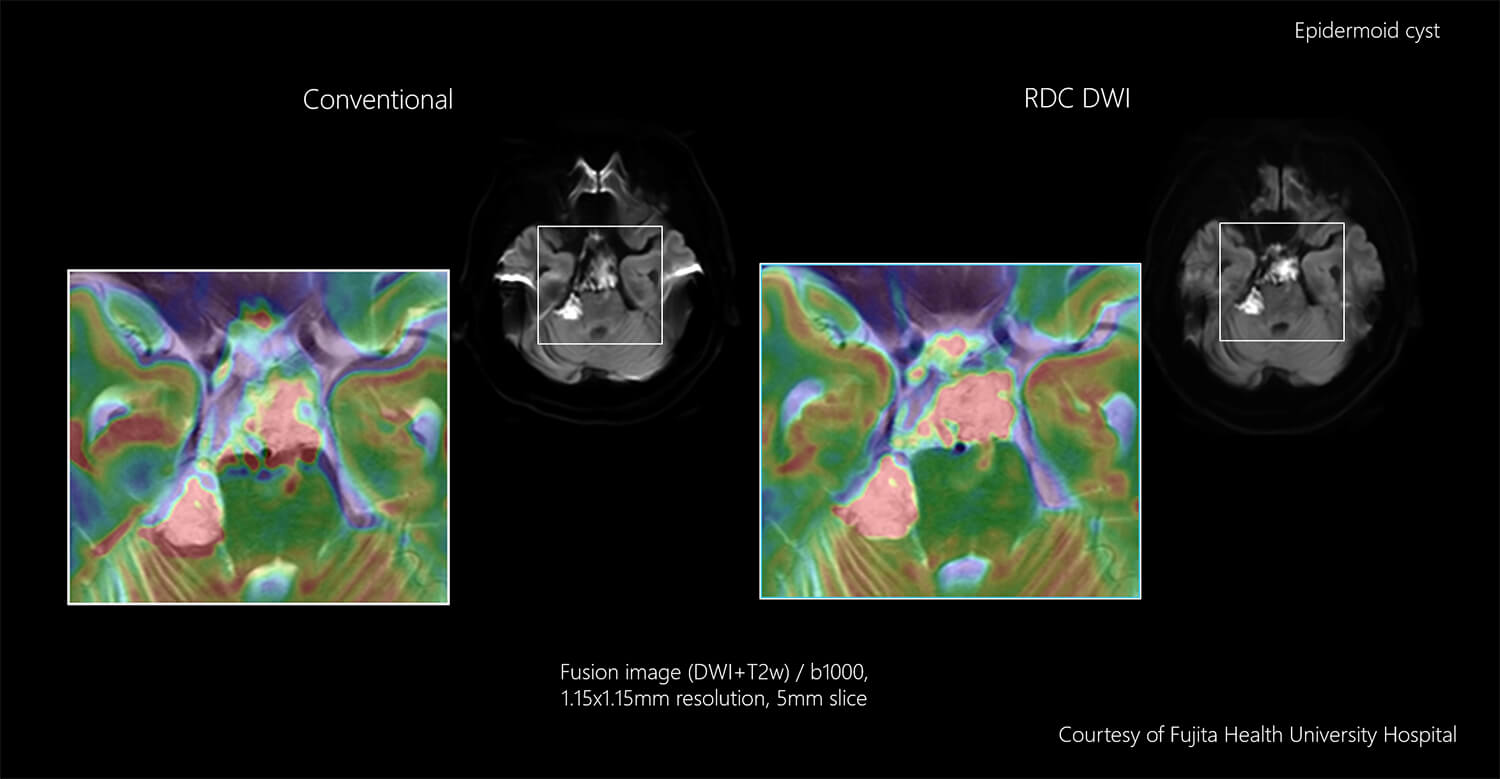
In diffusion weighted imaging, distortion can be easily caused due to B0 field inhomogeneity or eddy current. RDC DWI (Reverse encoding Distortion Correction DWI) is intended to reduce distortion in phase encoding direction by estimating the distortion with generated shift map.
Zoom DWI
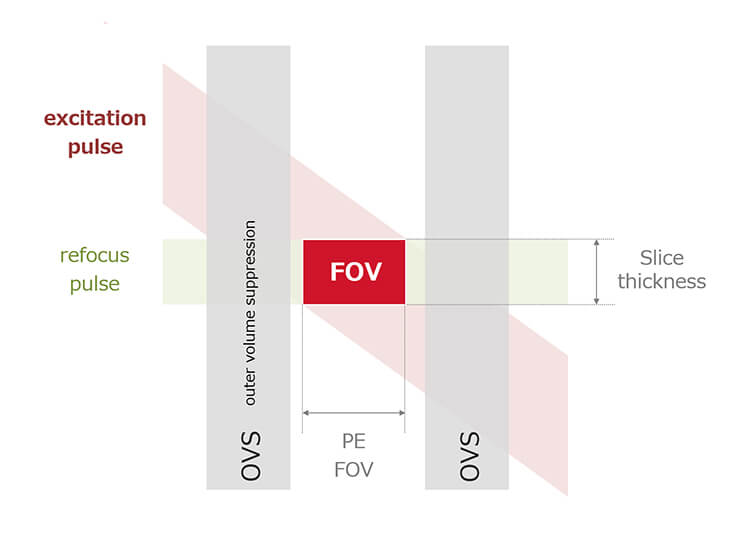
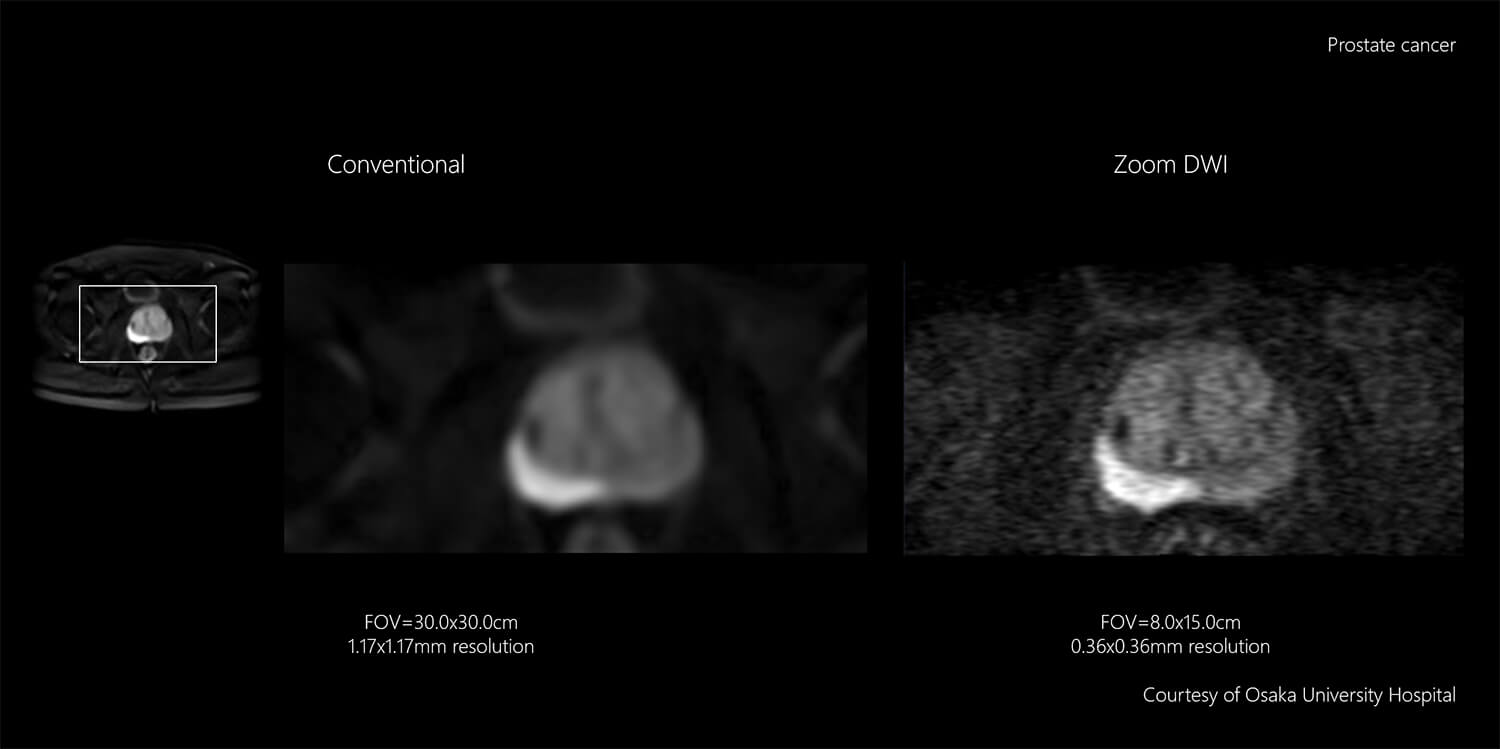
Zoom DWI is using rotated excitation pulse. With this technology, diffusion weighted imaging with small FOV can be acquired suppressing distortion and unfolding errors.
Precise IQ Engine (PIQE)
Disclaimer:
Available features vary depending on the system models and versions. Product availability varies from country to country.
Social Media


