Search

BPH

Join Canon at CIRSE 2026

For more than 40 years, CIRSE has brought together the interventional radiology community to share innovations that improve patient care.  Join our Symposium on September 8 to see how Canon’s Alphenix Sky + is helping redefine interventional radiology with greater flexibility, improved accuracy, and a more efficient workflow.

CIRSE

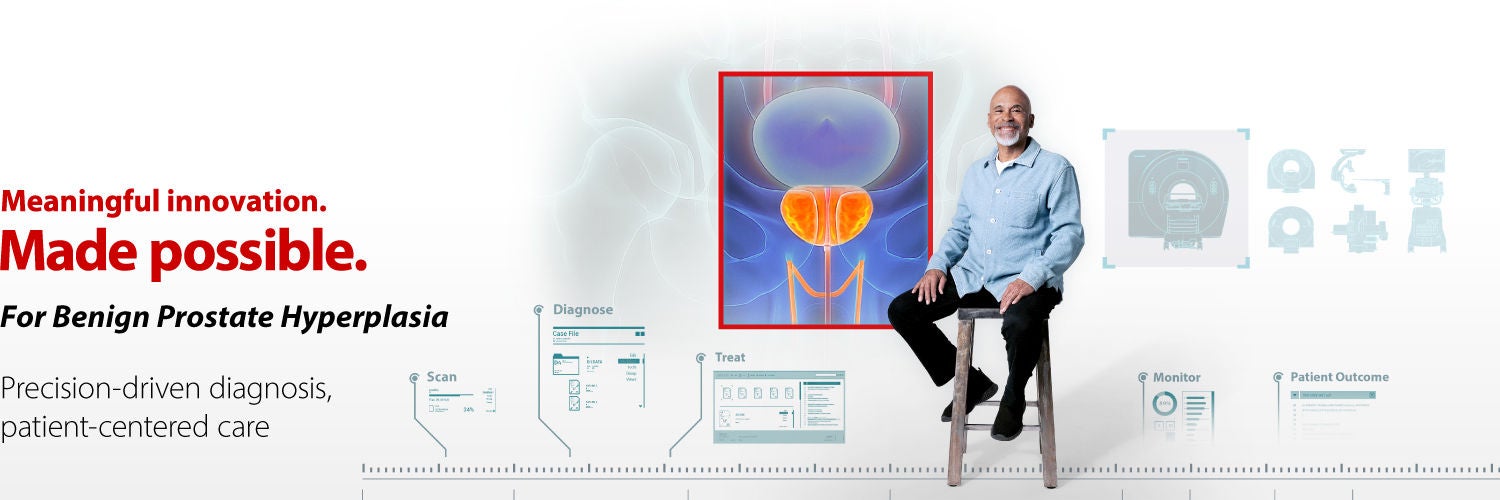
What is Benign Prostate Hyperplasia ?

Benign Prostatic Hyperplasia: a common condition that affects 8 out of 10 men in their lifetime

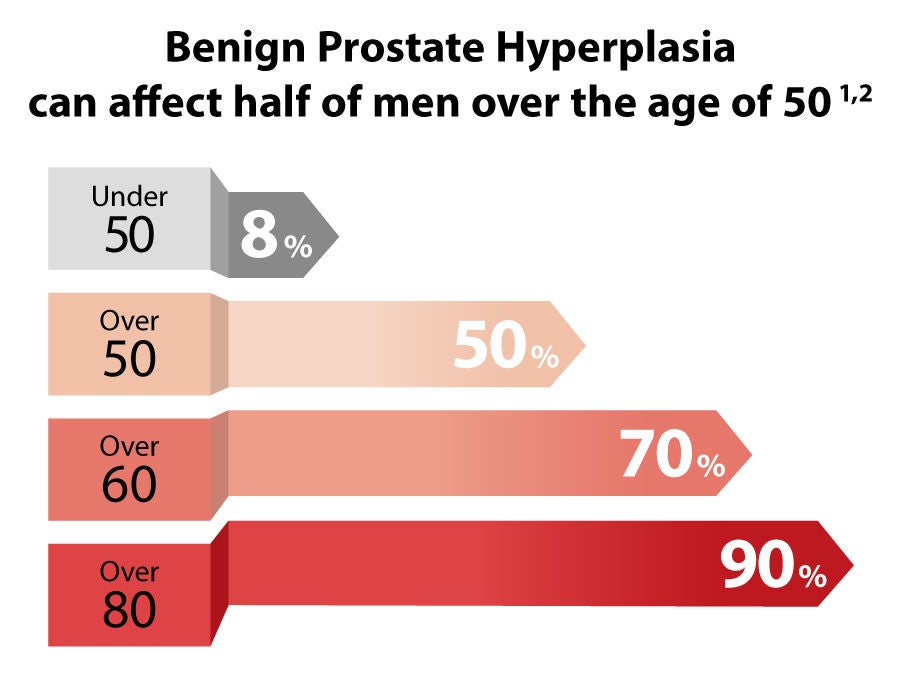
Benign Prostate Hyperplasia (BPH) is a common urological condition affecting 50% of men aged 51 to 60 and up to 90% of men older than 80. 1 Its symptoms have a considerable impact on well-being. As the global population ages, its prevalence is expected to rise, driving up increased healthcare costs and a reduced quality of life. 3-5

Current challenges in BPH treatment

Prostate artery embolization (PAE): A minimally invasive alternative requiring anatomical precision

Traditionally, transurethral resection of the prostate (TURP), a surgical procedure that involves general or spinal anaesthesia and a 2–3 day recovery stay in hospital, has been the gold standard for BPH treatment.

More recently, prostate artery embolization (PAE) has emerged as a minimally invasive alternative.6-8 As compared to surgery, PAE is associated with fewer complications and side effects without a need for general anaesthesia or hospitalization,9 and shorter recovery times. Benefits have recently shown to persist over 24 months.10

However, PAE presents its own challenges. It is a technically demanding procedure that requires careful pre-procedural selection of eligible candidates and planning of the intervention. As in-depth understanding of the pelvic vascular anatomy is needed, high-quality imaging is essential for accurate navigation, confident decision-making, and avoidance of non-target embolization. Additionally, real-time dose management is critical—not only to protect patients during the procedure, but also to safeguard clinical teams from excessive radiation exposure over time.
Our Solutions

Reimagine precision in Prostate Artery Embolization guided by Alphenix 4D CT

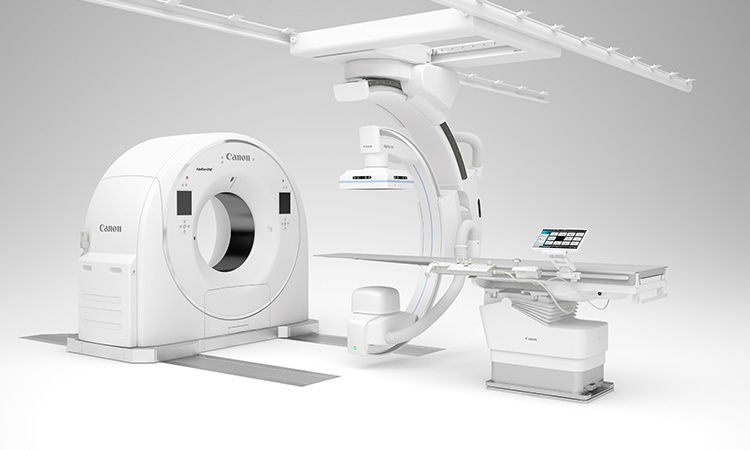
Canon's Alphenix 4D CT system combines the strengths of fluoroscopy and advanced CT in a single suite, offering unmatched anatomical insight and procedural flexibility. This enables clinicians to perform PAE with high safety, accuracy, and efficiency.

Key Benefits

Safety

Patient-centered, less invasive treatment

  • Assess vessel quality with pre-procedural CTA to help identify eligible patients
  • Minimize radiation and contrast exposure, improving safety for both patients and clinical staff
  • Streamline protocols to support same-day discharge and outpatient PAE, reducing hospital burden and recovery costs 11

Accuracy

Precise embolization with superior visualization

  • Streamline workflow with full visualization of the pelvic viscera, particularly in large or tall patients, overcoming the field-of-view limitations seen with cone-beam CT12
  • Visualize vascular anatomy in real time with high-resolution and full- coverage CT imaging
  • Achieve precision embolization through dynamic intraprocedural guidance
  • Identify collateral vessels clearly to helps avoid non-target embolization and enhance procedural durability

Efficiency

Streamlined workflows and operational efficiency

  • Combine CT and fluoroscopic imaging in a single suite during diagnostic and therapeutic interventions to enable more accurate image-guided procedures and reduce overall procedure time

Hear from our users

Clinical experience with Canon's Alphenix 4D CT for PAE


“4D CT is helpful during PAE for confirmation of PA origin, quantification of prostatic parenchyma, and identification of intra-prostatic collaterals. The ability to visualize these things with exceptional image quality allows for increased confidence during embolization with respect to safety and outcomes.”


Nainesh Parikh, MD, MBA

Associate Member, Diagnostic Imaging & Interventional Radiology

H. Lee Moffitt Cancer Center & Research Institute, Tampa, FL, USA

image

How ceiling-mounted IR helped protocolize same-day prostate artery embolization


“The shift to same-day treatments was accelerated during the Covid years as we had to limit the use of inpatient beds. PAE was protocolised as a day case with discharge of patients the same day. This was made possible by having a ceiling-mounted interventional imaging system giving us the ergonomic flexibility to switch to transradial access (TRA) via the patient’s wrist on the left side rather than transfemoral access (TFA) via the groin on the right. TRA is known to have fewer complications at the access site and is more comfortable for the patient, so it aided the confidence in decision making to speed up our discharge rates.”


Dr. Pavan Najran

Consultant Interventional Radiologist

The Christie NHS Foundation Trust, UK

image

Increasing the success rate of Prostate Artery Embolization (PAE) with Alphenix 4D CT


“Canon’s Angio-CT system reduces the burden of contrast media and time for patients and increases the level of procedure completion for interventionalists.”


Dr. Jung,

Chief of Intervention Center

Human Medical Imaging & Intervention Center, Korea

image

Highlighted scientific publications
Prostate Artery Embolization with 4D-CT

Learn more about PAE with 4D-CT in this review of the indications and technical parameters of PAE as well as tips and tricks from a high-volume center.


Bibok, Andras et al. “Prostate Artery Embolization with 4D-CT.” Seminars in interventional radiology vol. 41,3 302-308. 19 Aug. 2024, doi:10.1055/s-0044-1788622

More solutions for prostate imaging

From BPH to Prostate Cancer

prostate cancer solutions

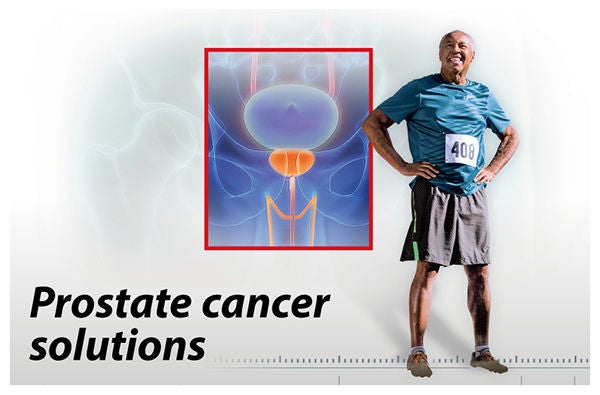
While BPH is a common non-cancerous condition, comprehensive prostate health management must also address the rising global burden of prostate cancer.

Prostate cancer is the most common cancer in men across nearly two-thirds of the world. It ranks second globally in incidence and is the fifth leading cause of cancer-related deaths. By 2040, annual new cases are expected to reach 2.9 million.13

Our imaging solutions offer a range of Ultrasound, MRI, and CT/PET-CT solutions with advanced features that enhance diagnosis and procedure planning through:

  • AI-enabled high-quality imaging for lesion detection and characterization
  • Smart MR/UL fusion to guide targeted biopsy, improving accuracy, comfort and safety
  • Whole body imaging with high image quality for staging, assessment of metastases and detailed treatment planning and monitoring
References
  1. Bibok A, Kis B, Parikh N. Prostate Artery Embolization with 4D- CT. Semin Intervent Radiol 2024;41:302-308.
  2. Johns Hopkins Medicine. Prostatic Artery Embolization (PAE) Infographic. Retrieved from:https://www.hopkinsmedicine.org/health/treatment-tests-and-therapies/prostatic-artery-embolization/pae-infographic
  3. Collaborators GBDBPH. The global, regional, and national burden of benign prostatic hyperplasia in 204 countries and territories from 2000 to 2019: a systematic analysis for the Global Burden of Disease Study 2019. Lancet Healthy Longev 2022;3:e754- e776.
  4. Ye Z, Wang J, Xiao Y, Luo J, Xu L, Chen Z. Global burden of benign prostatic hyperplasia in males aged 60-90 years from 1990 to 2019: results from the global burden of disease study 2019. BMC Urol 2024;24:193.
  5. Banker H, Selvarajan SK. Prostate Imaging. [Updated 2023 Jan 16]. StatPearls [Internet]: StatPearls Publishing, 2023.
  6. McWilliams JP, Bilhim TA, Carnevale FC et al. Society of Interventional Radiology Multisociety Consensus Position Statement on Prostatic Artery Embolization for Treatment of Lower Urinary Tract Symptoms Attributed to Benign Prostatic Hyperplasia: From the Society of Interventional Radiology, the Cardiovascular and Interventional Radiological Society of Europe, Société Française de Radiologie, and the British Society of Interventional Radiology: Endorsed by the Asia Pacific Society of Cardiovascular and Interventional Radiology, Canadian Association for Interventional Radiology, Chinese College of Interventionalists, Interventional Radiology Society of Australasia, Japanese Society of Interventional Radiology, and Korean Society of Interventional Radiology. Journal of Vascular and Interventional Radiology 2019;30:627-637.e1.
  7. Sandhu JS, Bixler BR, Dahm P et al. Management of Lower Urinary Tract Symptoms Attributed to Benign Prostatic Hyperplasia (BPH): AUA Guideline Amendment 2023. Journal of Urology 2024;211.
  8. Page T, O'Toole E, Keltie K et al. Surgery for benign prostate enlargement in England: 10- year retrospective study of 155 874 patients. BJU Int 2025.
  9. Pisco JM, Bilhim T, Pinheiro LC et al. Medium- and Long- Term Outcome of Prostate Artery Embolization for Patients with Benign Prostatic Hyperplasia: Results in 630 Patients. Journal of Vascular and Interventional Radiology 2016;27:1115-1122.
  10. Sapoval MR, Bhatia S, Déan C et al. Two- Year Outcomes of Prostatic Artery Embolization for Symptomatic Benign Prostatic Hyperplasia: An International, Multicenter, Prospective Study. CardioVascular and Interventional Radiology 2024;47:1515-1524.
  11. Bagla S, Smirniotopoulos J, Orlando J, Piechowiak R. Cost Analysis of Prostate Artery Embolization (PAE) and Transurethral Resection of the Prostate (TURP) in the Treatment of Benign Prostatic Hyperplasia. CardioVascular and Interventional Radiology 2017;40:1694-1697.
  12. Parikh N, Hoi Y, Marek D, Hohn M, Kuhls- Gilcrist A. Utility of 4D CT Technology During Prostate Artery Embolization (PAE). 2022.
  13. James, Nicholas D et al. “The Lancet Commission on prostate cancer: planning for the surge in cases.” Lancet (London, England) vol. 403,10437 (2024): 1683-1722. doi:10.1016/S0140-6736(24)00651-2

Disclaimer

  • The opinions expressed in this material are solely those of the presenter and not necessarily those of Canon. Canon does not guarantee the accuracy or reliability of the information provided herein.
  • The clinical results, performance and views described here are the experience of the clinician. Results may vary due to clinical setting, patient presentation and other factors. Many factors could cause the actual results and performance of Canon’s products to be materially different from any of the aforementioned.
  • Some products shown might not be available in all regulatory jurisdictions, please consult with your local Canon sales office for availability in your region.