

Striving to Minimize Climate Change
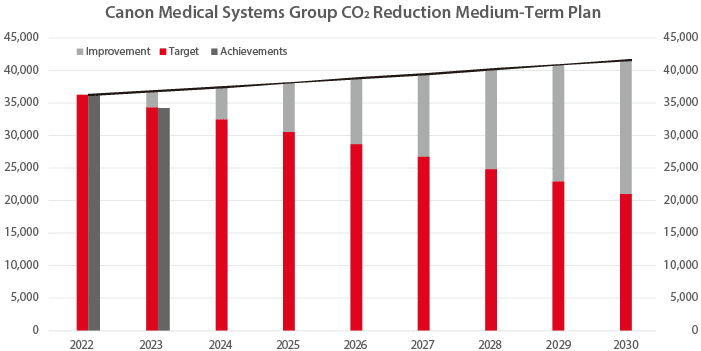
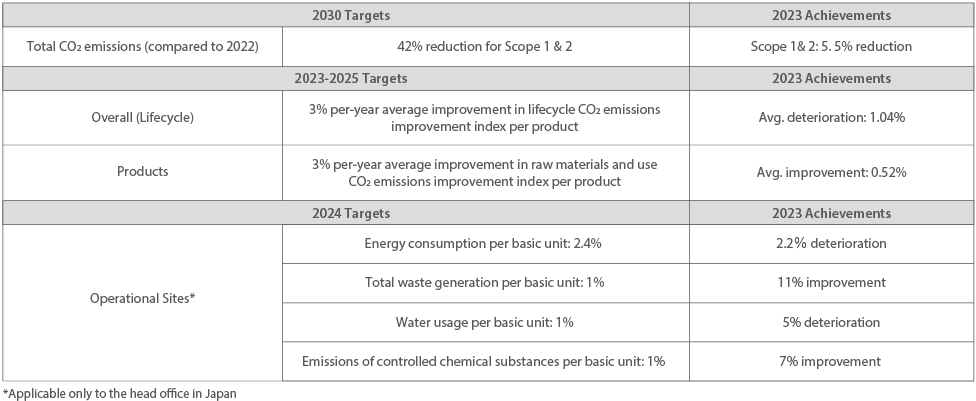
Canon Medical Systems supports the 2015 United Nations’ Paris Climate Agreement and strives to minimize the impact of climate change. In December 2022, we established a medium-term plan for CO2 emissions for Canon medical & all its group companies or offices around the world, aiming for a 42% decrease in Scope 1 and Scope 2 emissions from 2022 levels by 2030, and we are taking significant steps to achieve carbon neutrality.
Treading Lightly Towards a Better Future
We are committed to reducing our carbon footprint, which decreased from 36,260 tons of CO2 in 2022 to 34,240 tons in 2023.
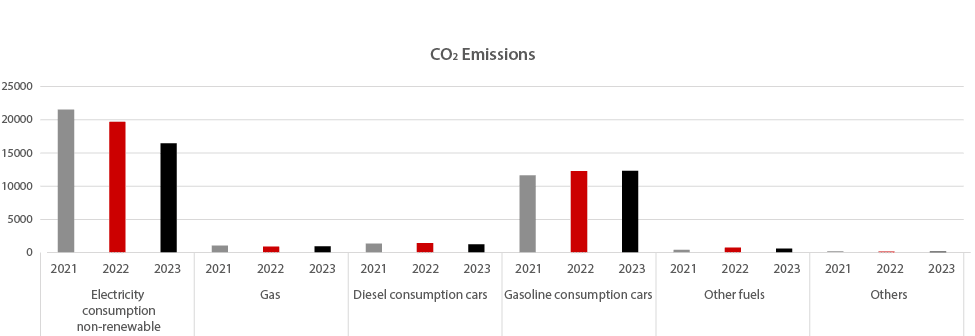
Factors contributing to this decrease include reductions due to carbon credits, as well as reductions in standby power consumption at manufacturing facilities and upgrades to high-efficiency equipment as part of energy-saving activities at production sites in Japan.
Our sales companies are increasingly transitioning from gasoline vehicles to hybrid and electric vehicles to decrease fuel consumption in sales and service vehicles. Additionally, in certain regions of Europe and Japan, renewable energy is being employed to lower CO2 emissions.
Environmental Targets and Achievements
Eco-conscious design
We provide services to more than 190 countries and regions worldwide. In addition, we partner with expert institutions across the globe to create innovative technologies through joint research and development.
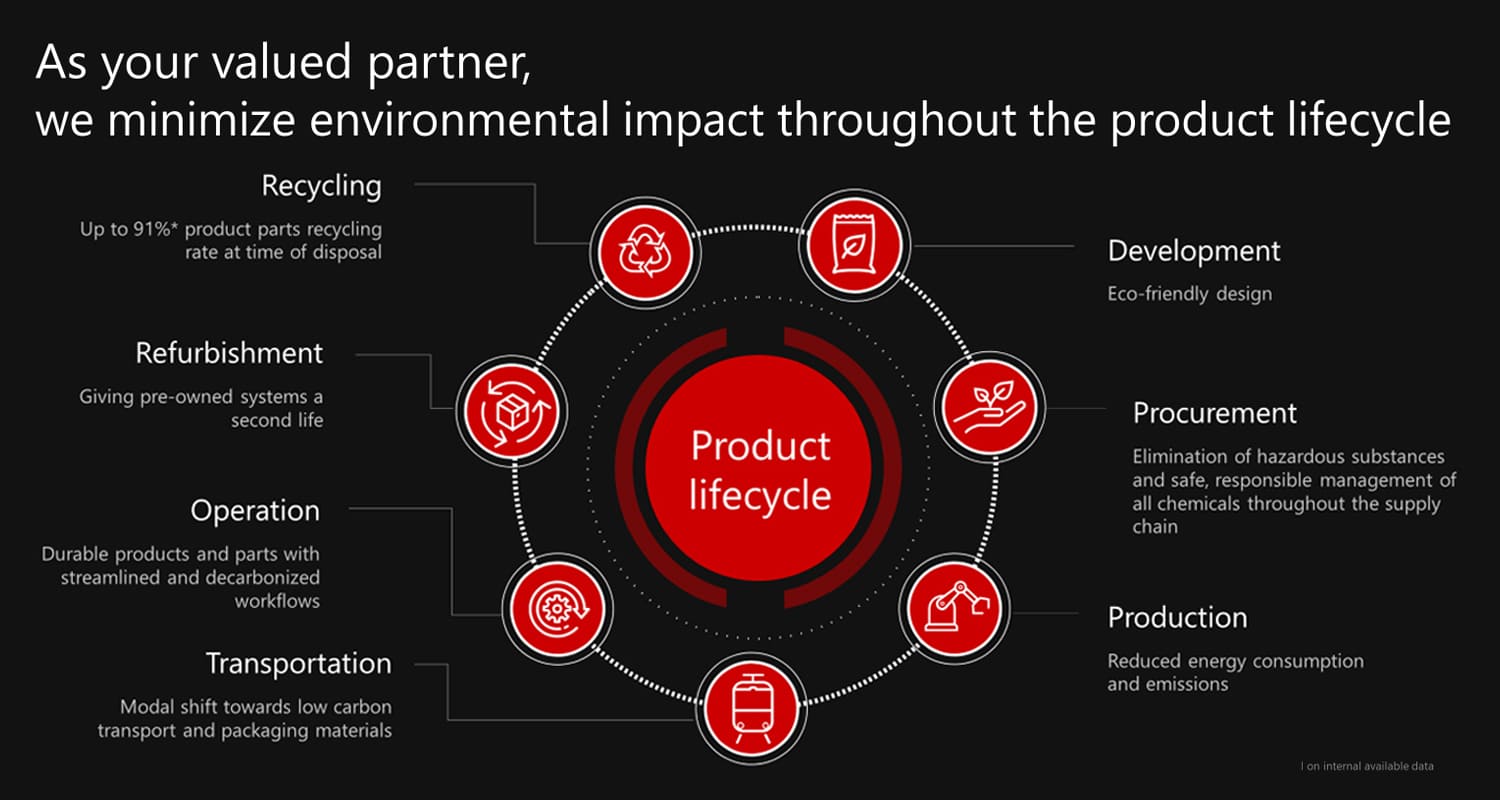
We distribute our products to the market each year with the intention of contributing to a sustainable global environment. Based on our product development and design process, which complies with IEC 60601-1-9*, the international standard for environmentally conscious design of medical equipment, we are implementing various measures to reduce our energy consumption and use of resources. We are also making an effort to embed eco-conscious design to our products, focusing on improving product efficiency, as well as providing our customers with environmental information concerning our products when requested.
*IEC 60601-1-9: International Electrical Standard or requirements for environmental conscious design to ensure compliance of medical devices with environmental regulations in different countries.
We are active members of the Environment Committee of JIRA1 and DITTA2, its superior international organization. In response to the EU Eco-Design Directive3, we also directly participate in a voluntary activity to promote the eco-design of products led by COCIR4. We work in cooperation with other member companies to proactively save energy and resources and manage chemicals contained in products.
The outcomes of these efforts are carefully reported and shared with the European Union (EU). Particularly in recent years, in response to the circular economy promoted in the EU, we emphasize exploring technology to identify and reduce the consumption of CRMs5. We have also adopted proactive efforts to eliminate toxic chemicals in our products.
- JIRA: Japan Medical Imaging and Radiological Systems Industries Association
- DITTA: International Congress of Diagnostic Imaging and Therapy Systems Trade Association
- EU Eco-Design Directive: Directive aiming to establish a framework for ecological design requirements applied to energy-related products
- COCIR: European Coordination Committee of the Radiological, Electromedical and Healthcare IT industry
- CRM: Critical Raw Materials
Environmental Targets and Achievements
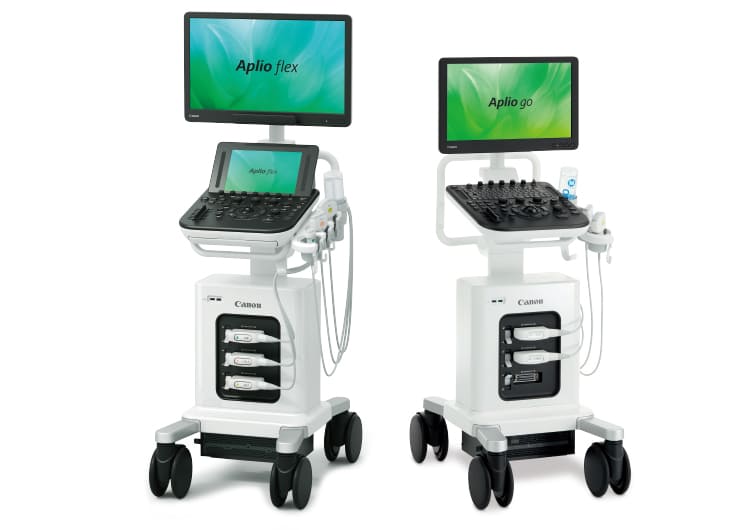
Canon Medical Systems provides healthcare professionals with a wide range of high utility products and services in the fields of diagnostic imaging, healthcare IT, and in vitro diagnostics.
Our ultrasound products exemplify meaningful innovation as they are compact, high-performing, space-saving, and 45% lighter than conventional models*.
this and our other product range and initiatives see: ”Our products”
- Footprint : 34% approximate reduction
- Power consumption : 45% approximate reduction
- Weight : 45% approximate reduction
- Annual CO2 emissions per product: 145kg reduction
- Xario 100S
Positive Improvements in Packaging
We are focused on reducing the amount of packing materials used for transporting products by simplifying the packing process and decreasing the number of units for each system. In 2023, there was a shift in the mix of product sales with an increase in sales of small equipment, leading to a 21% decrease in absolute packaging material use (from 3,252 tons in 2022).
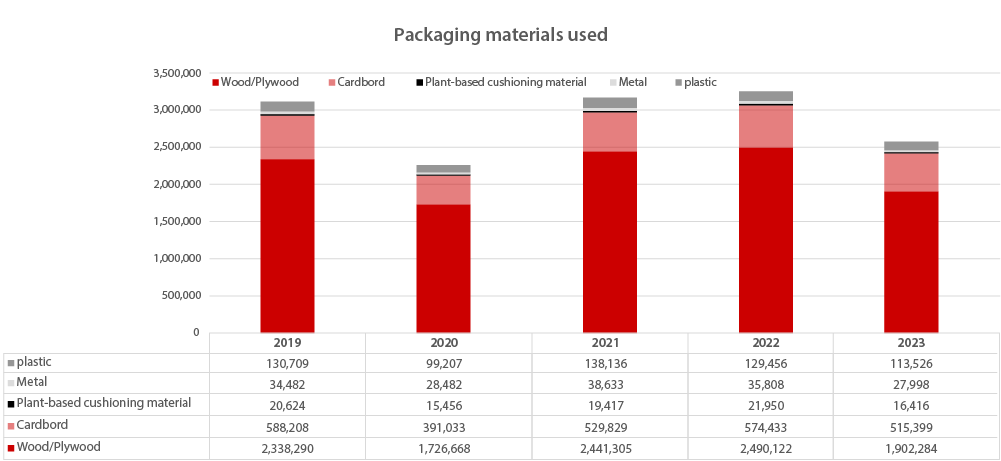
We have been consistently improving our packaging efficiency while ensuring the safe delivery of products to our customers after shipment and local transportation. Introducing a new concept for equipment transportation in Japan, we are promotint the use of rail, ship, and other means of transportation that emit less CO2. Our packaging materials are mainly based on renewable and recycled materials, and we ensure that any wood used is FSC*-certified.
- Forest Stewardship Council
Circular Economy
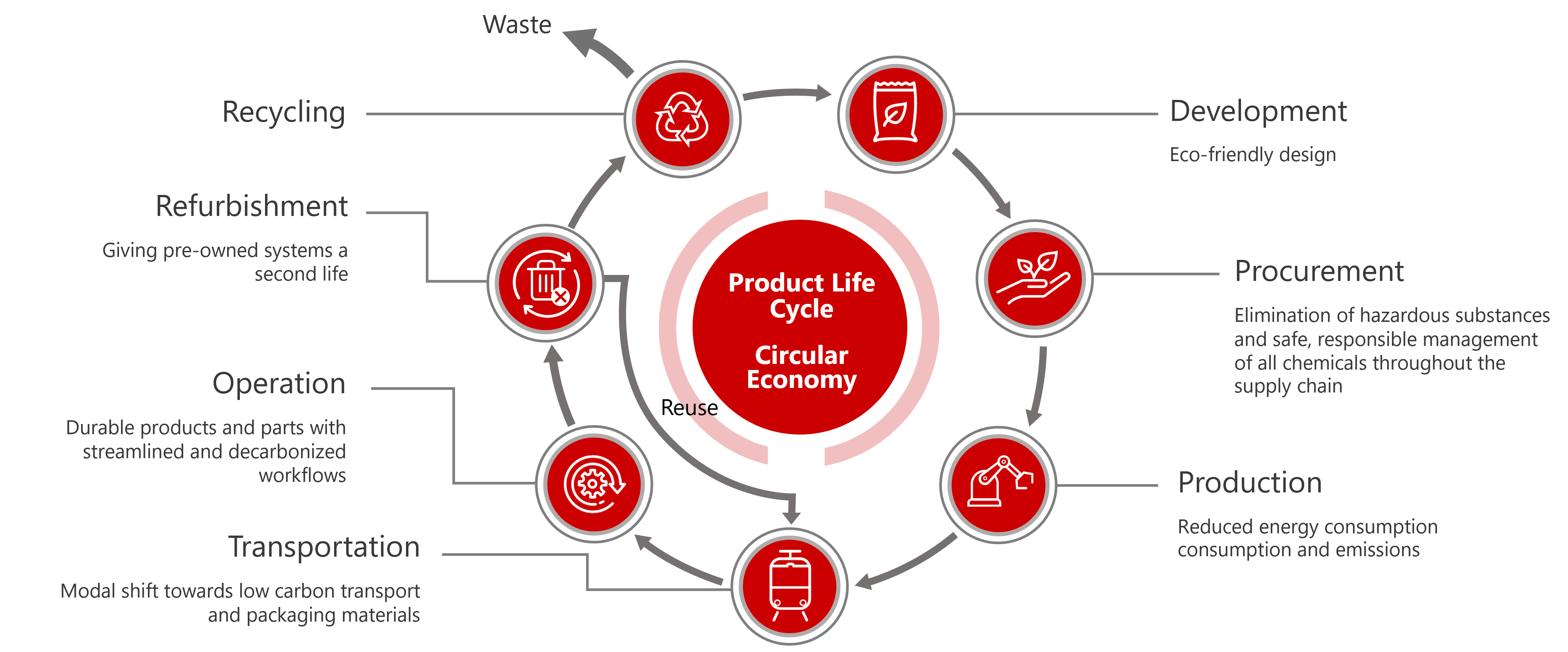
To ensure the most effective use of resources in our business, we are engaged in refurbishing used products and reusing used parts.
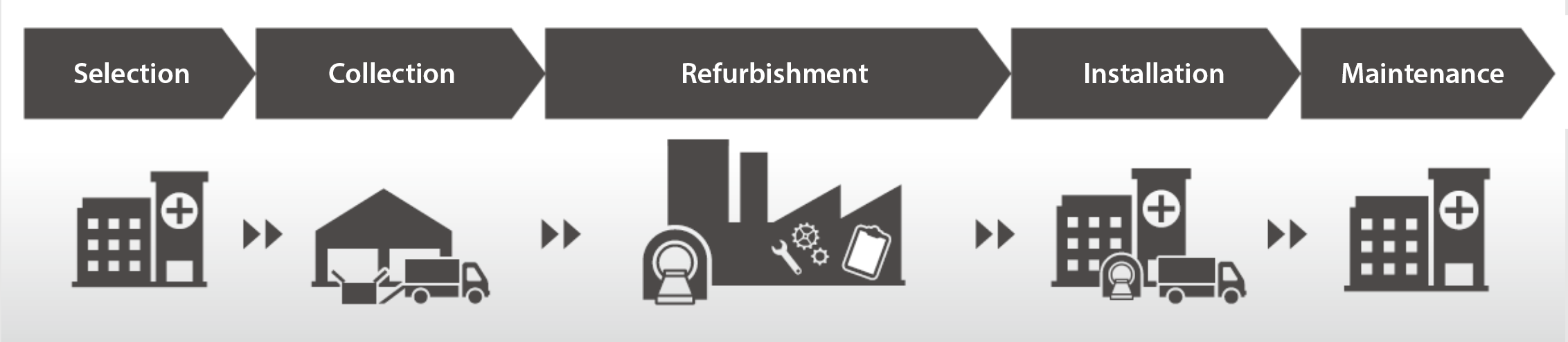
We have a robust refurbishment program called "Secondlife" that complies with IEC63077*, the international standard for the refurbishment and maintenance of used medical imaging equipment.
Secondlife first selects and collects used medical imaging equipment. Next, the equipment we accept into the program is disinfected, cleaned (including repainting), tested for functionality and performance, and thoroughly checked for safety. Finally, the equipment is packaged, safely transported, and installed.
Alongside this, we operate a second-hand parts supply system for reconditioned products to ensure reliable support (see figure below).
Suitable parts collected from products are inspected, sorted, cleaned, verified, and quality tested, before being sent to our parts center for use in repairs.
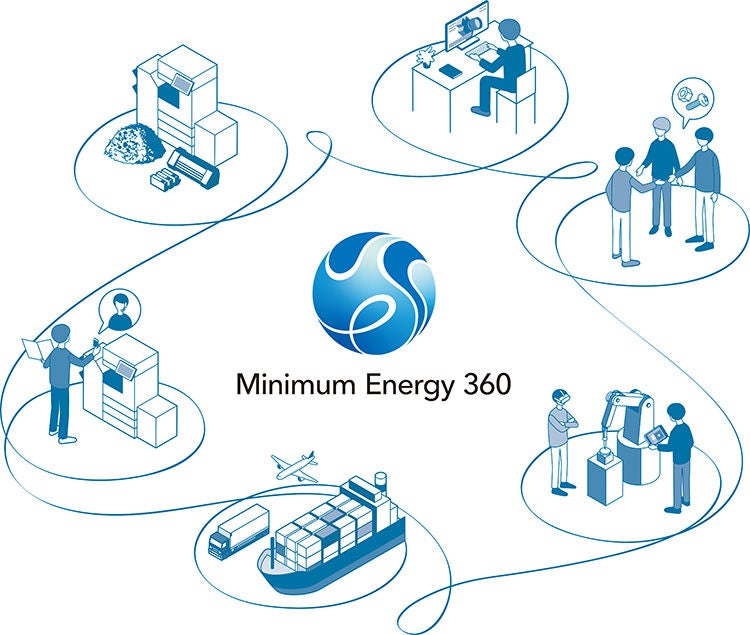
A Collective Focus on Environmental Initiatives
Learning to Save the Planet
We provide environmental training to all our employees, including those from contracting companies, to ensure compliance with our environmental policies and activities. In 2023, over 6,496 people completed their environmental education. Additionally, we offer training for specialists and internal environmental auditors to assist them in maintaining maximum adherence within their teams and departments. Environmental training is also a part of the onboarding process for newly hired employees.
Raising Awareness of Biodiversity
Since 2013, we have been organizing events to help people understand the importance of biodiversity. In 2023, our focus was local. Biological surveys were conducted at Head Office, and we planted trees and other plants to enhance biodiversity in the grounds of our Headquarters.
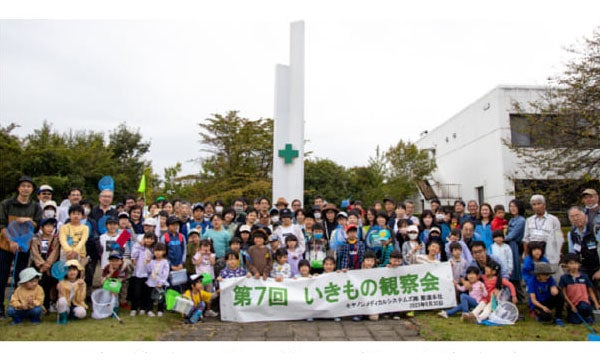 The 7th observation of flora and fauna in the local area
 Tree planting event
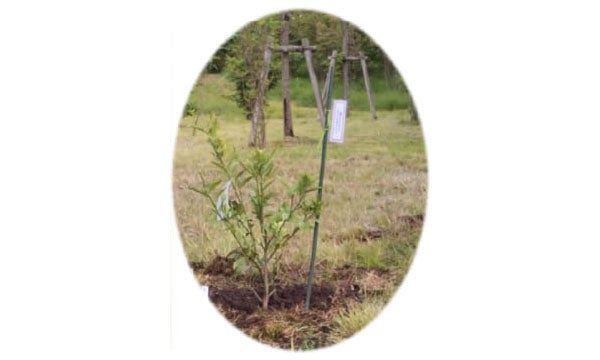 Satsuma mandarin orange (Citrus unshiu)
Setting the Highest Standards
Environmental Vision
Environmental Policy
Managing with the Environment in Mind
- "Canon": Represents the entire group including Canon Inc. and all of its consolidated subsidiaries.
- "Canon Inc.": Represents Canon Inc. alone.
- “Canon Medical Systems”: Represents the entire group including Canon Medical Systems Corporation. and all of its consolidated subsidiaries.
- "Canon Medical Systems Corporation": Represents Canon Medical Systems Corporation alone.
Social Media


