

At the Forefront of Elite MSK Ultrasound with the Aplio i800 / Prism Edition
Aaron Fleming is a Senior Sonographer at Qscan Radiology’s Red Hill Clinic in Brisbane, Australia – a leading diagnostic medical imaging and interventional practice that provides the imaging for numerous professional sporting teams and organizations as well as the general public. Aaron has a particular interest in MSK ultrasound that has evolved from an unparalleled passion for sport – a product of his upbringing in country NSW. One of the first specialists to scan with the new Aplio i-series / Prism Edition ultrasound system from Canon Medical, Aaron explained to VISIONS how the advanced new features and improved ergonomics enhance the scanning experience and facilitate greater accuracy in ultrasound diagnoses.
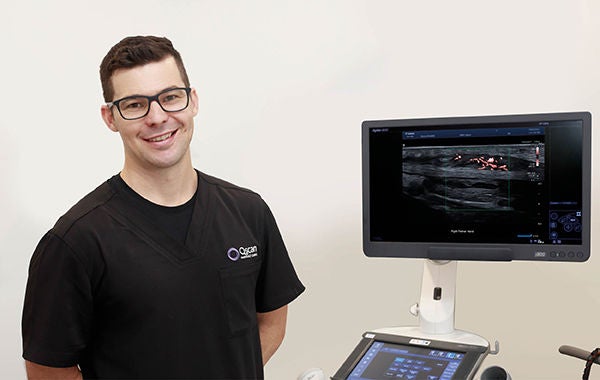
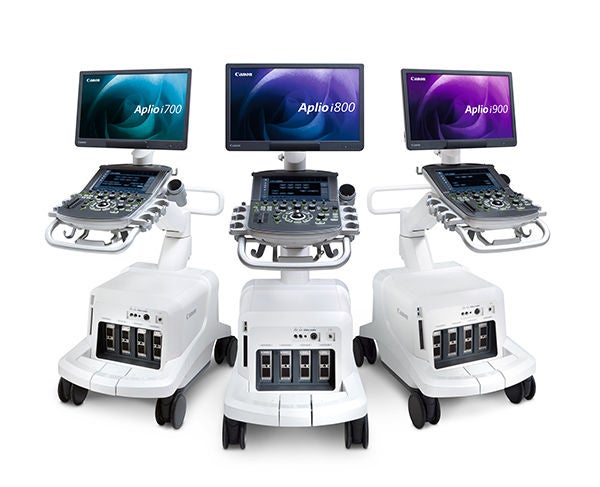
In addition, there are a number of really smart new features that improve the overall scanning experience. Some highly advanced new technologies, the customizable control panel and interface, the electric lift button and the increased versatility of the transducers were all striking additions to the new Aplio i-series / Prism Edition.
iBeam+ technology on the new Aplio i-series / Prism Edition emits, receives and processes ultrasound with up to four times faster image processing. The improved bandwidth and processing power of the iBeam+ beamformer results in images with better penetration and detail resolution, so more can be seen without having to switch to a lower frequency transducer.
Aplio's innovative Full Focus function enables clear, uniform images from near to far field without the need for tedious focus adjustments. With fewer application steps and greater uniformity, this can be particularly useful for a number of examinations.
Next-generation Superb Micro-vascular Imaging (SMI) capability on the Prism Edition is further enhanced to provide a higher frame rate, leading to better visualization and less clutter. Doppler luminance also produces an aesthetically pleasing image.
Advantages of the Prism Edition for MSK
‘From an MSK point of view, I think this system can help challenge and even overturn the notion that MRI is the gold standard for MSK imaging,’ Aaron says. Ultrasound offers many benefits over MRI such as availability, cost and superior spatial resolution to name but a few. Tendon and especially nerve assessment with ultrasound can trump MRI. Furthermore, ultrasound can be used for screening checks and in the rehab and progress of various injuries providing invaluable prognostic information and up-to-date return to play estimates for the team that oversees the care and treatment of professional and amateur athletes.
“There are a number of new, really smart features that improve image quality as well as the scanning experience.”
Versatile transducers
“The Prism Edition’s transducers are very versatile. The matrix probes all produced fantastic images and you could have quite easily performed the same scan with a number of different probes with no loss in scanning confidence.”
For Clinical Case 1 – Aaron used a High Frequency 24 MHz (i24LX8) linear matrix transducer, to demonstrate an intact Flexor Digitorum Profundus (FDP) and Flexor Digitorum Superficialis (FDS) tendons of the second finger. However, there were changes to the echogenicity of the adjacent lumbrical muscle. The muscle appeared enlarged and heterogenous with anechoic areas consistent with fluid. Increased vascularity was detected with SMI using Doppler luminance. These findings are consistent with a partial tear of the first lumbrical muscle of the hand – an unusual occurrence.
In another case, Clinical Case 3, the Aplio i800 / Prism Edition's 22 MHz High Frequency Hockey Stick transducer (i22LH8) was used to scan the thumb of an elite AFLW player – whose thumb was injured in a contest. A full thick- ness tear of the RCL and an avulsion fracture of the first metacarpal joint were visualized. Ultrasound findings also suggested a partial thickness tear of the UCL with no Stener lesion.
Canon Medical provides two high-frequency hockey sticks from 17 to 22 MHz with the Aplio i800 / Prism Edition. Both hockey sticks have a very fine footprint that allows easy access for imaging superficial areas in hard- to-reach anatomical places. ‘The interventional radiologists were also big fans of the hockey stick transducers.’

Qscan
Qscan Radiology Clinics is a comprehensive Diagnostic Medical Imaging & Interventional practice with subspecialty trained Radiologists, and highly trained clinical and support staff across multiple clinics in South-East Queensland and additional Qscan Group partner clinics elsewhere in Australia.
Qscan Radiology has a team of Radiologists who are highly experienced in sport imaging. https://www.qscan.com.au
Better ergonomics
Ergonomics are an important aspect of scanning for any sonographer.
Aaron found that the electric lift button as a sit/stand sonographer improved this aspect tremendously.
He also found the Aplio i800 / Prism Edition was very customizable which added benefits not just to ergonomics but in flattening the learning curve inherent in adjusting to a new machine.
“Similar to previous models, you have control over the setup of the control panel and interface. Therefore, there is next to no lag time in adjusting to a new machine,” he said. “Furthermore, the additions to previous models are all very intuitive, so it was very easy-to- use, and the learning curve was very smooth.”

“New, highly advanced technologies, the customizable control panel and interface, the electric lift button are all striking features to the versatility of the Aplio i-series / Prism Edition.”
Biography
Aaron Fleming is a Senior Sonographer at Qscan Radiology Red Hill Clinic, in Queensland, Australia – a leading diagnostic medical imaging and interventional practice with a high level of expertise in sport imaging. Aaron has a particular interest in MSK that has evolved from his passion for sport.
He graduated from radiography at Newcastle University in 2009 and completed a post-graduate diploma in Medical Ultrasound at Queensland University of Technology (QUT), Brisbane, Australia, in 2013.

Clinical Cases
Case 1: Lumbrical Tear
This case features a 49-year-old female patient who sustained an injury at yoga, and was referred for an ultrasound of her right hand. The patient presented with a small lump on the palmar aspect of her right hand, over the second metacarpal. She also had pain associated with flexion and extension of the index finger. Differential diagnosis at the time of referral was Dupuytren’s contracture, a collagen disorder where the fascia in the hands becomes thickened and fibrotic. The abnormal collogen proliferation of this disorder means the condition will often first present as a thickening or nodule in the palm.
The Flexor Digitorum Profundus (FDP) and Flexor Digitorum Superficialis (FDS) tendons of the second finger were seen intact however there were changes to echogenicity of the adjacent lumbrical muscle. The muscle appeared enlarged and heterogenous with anechoic areas consistent with fluid. Increased vascularity was seen with Superb Microvascular Imaging (SMI) using Doppler luminance. These findings are consistent with a partial tear of the first lumbrical muscle of the hand.
An interesting case study of an uncommonly seen lumbrical injury.
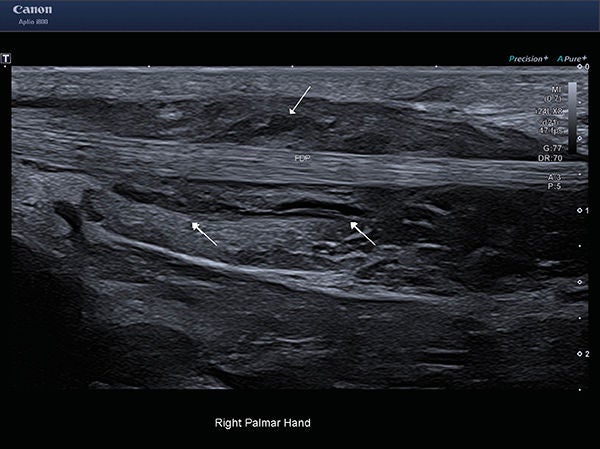 Figure 1: The FDP tendon in the longitudinal plane. Changes in echogenicity of the adjacent muscle are clearly demonstrated.
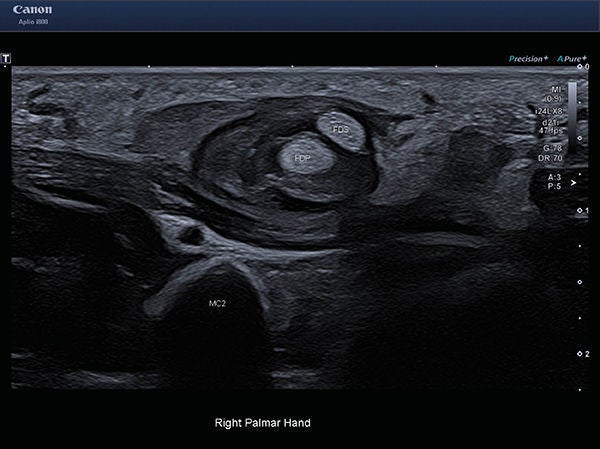 Figure 2: Transverse imaging of the same area shows the FDP and FDS in cross section with surrounding changes of the lumbrical muscle.
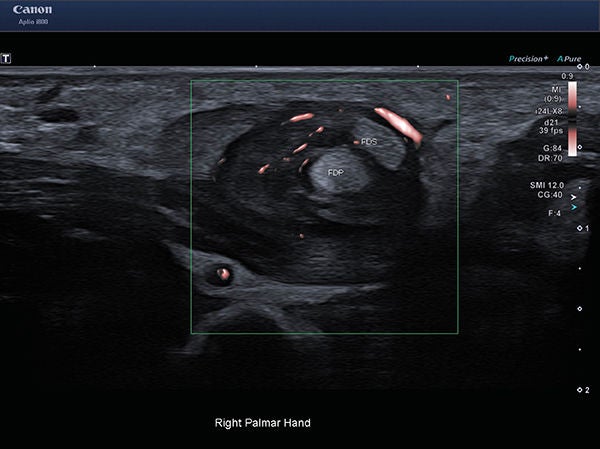 Figure 3: Increased vascularity was demonstrated. SMI helps to detect and demonstrate the detail of the fine vessels in the area of interest.
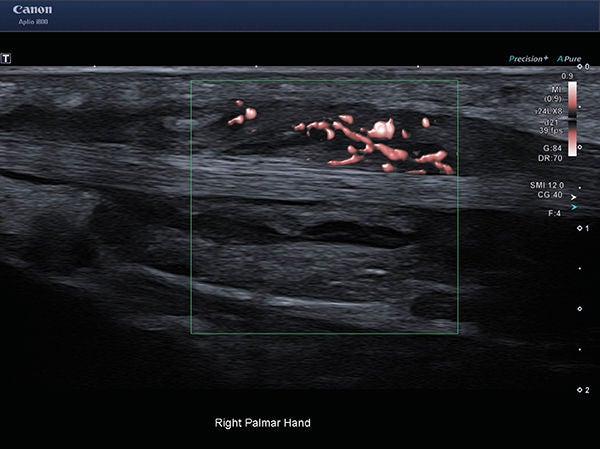 Figure 4: Longitudinal imaging with SMI shows marked hypervascularity to the injured region.
- Ultrasound examination was performed using a High Frequency 24 MHz (i24LX8) intelligent Dynamic MicroSlice (iDMS) transducer.
Case 2: Distal Biceps Tear
This case study follows a 52-year-old firefighter who pre- sented to his doctor with pain in his left elbow upon pronation and supination. There was no acute injury reported by the patient. Possible distal biceps tendinosis was thought to be the cause of his symptoms.
The scan revealed a high-grade partial tear of the distal biceps at its insertion, predominantly involving the long head of biceps. Some vascularity in the distal biceps was also demonstrated with Superb Microvascular Imaging (SMI). Post diagnosis, it was recommended that the patient return for a Platelet Rich Plasma (PRP) injection into the area to help with tendon repair and alleviate symptoms.
Partial tear findings of the long head of biceps are an import- ant diagnosis to help prevent the possibility of further full thickness tearing. The deep section of the distal insertion of biceps can be difficult to image.
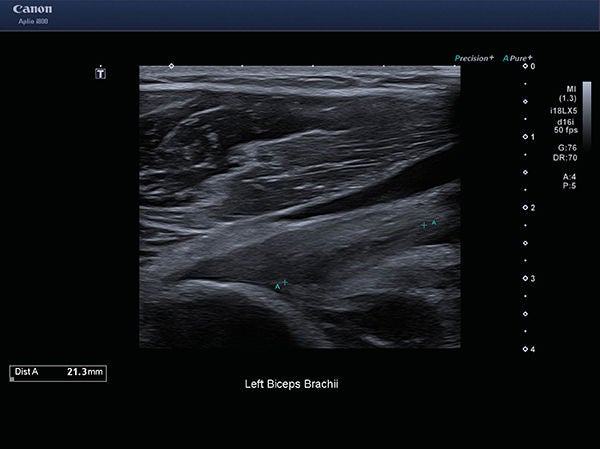 Figure 1: The biceps can be seen at its distal insertion onto the radial tuberosity. The deep portion of the tendon is seen to be heterogenous over an area of 21mm thought to be consistent with a partial tear of this tendon.
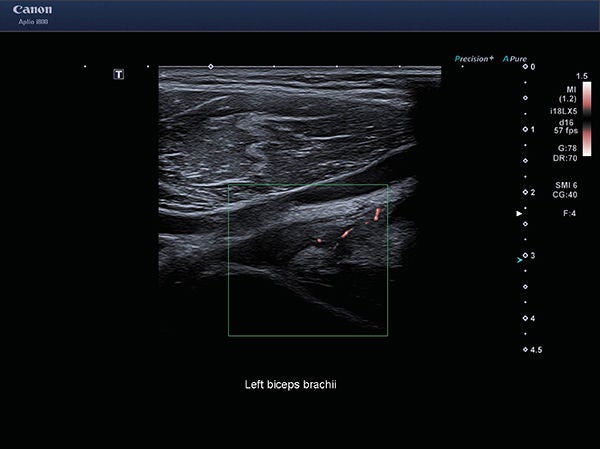 Figure 2: SMI shows some increased hyperaemia in the region of interest.
- Ultrasound examination was performed using the versatile 18 to 5 MHz (i18LX5) intelligent Dynamic MicroSlice (iDMS) transducer able to cover all joints and MSK structures from skin to bone.
Case 3: Radial Collateral Ligament Tear
A 29-year-old female AFL player presented with pain in the first metacarpophalangeal joint (MCP) following a hyper-extension injury.
A full thickness tear of the radial collateral ligament (RCL) and an avulsion fracture of the first metacarpal joint were visualised. Ultrasound findings also suggested a partial thickness tear of the ulnar collateral ligament (UCL) without a Stener Lesion.
The ulnar and radial collateral ligaments are the two main supporting structures that traverse the metacarpophalangeal (MCP) joint of the thumb. Forced adduction is the most common cause of injury to the RCL, while forced abduction movements are the cause of most acute injuries to the UCL. The damage sustained to both ligaments were clearly demonstrated in this hyperflexion case.
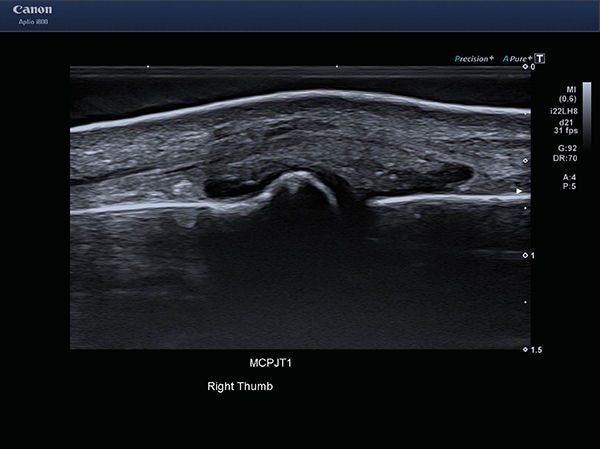 Figure 1: Imaging of the MCP Joint clearly demonstrates fluid emanating from the joint.
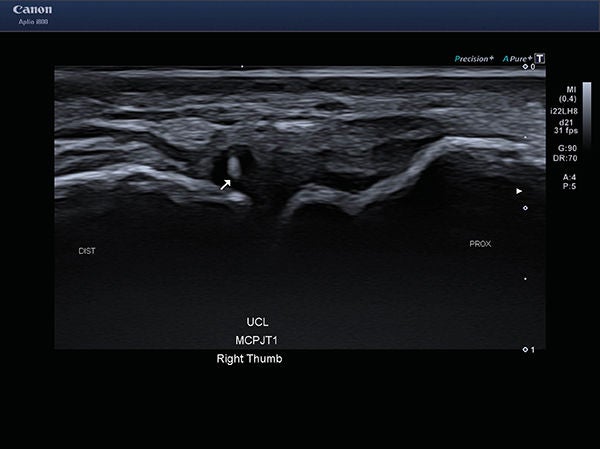 Figure 2: Imaging of the UCL shows and echogenic area at the distal portion of the ligament. Findings are suggestive of a partial tear.
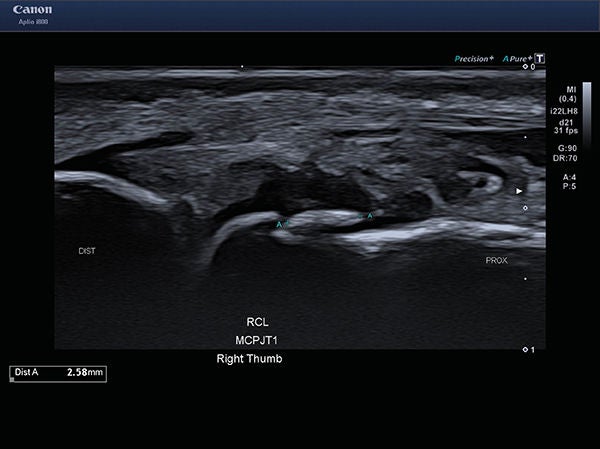 Figure 3: Imaging of the RCL of the thumb shows a 2.5mm echogenic area at the proximal portion of the ligament suggestive of an avulsion fracture.
- An ultrasound examination was performed using a 22 MHz High Frequency Hockey Stick transducer (i22LH8) with very fine footprint allowing easy access for imaging superficial areas in hard-to-reach anatomical places.
The content reflects information available at the time of publication and may differ from current information.
Social Media


