

Zoom DWI – DWI without Aliasing Artifact
Yuki Takai
When scanning small organs like prostate and spinal cord, implementation of a small field of view (FOV) and high spatial resolution is required. However, if FOV of phase encoding direction (PE-FOV) is small, it can cause aliasing artifacts. Therefore, some special methods are suggested to prevent these types of aliasing artifacts 1-7.
Canon Medical Systems Corporation implements Zoom diffusion-weighted imaging (DWI) applications to remove aliasing artifacts. In Zoom DWI, the excitation pulses are rotated by a certain angle related to the refocus pulses to selectively excite the acquisition FOV, making it possible to eliminate aliasing artifacts in the PE direction. The rotation angle of the excitation pulses depends on the gap between the acquisition, FOV and the slice. Therefore, it is recommended to set a large gap or perform multi-coverage acquisition such as Coverage Interleave or Double Coverage Interleave. To support multi-slice acquisition, the signals in the transition FOVs (regions where the excitation pulse interacts with the refocus pulse outside the PE-FOV) are suppressed by the outer volume suppression (OVS) pulses. Aliasing artifacts caused by the side lobes of the radio frequency (RF) pulses generated by the OVS pulses are suppressed by setting NoWrap.
This makes it possible to narrow PE-FOV, which also makes it possible to reduce distortion in principle.
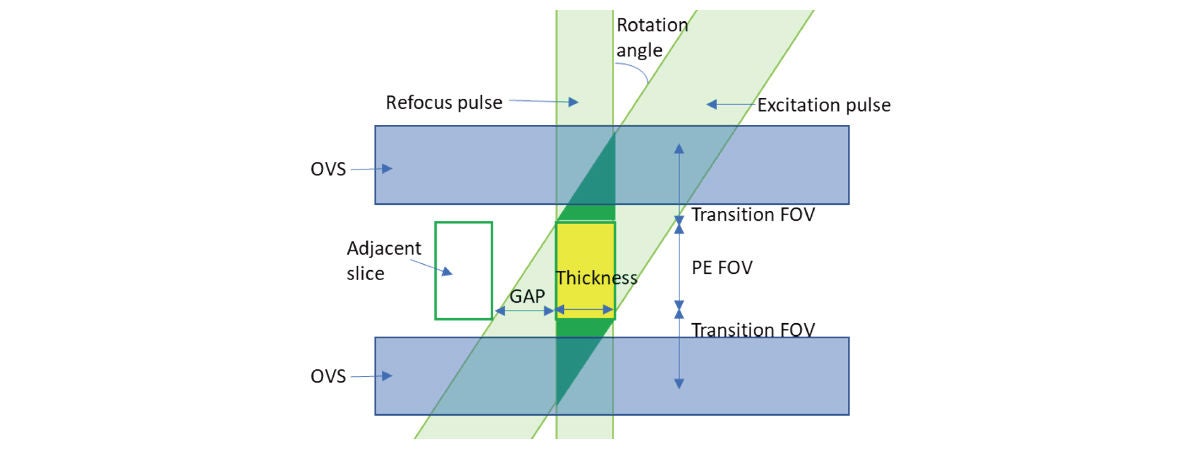 Figure 1: Schematic representation of Zoom DWI
This article demonstrates the effectiveness of Zoom DWI.
Firstly, aliasing artifacts were evaluated.
| Target: | ACR phantom |
| Scan conditions: | PE × RO matrix = 160 × 160 FOV = 12 × 24 cm (Zoom DWI), 24 × 24 cm (Conventional DWI) ST = 4 mm, Slice = 30 slices, Plane = Axial, Averaging = 1, Echo Space = 0.9 ms SPEEDER acceleration factor = 2.0 (Exsper) |
Conventional DWI and Zoom DWI were acquired under the FOV 12 × 24 cm, where aliasing artifacts were found in Conventional DWI.
Below is the comparison image between Zoom DWI and Conventional DWI.
It is demonstrated that Zoom DWI enables the ability to reduce aliasing artifacts while Conventional DWI does not (red arrow).
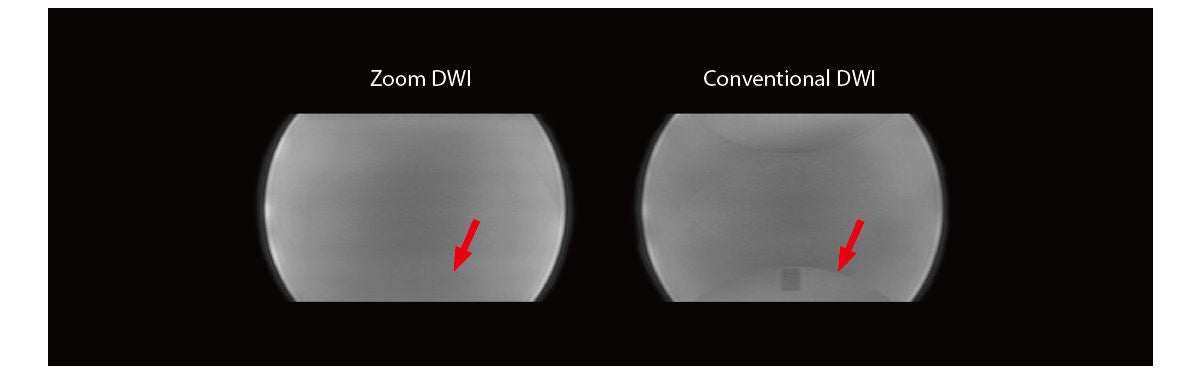 Figure 2: Comparison between Zoom DWI and Conventional DWI in terms of aliasing artifacts
Secondly, distortion was evaluated.
Conventional DWI (FOV 24 x 24 cm) and Zoom DWI (FOV12 x 24 cm) were acquired.
The amount of distortion is measured by setting a straight-line region of interest (ROI) with respect to the grid at the center of the grid phantom and measuring the amount of deviation between the grid and the straight-line ROI.
The amount of distortion on Zoom DWI is 2.2 mm and on Conventional DWI is 4.4 mm, demonstrating that the amount of distortion is halved under the half PE-FOV condition.
This demonstrates that Zoom DWI enables the ability to reduce distortion correctly.
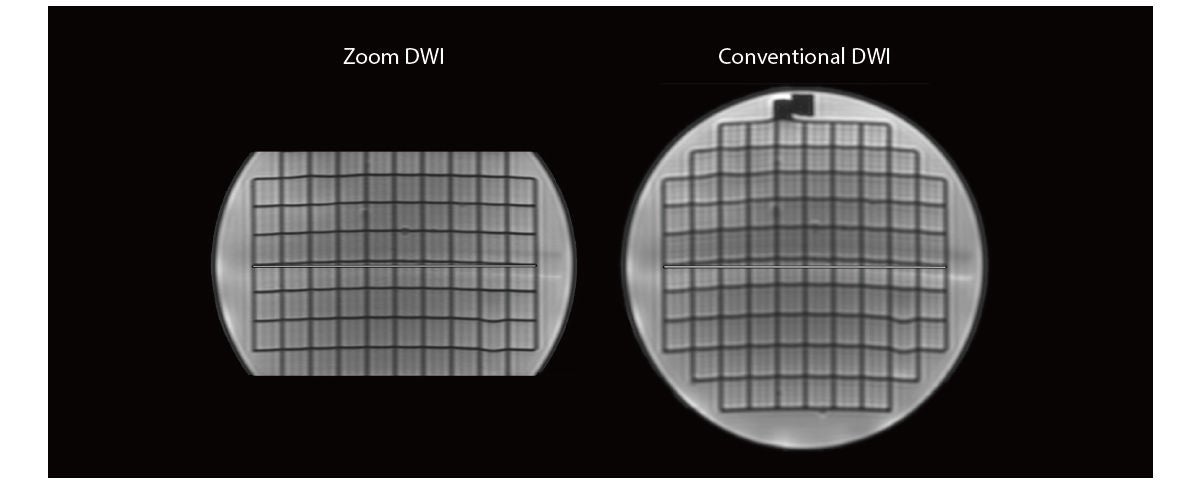 Figure 3: Comparison between Zoom DWI and Conventional DWI in terms of distortion
Finally, volunteer images were evaluated.
| Scan conditions: | TR = 4400 ms, TE = 72 ms PE × RO =96 × 96 (Zoom DWI), PE × RO = 112 × 112 (Conventional DWI) FOV=13 × 13 cm (Zoom DWI), 24 × 24 cm (Conventional DWI) ST = 3 mm, Slice = 30 slices, Plane = Axial, Averaging = 7, EchoSpace = 0.7 ms SPEEDER acceleration factor = 2.0 (Exsper) Fatsat = SPAIR (Zoom DWI), PASTA+SPAIR (Conventional DWI) |
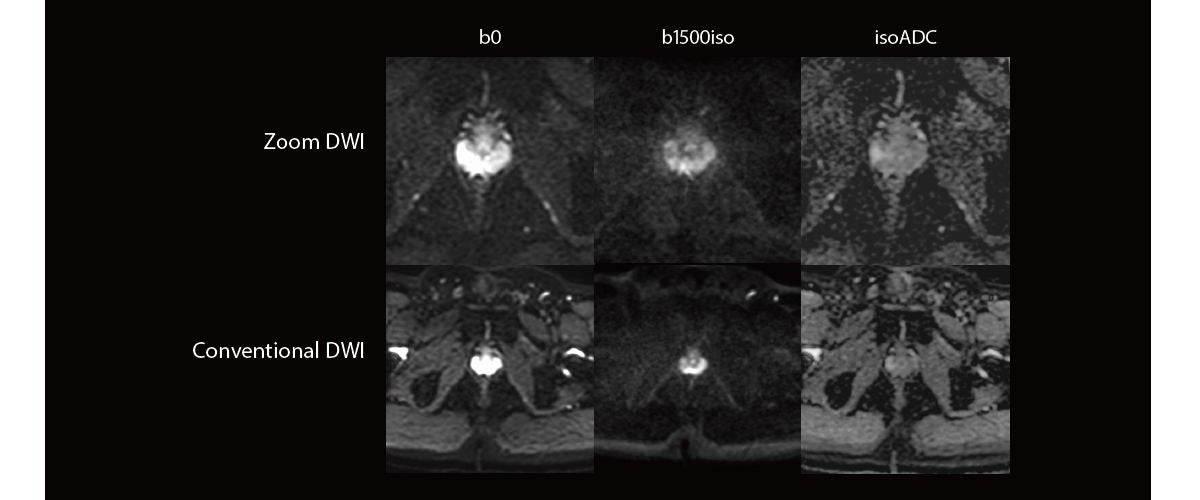 Figure 4: Prostate image (Volunteer)
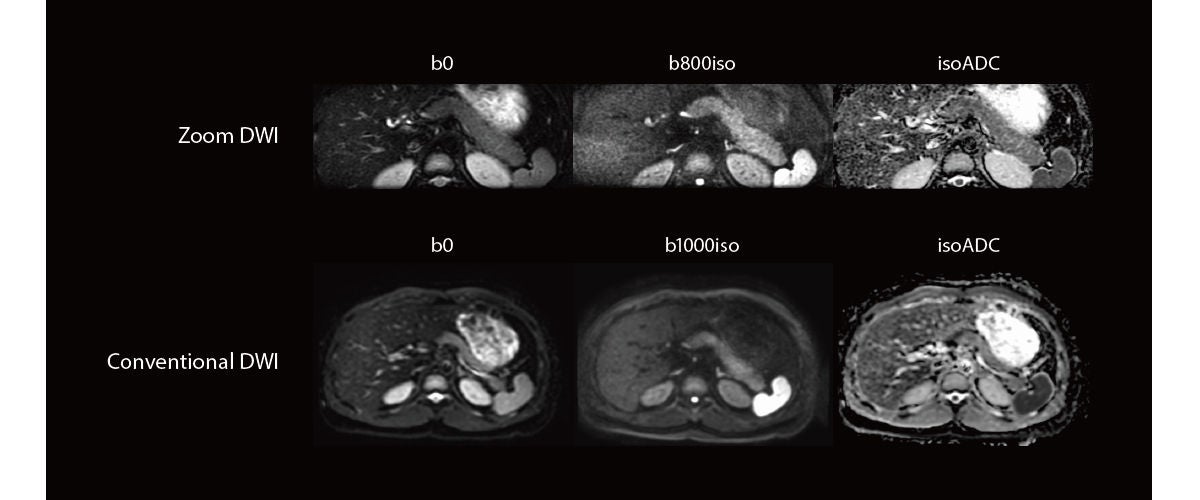 Figure 5: Pancreas image (Volunteer)
It is shown that aliasing artifacts do not occur, and the amount of distortion is reduced even when the PE-FOV is reduced. In addition, small PE-FOV makes it possible to eliminate signals from unwanted tissues outside the ROI. While resolution is increased, signal-to-noise ratio (SNR) is decreased by narrowing PE-FOV.
In conclusion, Zoom DWI has been shown to reduce aliasing artifacts and the amount of distortion by narrowing PE-FOV. //
References
- Bottomley PA, Hardy CJ. Two-dimensional spatially selective spin inversion and spin-echo refocusing with a single nuclear magnetic resonance pulse. J Appl Phys 1987; 62:4284-4290. (Original description of 2D RF pulses.)
- Feinberg DA, Hoenninger JC, Crooks LE, et al. Inner volume MR imaging: technical concepts and their application. Radiology. 1985;156:743–747. (early method using intersection of two perpendicularly excited slabs to limit imaged volume)
- Frahm J, Merboldt K-D, Hänicke W. Localized proton spectroscopy using stimulated echoes. J Magn Reson 1987; 72:502-508. (the STEAM technique, commonly used in MR spectroscopy to excite a single voxel using three perpendicular excitation pulses)
- Ma C, Xu D, King KF, Liang Z-P. Reduced field-of-view excitation using second-order gradients and spatial-spectral radiofrequency pulses. Magn Reson Med 2013; 69:503-508.
- Pauly J, Speilman D, Macovski A. Echo-planar spin echo and inversion pulses. Magn Reson Med 1993; 29:776-782.
- Saritas EU, Cunningham CH, Lee JH, Han ET, Nishimura DG. DWI of the spinal cord with reduced FOV single-shot EPI. Magn Reson Med 2008; 60:468-473.
- Wilm BJ, Svensson J, Henning A, et al. Reduced field-of-view MRI using outer volume suppression for spinal cord diffusion imaging. Magn Reson Med 2007; 57: 625–630.
Disclaimer
Some features presented in this article may not be commercially available on all systems shown or may require the purchase of additional options. Due to local regulatory processes, some commercial features included in this publication may not be available in some countries. Please contact your local representative from Canon Medical Systems for details and the most current information.
Yuki Takai
Deputy Manager
MR Clinical Application Group
MRI Systems Development Department, MRI Systems Division
Canon Medical Systems Corporation
For more information

The content reflects information available at the time of publication and may differ from current information.
Social Media


