

Dilatation of Virchow-Robin Perivascular Spaces
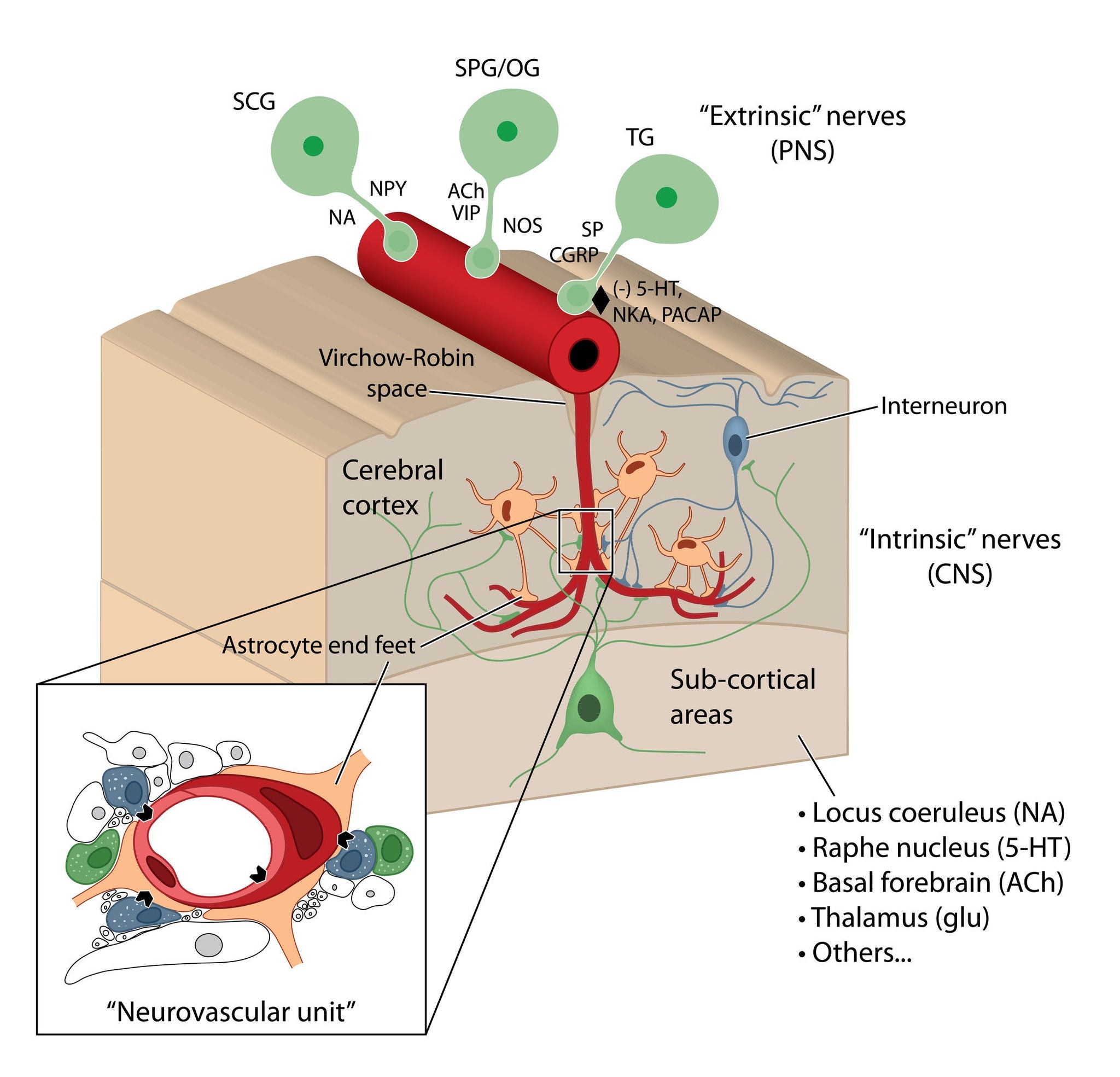
Complication
- Hydrocephalus
Possible treatments
- Only giant dilatations require close monitoring and treatment
- Ventriculocisternostomy (surgical treatment performed using an endoscope, an optical tube that can be introduced into the cerebral ventricles)
- A fenestration gesture (opening breakthrough of the Virchow-Robin perivascular spaces dilation can be associated if necessary).
In Vitrea
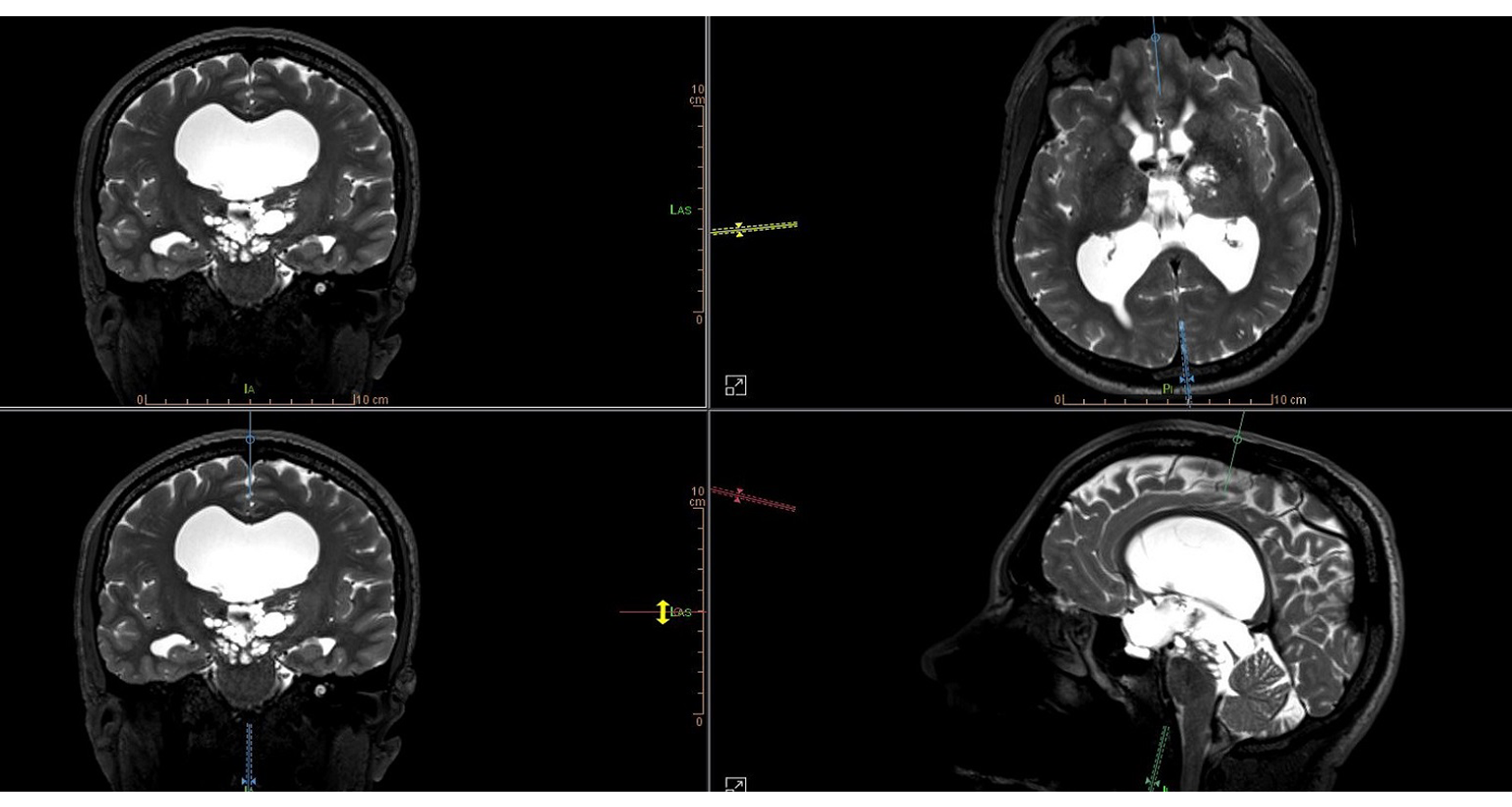
The viewer on enterprise platform provides good visualization and analysis of Virchow and Robin spaces dilatations from an isotropic FSE T2 sequence acquired in the three planes as well as the visualization of hydrocephalus (Figure 2). The MPR (Multi-Planar Reconstruction) and MIP (Maximum Intensity Projection) tools, also provided by this module, are particularly suitable for viewing and analyzing images.
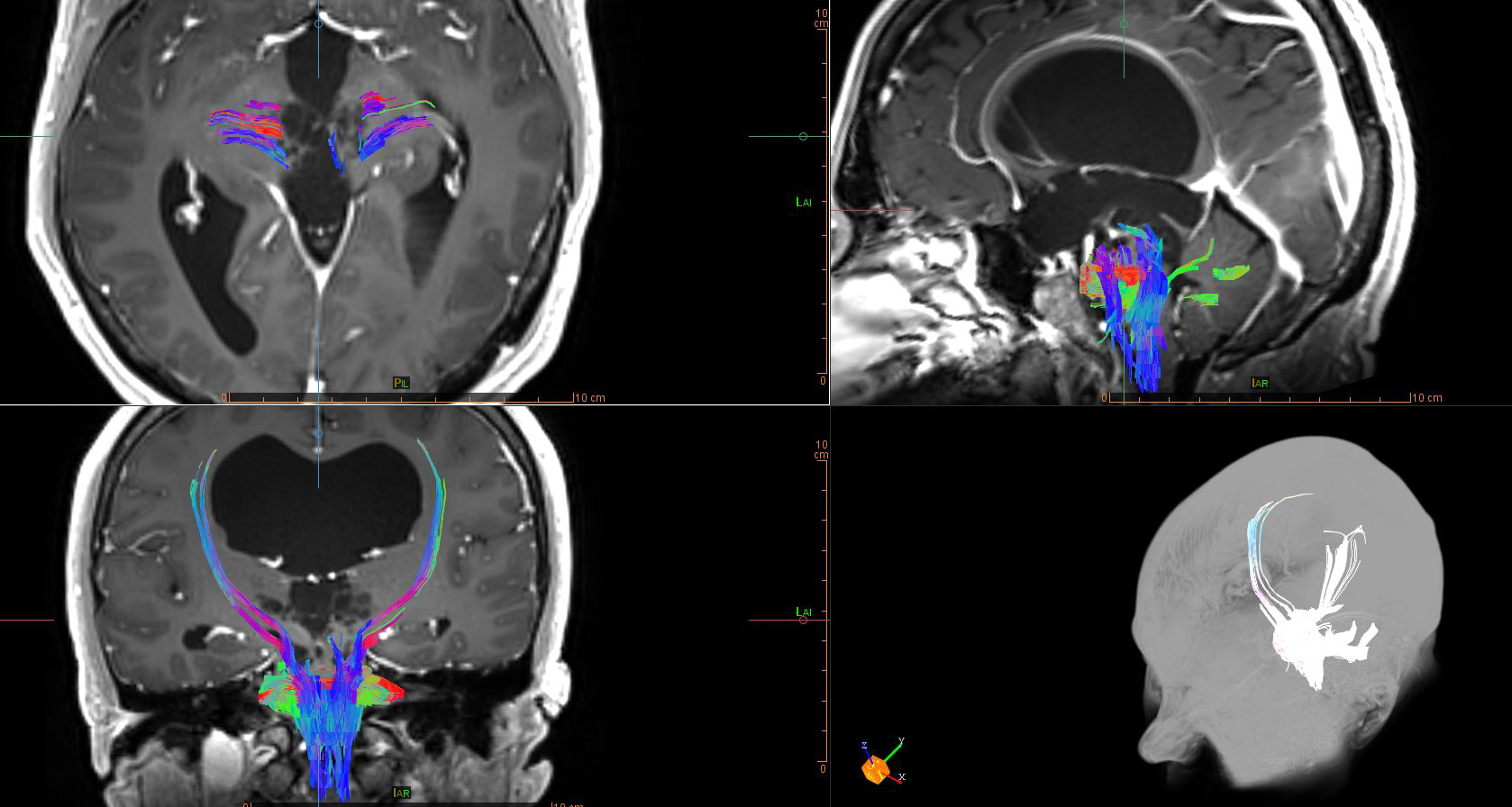
Thanks to diffusion tensor maps (DTI), it is possible to reconstruct and visualize the bundles of nerve fibers and thus analyze the repercussion on the latter of the different dilations, especially at the mesencephalon (Figure 3).
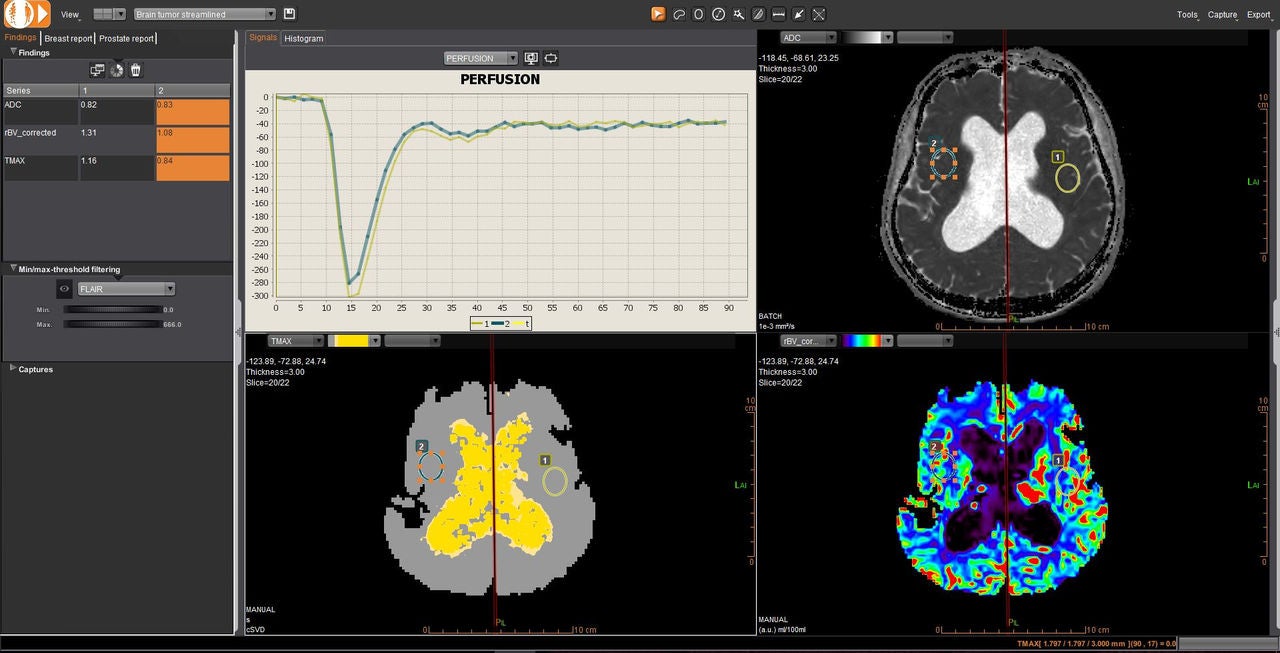
Cerebral perfusion applications with rapid computation of corrected rBV, Tmax and diffusion (ADC) maps can detect any potential dilation in cerebral vasculature (Figure 4).
A follow-up module facilitates the simultaneous visualization of the different examinations carried out as part of patient follow-up.
Addition
The enhancement of perivascular spaces is always pathological. It could occur in three major etiological contexts: vascularity (involvement of the vascular wall) ; infection (infectious meningitis, chronic perivascular infection like neurosyphilis...) ; tumor (intravascular lymphoma, glioblastoma, metastasis...).
Social Media


