

Pushing the Boundaries of Interventional Cardiology with Alphenix
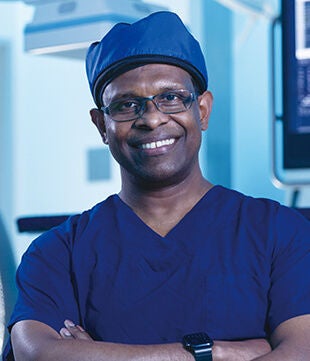
Dr. Sanjeevan Pasupati, Director of Structural Heart Disease & Cardiovascular Research at Waikato Hospital in Hamilton, New Zealand, is an interventional cardiologist specialized in angioplasty and percutaneous interventions for valvular and structural heart disease. As one of New Zealand's leading cardiologists in structural heart disease, he has mentored many international and local sites in the development of Transcatheter Aortic Valve Implantation (TAVI). Dr. Pasupati is internationally renowned for testing and developing new devices for structural and coronary disease and is widely published in this area. He is also a speaker at interventional meetings around the world and sits on the scientific advisory boards of various cardiac device companies.
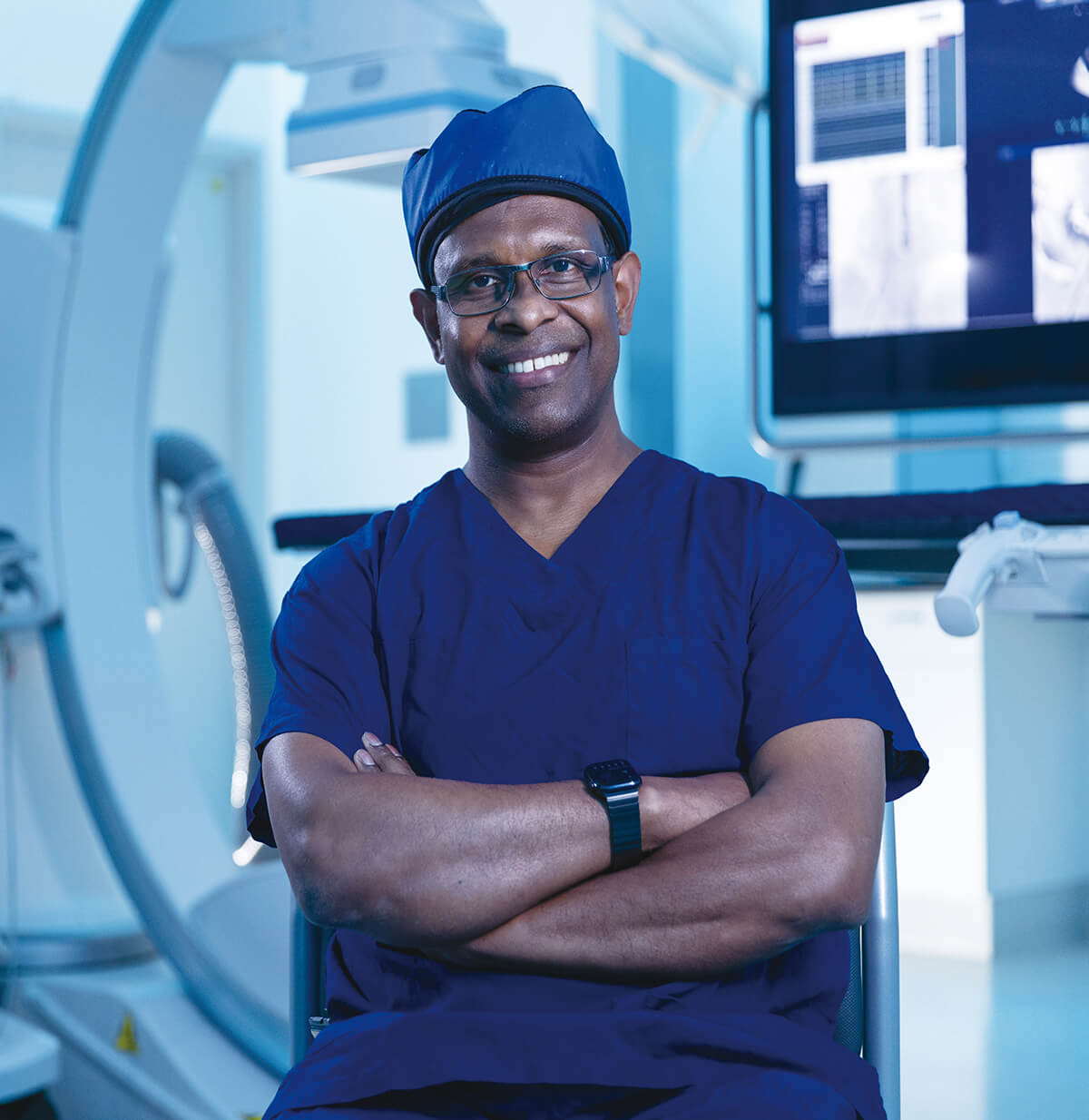 Dr. Sanjeevan Pasupati, Waikato Hospital in Hamilton, New Zealand
Waikato Hospital was the first comprehensive structural heart centre in New Zealand. It performs over one thousand PCIs a year and the number of complex PCIs and high-risk cardiac interventions is continually increasing. Dr. Pasupati attributes this increase to improvements in devices and pharmaceuticals, an increased understanding of equipment, and innovations in imaging technology.
“All of these advancements have an impact on the outcomes of angioplasty and have brought angioplasty indications more and more on par with bypass surgery for a lot of the cases we perform,” he says. “Now very seldom does a patient who comes with an acute cardiac coronary event go to a cardiac theatre. And if you want to push the boundaries, you need the right Cath Lab and ultrasound imaging.”
The hospital’s Alphenix system features a range of advanced technologies that help operators deliver the best possible outcomes to patients. “I would confidently recommend Canon interventional systems to any site looking to grow their interventional cardiology service, most importantly because they are the most reliable systems I have used."
You really can push the boundaries with the right Cath Lab and echo imaging.
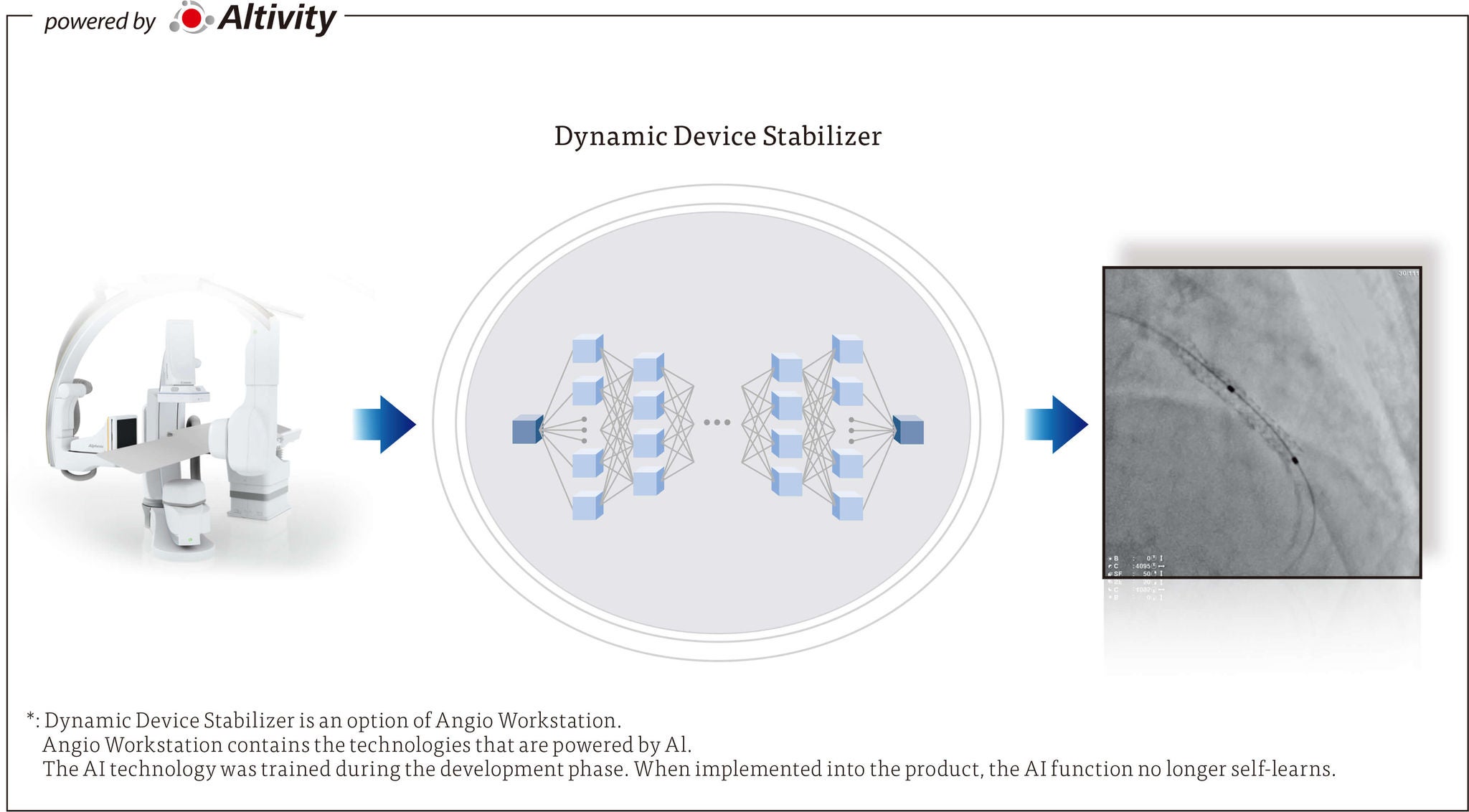
Dynamic Device Stabilizer (DDS) for real-time AI-assisted stent imaging
“Dynamic Device Stabiliser technology has been a great addition to our department. Using deep learning it automatically detects balloon markers in real time, without any manual input,” claims Dr. Pasupati. “Once detected the markers are held stable and surrounding structures such as stents are magnified and enhanced to allow easier assessment of device placement and deployment.”
Echo Fusion technology
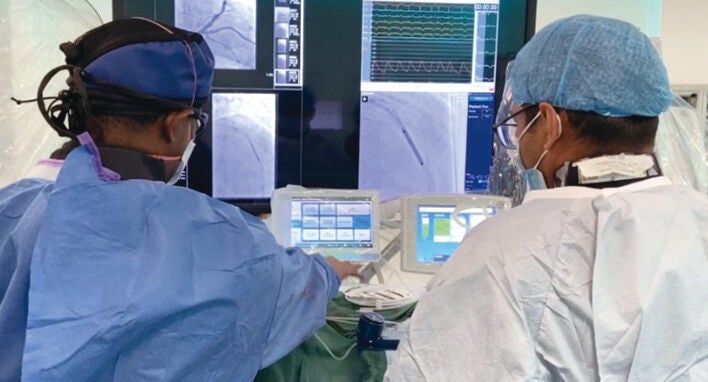
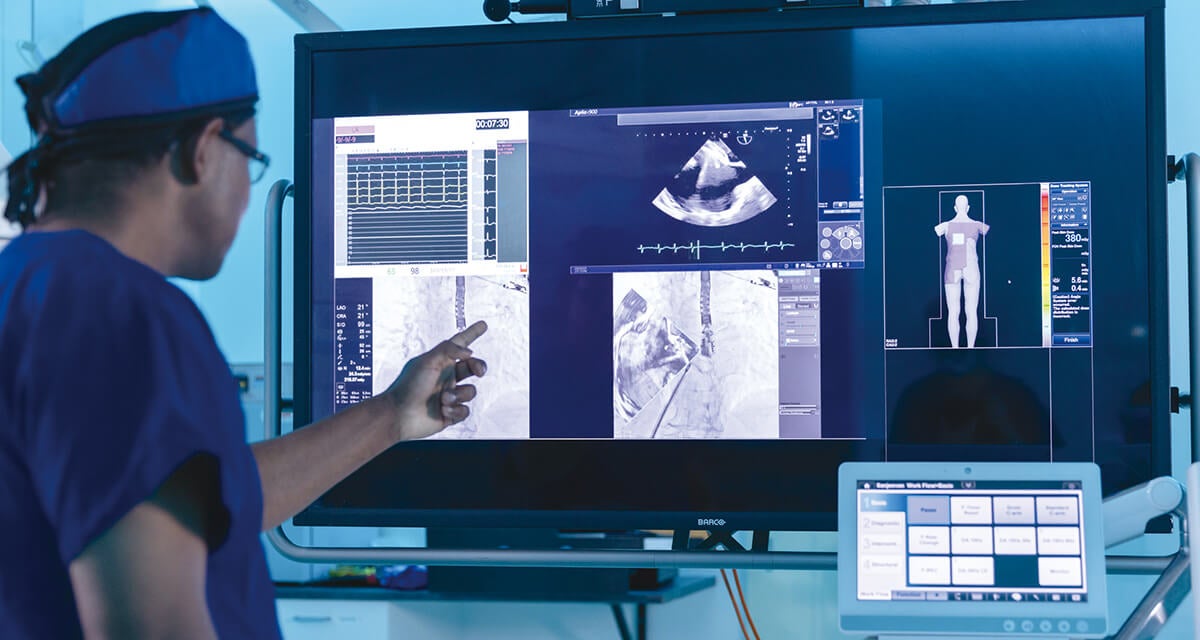
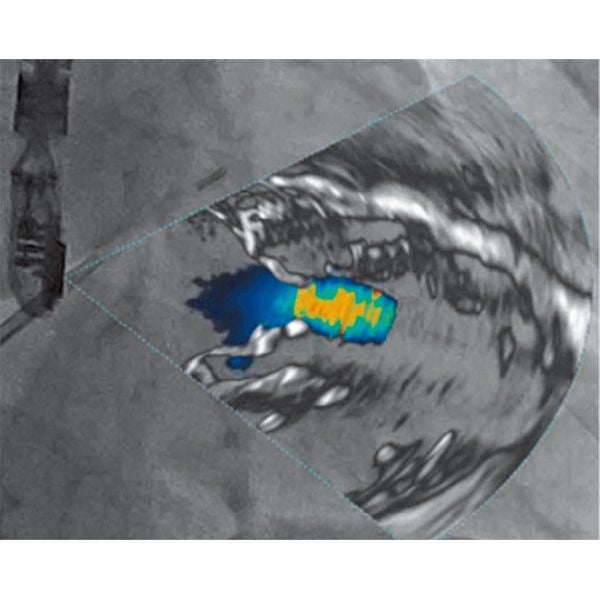
“The latest addition in advanced technology is to bring live Echo Fusion to the Cath Lab. Canon uses AI technology to automatically track the echo probe to maintain the accuracy of the fused images on the screen.
This means we can better concentrate on the case without spending time to highlight the probe position with the orthogonal fluoro imaging. It also gives us more confidence knowing there is a higher degree of accuracy of the fused images because of the continuous re-registration when the c-arm is moved. This is a unique feature for Canon advancing in this space.”
Canon’s Echo Fusion, powered by Altivity, uses deep learning for automatic probe detection within 5 seconds of pressing the fluoro pedal.
The system operates as a function within the Alphenix Workstation Pro and provides a 3D roadmap of the TEE overlaying live fluoroscopy. The marker and color Doppler are also displayed in parallel to the main image display.
AI is used for automatic detection of the probe position, reducing the number of workflow steps and increasing examination speed.
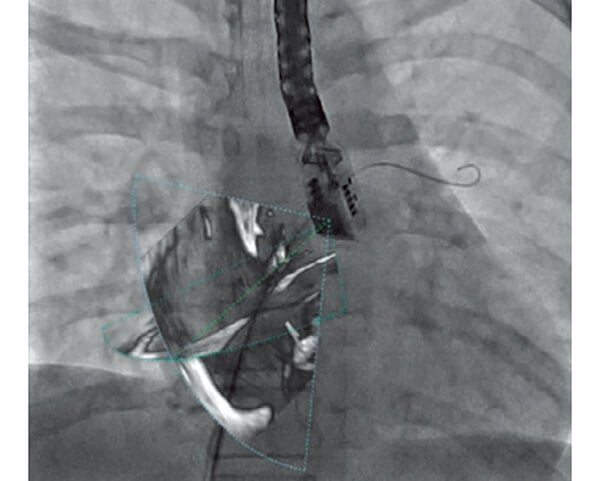 Zero click probe detection or Automatic probe detection
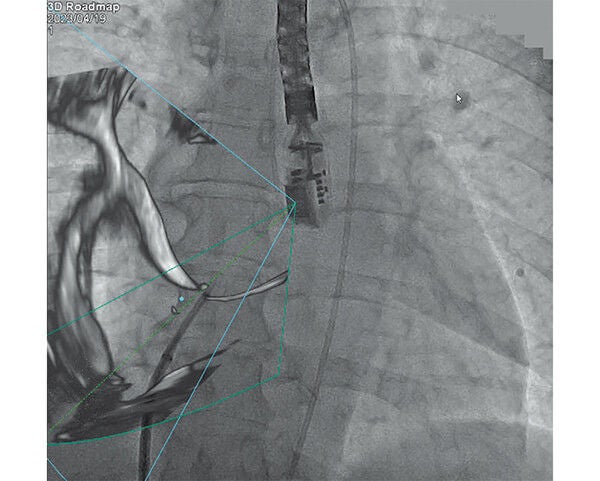 Marker display
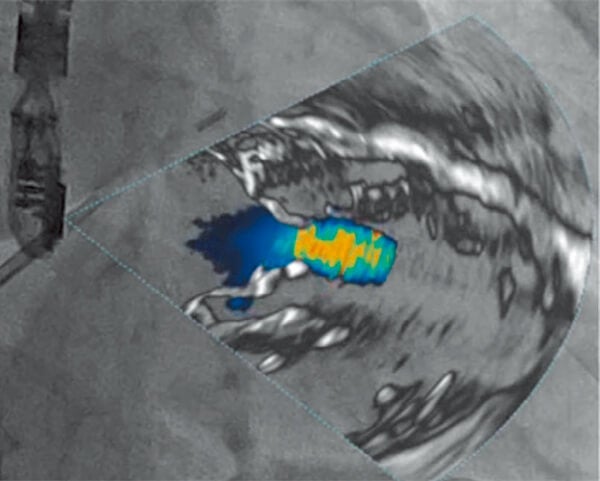 High quality 2D and color display
Alphenix interventional systems feature the world’s first high-definition detector within the 30 × 40 cm detector panel. The high-definition part displays at 76-micron pixel imaging modes. At more than twice the spatial resolution of conventional flat panel detectors (FPD), the unique Hi-Def imaging mode allows you to effortlessly zoom up to 4 cm (1.5”) without losing image quality. This helps clinicians visualize fine details and anatomical structures and deploy devices with accuracy and confidence. While Waikato Hospital doesn’t perform paediatric structural heart procedures, Dr. Pasupati comments that Hi-Def imaging would be an asset to sites with paediatric service, as it would help visualize and position the smaller paediatric devices without increasing total procedural dose.
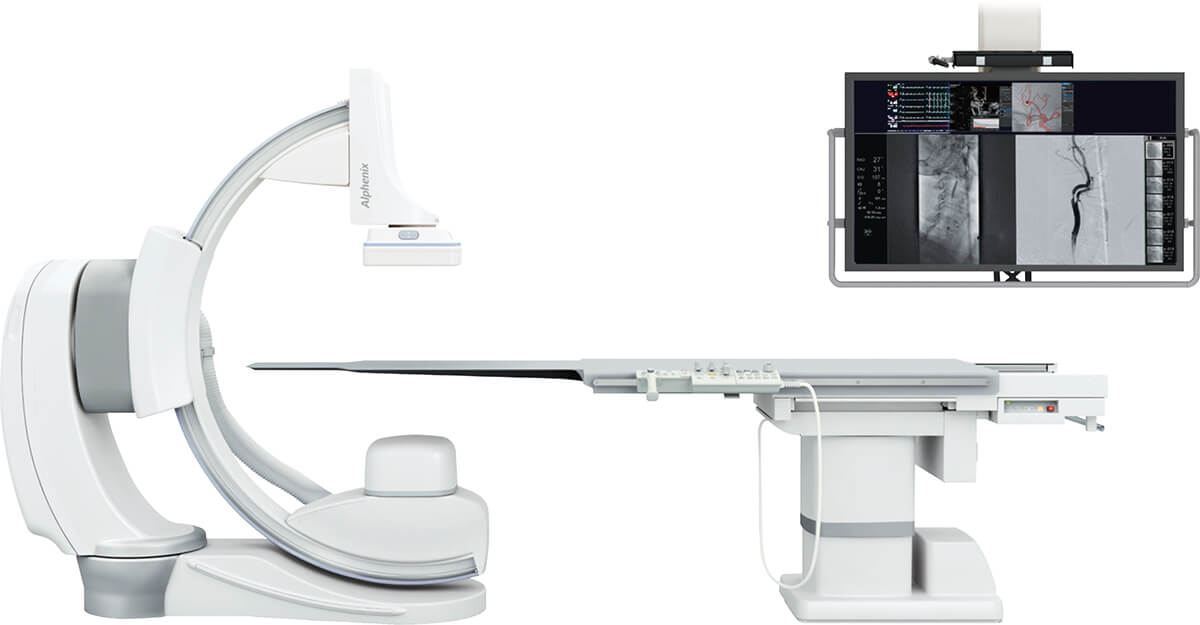
“Canon have been the pioneers with detectors moving fingertip to fingertip and head to toe without any table movement. The detectors remain self-aligned to the patient independent of C-arm movement. This improves the work flow with safe radial and other peripheral access. This is extremely valuable for supporting safe radial access. I’m a control freak and I like to control things myself. The Alphenix’s flexibility and range of patient access allows me to stay focused on the patient.”
There is an increasing need for structural procedures to be performed under anaesthesia with or without TOE guidance. The Alphenix allows us to position the C-arm offset at 45 degrees to the table, providing enough space for the echo system and giving the ICU and anaesthetic teams with keeping better visibility and communication between the teams.
“Most Cath Labs use the 20 cm × 20 cm panels for coronary interventions. With the growth of the structural interventions performed in the same lab, the detectors have increased to 30 cm × 40 cm which can be bulky for day-to-day coronary use. Canon has a 30 cm × 30 cm detector which is a great compromise for both coronary and structural procedures. Canon also has one of the slimmest detector housing which eliminates the bulkiness and provides a greater field of view when needed.
The 30 × 30 cm configuration is a perfect balance and means that our lab is truly multi-purpose; well suited for structural and interventional procedures.”
The automatic cine replay function and additional reference monitor are extremely useful, particularly for structural work. “We utilise it almost daily for TAVI procedures,” he says. “When we are deploying a valve, I have one hand holding the valve and if you need to let go to access your previous run, the valve may move. On the Alphenix I don’t need to do anything; I can always visualize the last view on my second screen. This is a superior feature of the Alphenix, one that helps with clinical confidence and workflow in complex cases.”
During deployment of Evolut core valves, Dr. Pasupati now does what is called a cusp overlap technique, which involves a deep RAO caudal view. His team then rechecks the valve at the other end with an LAO projection.
Having an additional reference monitor allows them to store and access both images, which makes life much easier.
The 30 × 30 cm detector configuration means our lab is truly multi-purpose; well suited for structural and interventional procedures.
Dr. Sanjeevan Pasupati,
Director of Structural Heart Disease & Cardiovascular Research, Waikato Hospital, Hamilton, New Zealand
With more complex cases being treated in the cathlab, DTS is a critical tool for operators to ensure that long cases are safe for patients.
“With more complex cases being treated in the Cath Lab, Canon’s Dose Tracking System is a critical tool to help ensure that long cases are safe for the patient. It is extremely valuable in long procedures like mitral clip implantation, CTO procedures and complex multivessel PCI. These procedures require a lot of fluoroscopy, it is common to remain in the same view for an extended period of time and they can involve high radiation doses. As an operator you are very focused on the patient and the case and the real time patient dose feedback that DTS provides becomes critical. It provides alerts and allows me to modify my approach to ensure that dose thresholds are not exceeded and helps minimise the patient’s risk of radiation injuries.”
“Cardiac catheterization labs need to be reliable and the Alphenix is the most reliable interventional cardiology system I have worked with,” claims Dr. Pasupati. “Canon provide the best service and support in New Zealand. Downtime on our Alphenix interventional systems is minimal and Canon take a pro-active approach to ensuring that we are well supported.”
“We are now on the 3rd generation of Canon Cath Labs at Waikato Hospital, and the latest image quality, workflow and range of advanced technology along with their impressive service made it an easy choice for us.” //
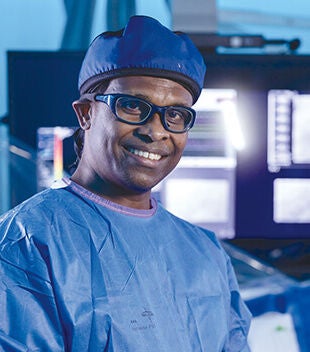
“The Alphenix is the most reliable interventional cardiology system I have worked with.”
Dr. Sanjeevan Pasupati,
Director of Structural Heart Disease & Cardiovascular Research, Waikato Hospital, Hamilton, New Zealand
For more infomation
The content reflects information available at the time of publication and may differ from current information.

Magazine for Interventional X-ray
Read testimonials from users of Canon Medical Systems' vascular systems.
Social Media


