

Precision in Every Pulse: Aster's Cath Lab Elevates Care with Canon’s Alphenix Biplane
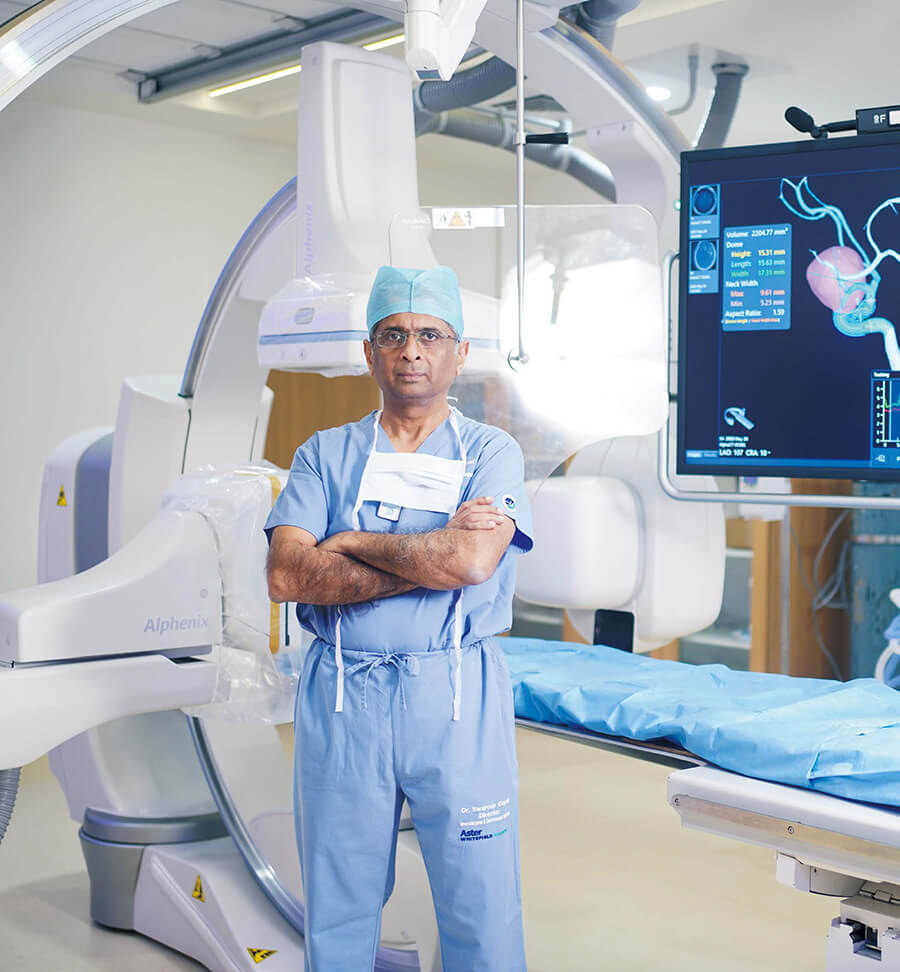 Dr. Swaroop Gopal, Aster International Institute of Neurosciences at Aster Whitefield Hospital, Bengaluru
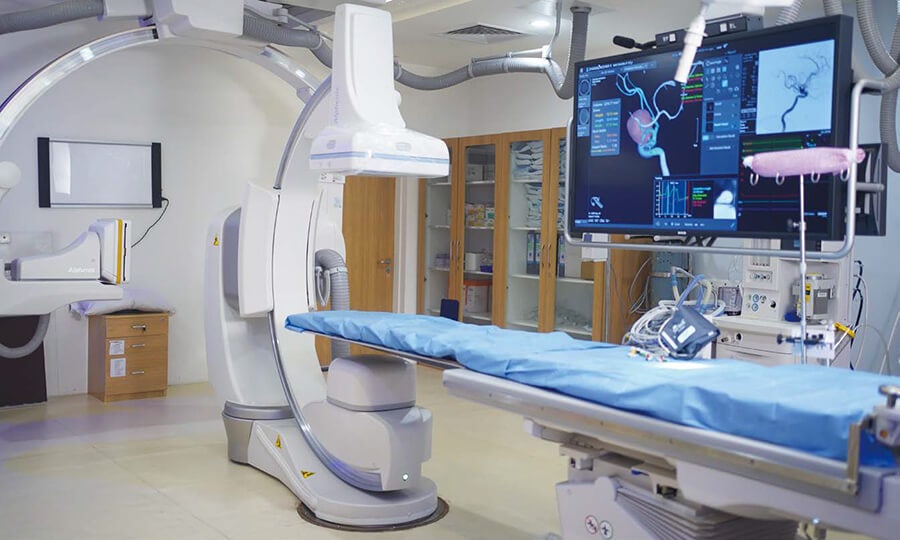
In a field where every millimeter counts and every second matters, neurointervention demands nothing less than technological precision, clinical expertise,and visionary leadership. Rising to meet this challenge, Aster International Institute of Neurosciences at Aster Whitefield Hospital, Bengaluru, India has established a cutting-edge neuro catheterization lab equipped with Canon Alphenix Biplane system — a move poised to redefine standards of care in India’s neurovascular landscape. Spearheaded by renowned neurosurgeon and neurointerventionist Dr. Swaroop Gopal, this strategic upgrade marks the beginning of a new chapter in advanced stroke care, complex aneurysm treatment, and minimally invasive brain interventions. At the intersection of innovation, training, and patient-centric design, Aster and Canon are not just delivering better outcomes — they’re shaping the future of neuro care.
In the dynamic and ever-evolving world of medical technology, neurointervention stands out as one of the most complex and rapidly advancing specialties. With conditions such as stroke, aneurysms, and vascular malformations requiring timely, precise interventions, the role of high-end imaging and catheterization systems becomes paramount. Recognising this imperative, Aster International Institute of Neurosciences at Aster Whitefield Hospital, Bengaluru, has taken a bold step forward by establishing a next-generation neuro catheterization (cath) lab powered by Canon's Alphenix Biplane system.
At the helm of this transformation is Dr. Swaroop Gopal, Group Director – Neurosciences and Spine Care at Aster, a veteran neurosurgeon and neurointerventionist who brings with him a unique hybrid approach, seamlessly integrating open surgical techniques with endovascular interventions. His vision for the institute is clear: to build a future-ready hub for neurovascular excellence, blending clinical acumen with technological innovation.
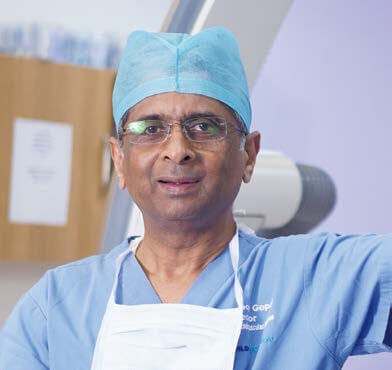
“High-Definition Imaging helps us achieve a level of visual clarity that directly translates to safer procedures. The ability to see minute vessels clearly helps us plan, navigate, and execute interventions with accuracy.”
Dr. Swaroop Gopal, Aster International Institute of Neurosciences at Aster Whitefield Hospital, Bengauru, India
A new era for Aster’s Neuro Sciences
“We’ve just launched the institute and installed the Canon Alphenix Biplane a few months ago. It’s still early days, but our vision is ambitious,” shares Dr. Gopal. “We intend to make this center one of the most advanced neurointerventional facilities in the region — not just in terms of procedures but also in education and training.”
Training the next generation of specialists is a core part of Aster’s roadmap. As neurointervention gains recognition as a minimally invasive yet highly precise discipline, the need for hands-on, real- world exposure to complex technologies like the Alphenix system becomes vital. “Many young doctors are eager to enter this field. What they need is a platform that allows them to learn gradually, safely, and thoroughly. That’s what we aim to offer,” he adds.
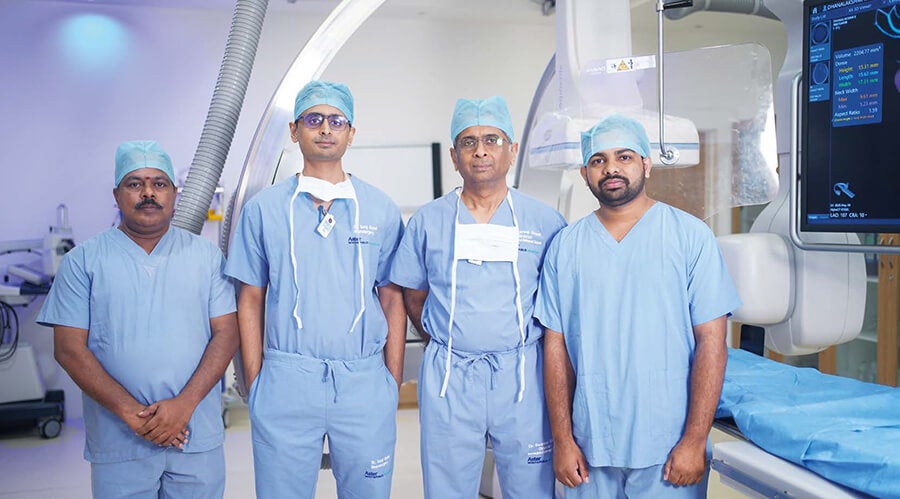
Precision imaging: The heart of safer interventions
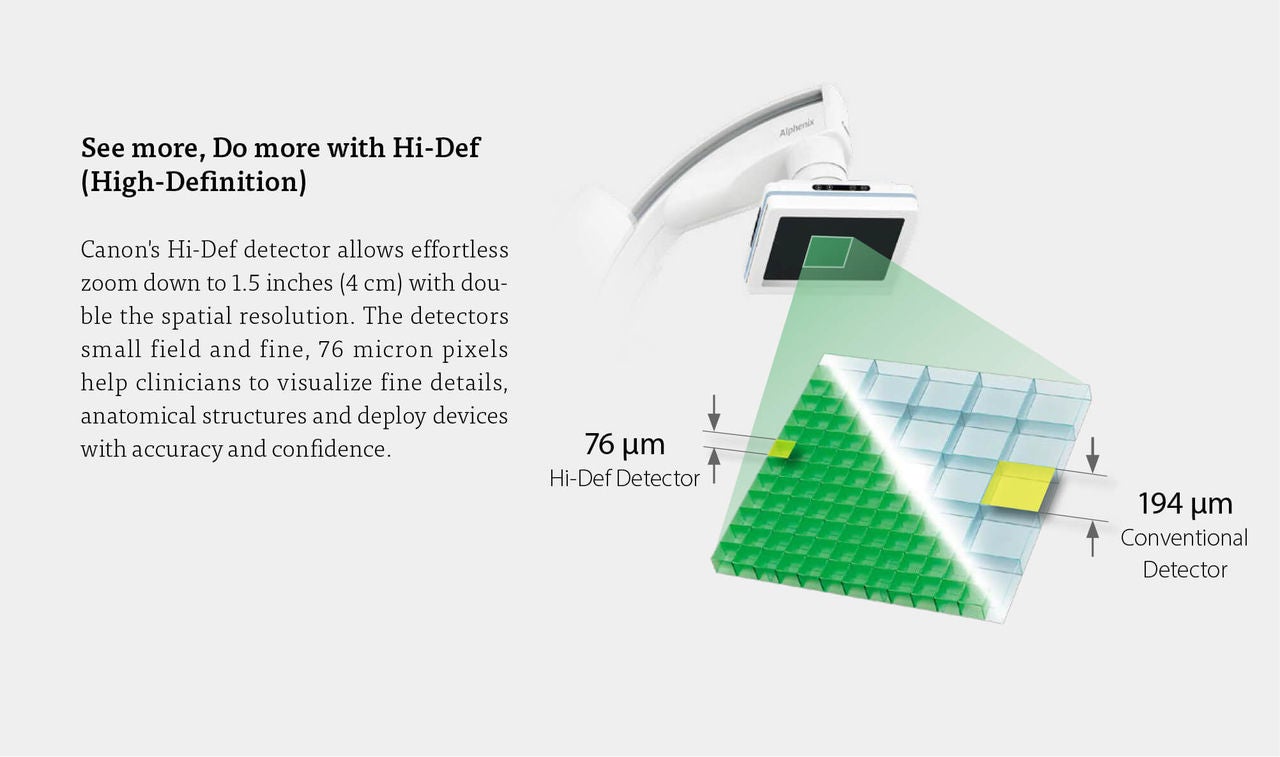
Neurointervention, by nature, deals with millimeter-level precision inside the most delicate organ — the brain. Here, image quality is not just a value-add; it’s a lifeline. Canon’s Alphenix Biplane system, with its High-Definition detectors and advanced image processing, delivers unparalleled clarity, especially when visualizing small, tortuous vessels. “Hi-Def resolution was one of the main reasons we chose Canon,” Dr. Gopal states.
Features such as Illuvis noise reduction, Auto Pixel Shift, and Super Noise Reduction Filters (SNRF) ensure that the image stays sharp and aligned even during complex DSA runs. This is particularly important during cerebral aneurysm treatments or intracranial stenting, where minute errors can have significant consequences.
Improving workflow and enhancing patient experience
Since the installation of the Canon Alphenix system, Aster’s neuro cath lab has performed nearly 200+ procedures, including both diagnostic and complex interventional cases. One notable shift has been the lab’s transition from transfemoral to transradial access for many procedures. “Patients undergoing radial interventions can often go home the same day. There’s less trauma, faster recovery, and higher patient satisfaction,” he explains. “Canon’s Alphenix platform supports radial access extremely well, allowing smoother navigation and setup.”
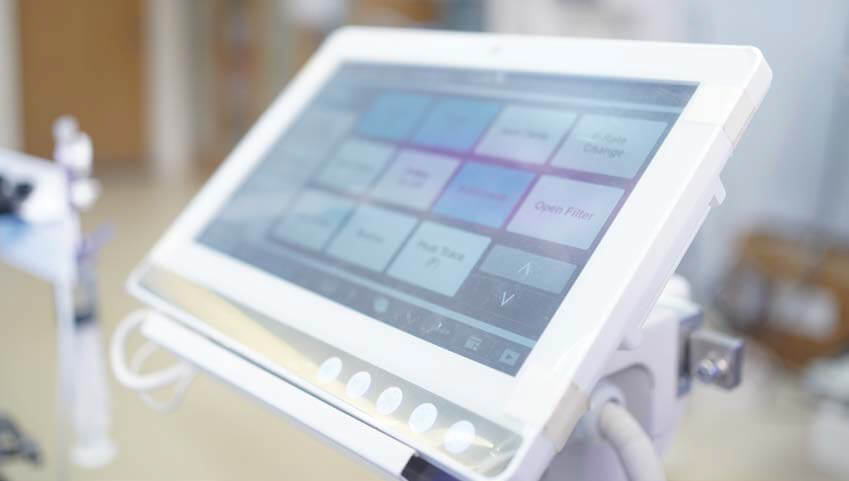
The Alphenix Tablet, a compact control panel located table-side, provides physicians and technicians real-time control over system settings and views. “You don’t need to leave the table or depend entirely on external operators. This handson control streamlines the procedure and keeps the entire team aligned,” he says.
“The system’s ease of use, speed, and intuitive interface have transformed our workflow.”
Dr. Swaroop Gopal, Aster International Institute of Neurosciences at Aster Whitefield Hospital, Bengauru, India
Dose efficiency: A win for safety and compliance
Another standout feature of the Canon Alphenix system is its comprehensive suite of DoseRite technologies, designed to reduce radiation exposure without compromising image quality. Tools such as Spot Fluoroscopy, Dose Tracking System (DTS), and gridcontrolled pulsed fluoroscopy enable precise dose control, visual feedback, and safer operations — for both patient and operator.
“This helps us avoid threshold breaches and ensures longterm safety,” says Dr. Gopal.
Enabling learning and continuous improvement
The Alphenix Biplane is not just an intervention tool — it’s also a teaching platform. For a specialty like neurointervention, which demands long learning curves and extreme precision, the role of imaging in education is immense.
“When trainees see high-definition, 3D visualization of vessels, they learn faster. The ability to understand anatomy in real time, during live cases, is an advantage I never had during my training,” says Dr. Gopal.
He believes Canon can further enhance this value by offering structured hands-on training, simulation modules, and real-case feedback sessions. “As new features and updates roll out, we’re eager to test them and provide Canon with data to help them refine their systems. This mutual learning loop is beneficial to everyone — especially the patients.”
“Radiation safety is a huge concern in neurovascular procedures. With Canon’s DTS, we can see dose maps in real-time and adjust accordingly.”
Dr. Swaroop Gopal, Aster International Institute of Neurosciences at Aster Whitefield Hospital, Bengauru, India
What lies ahead: Custom innovation for Indian needs
Dr. Gopal is clear that while global standards are valuable, there must be customization for regional realities. “Our patient demographics, volume, and procedural workflows are unique. The way we use imaging technology in India may differ from Japan or the West. Canon has shown openness in understanding this, which is encouraging.”
Looking forward, he hopes for even more India-centric innovations — such as locally adapted dose protocols, AI-enabled diagnostic overlays, and tools that integrate seamlessly with hospital IT systems and PACS. “Canon’s strength lies in their engineering depth and their collaborative attitude. If they continue to engage with us on the ground and incorporate our feedback, the future is very bright,” he adds.
Canon Alphenix Biplane System: Transforming Neurovascular Intervention
Canon’s flagship Alphenix Biplane cath lab system combines intelligent imaging, advanced dose control, and workflow automation to support high-precision procedures across neuro, cardiac, and peripheral applications.
Conclusion: Redefining Neuro Care, one innovation at a time
The launch of the Canon Alphenix Biplane system at Aster Whitefield marks a milestone not just for the hospital, but for neurointervention in India. With a clear focus on precision, safety, and education, this collaboration is setting new benchmarks in how technology can transform patient outcomes.
As Dr. Gopal puts it, “The brain is an unforgiving organ.
Our responsibility is to approach it with the best tools, utmost care, and a commitment to continuous learning. Canon’s Alphenix system helps us do exactly that.” //
This article was produced by Erbis Engineering Co., Ltd. and published in Express Healthcare on August 8, 2025.
Social Media


