

Interventional Neuroradiology: Training and Technology That Tackles the Rise in Stroke in Türkiye
Interventional neuroradiology is a growing field in Türkiye. It is widely used in the treatment and management of acute stroke in particular. With a significant rise in stroke cases due to Türkiye’s ageing population, more than 50 comprehensive stroke centers have been established across the country, served by a large number of expert interventional neuroradiologists who use advanced imaging capabilities.
Specialists based in Türkiye have played an important role in advancing Interventional Neuroradiology globally since its inception in the 1970s. Their work helped to establish its foundations. However, key to tackling the recent rise in stroke is building an even stronger pool of interventional neuroradiologists through training. Using the very latest medical imaging equipment, such as Canon’s Alphenix, they are able to continue to save hundreds of lives daily. VISIONS Special spoke to experts in two teaching hospitals in Türkiye - Professor Yılmaz Önal, Interventional Neuroradiologist from the Fatih Sultan Mehmet Training and Research Hospital, in Istanbul, Türkiye, and Mustafa Özdemir, Academician at the Interventional Radiology Unit, Sakarya University, Sakarya, Türkiye - about their experiences with the Alphenix.
Comprehensive Stroke Center
The Fatih Sultan Mehmet Training and Research Hospital is a 300-bed facility in Istanbul, which has been used in training and research since 1983. It was recognized as a Turkish Ministry of Health approved stroke center in 2018. The stroke service operates 24/7, 365 days a year. The number of patients treated at the center has increased progressively since its establishment and in 2024, the Interventional Radiology Department at the center performed more than 400 thrombectomies.
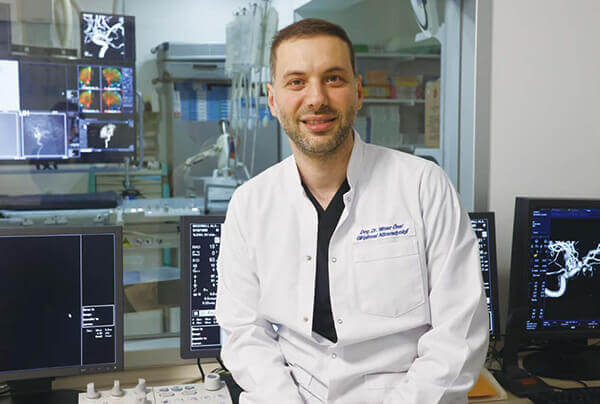 Prof. Yılmaz Önal, Interventional Neuroradiologists from the Fatih Sultan Mehmet Training.
“In our center, we not only provide thrombectomy treatment services to stroke patients, but we are also highly competent in the endovascular treatment of all neurovascular diseases,” remarked Professor Önal. “Full treatment of these diseases is implemented through a team of many specialists and assistants.”
“Alongside treatment, we are also a training clinic that accepts fellows from many training and research hospitals in Türkiye and sometimes from abroad. They complete their training here which enables them to provide treatment on their own when they return to their own centers,” he added. “We are recognized nationally and globally.”
Quality systems with advanced features
Equipped with two Canon Alphenix systems, the Department has a monoplane system which was acquired in 2015, and a biplane system, which was installed in 2018.
“The procedures we performed using the Canon monoplane system have been significantly enhanced in terms of volume and complication management since the introduction of the biplane device in 2018,” said Professor Önal. “With the monoplane, we could only receive treatments under general anesthesia twice a week. With the biplane, we can receive patients with general anesthesia every weekday, sometimes even at night, when necessary. This has led to a dramatic increase in the number of patients that we can treat. We have been treating neurovascular diseases under general anesthesia every day of the week since 2018.”
“Having two systems has significantly helped us,” he continued. “In 2018, we received the Comprehensive Stroke Center certificate having installed the two systems. Since then, we have been able to take an emergency thrombectomy patient to our monoplane device and complete their treatment while simultaneously treating an elective patient using our biplane system. This is very beneficial both in terms of clinical results and workflow efficiency.”
Professor Önal has extensive experience with both the systems at the Department and shares his knowledge with others.
“As our center also has a training facility, we do not only handle cases here, but also support colleagues who require assistance in working on biplane devices,” he said. “One feature of the Alphenix systems that I am very pleased with is the fluoroscopic imaging quality. I am also very satisfied with the superior quality of 3D images and the intraoperative CT scans that we acquire to rule out a possible complication after post-op patient treatment while the patient is still on the table. This is not only my opinion - it is a common satisfaction shared by many physicians who come from abroad for our workshops and had not previously used Canon systems. After experiencing the Alphenix here, their feedback about the outstanding fluoroscopy quality has been consistently positive.”
“One feature of the Alphenix systems that I am very pleased with is the fluoroscopic imaging quality. I am also very satisfied with the superior quality of 3D images.”
Prof. Yılmaz Önal,
Interventional Neuroradiologists, Fatih Sultan Mehmet Training, Türkiye
Significant dose reduction
Spot Fluoro in the Alphenix Biplane system provides a significantly and highly valued reduction in radiation exposure for Professor Önal and his team.
“For our complicated work, which requires prolonged fluoroscopy times, such as AVM, the radiation dose is seriously reduced for the patient and us. I think it is a crucial advantage,” he remarked. “We performed a study running collimation at the same time. And when comparing normal fluoro and Spot Fluoro, we could clearly see that Spot Fluoro reduced the dose significantly.”
“It is very important and very successful, especially in AVM/AVF treatments that require not short- but long-term scopy,” he reiterated.
Variable Isocenter
Another feature that Professor Önal is delighted with is the variable isocenter, which enhances imaging capabilities when obtaining tricky perspectives.
“When working with high caudal or cranial angulations in the frontal projection (up to 30-40 degrees), adjusting the lateral view typically requires significant table movement, which can disrupt the frontal image,” he explained. “To avoid such a situation, Canon’s angiographic systems have variable isocenter projection of the system, and without moving the table at all to adjust the lateral image, you can bring the clear image to your screen on the lateral side by playing with the isocenter. I think this is a very important feature and it makes our job much easier. It is very successful, especially in aneurysm treatments with difficult working angles.”
Alpha CT imaging
Image quality is very valuable and important for the Interventional Neuroradiology Team because their work is within a closed system.
“In interventional radiology, we work in a closed system. We do not perform open surgery,” said Professor Önal. “Therefore, fluoroscopy quality is indispensable for us. Especially in patients for whom we perform stent treatments. It is essential to ensure that the stent is clearly positioned in the vessel and that the apposition of the stent is good. We evaluate this after post processing using Alpha CT (cone beam CT). In Canon’s Alphenix, I generally have a very high chance of evaluating the apposition of the stent in images that we see unsubtracted with contrast injection in 2D images. This is possible because the fluoroscopy resolution of the device is quite good.”
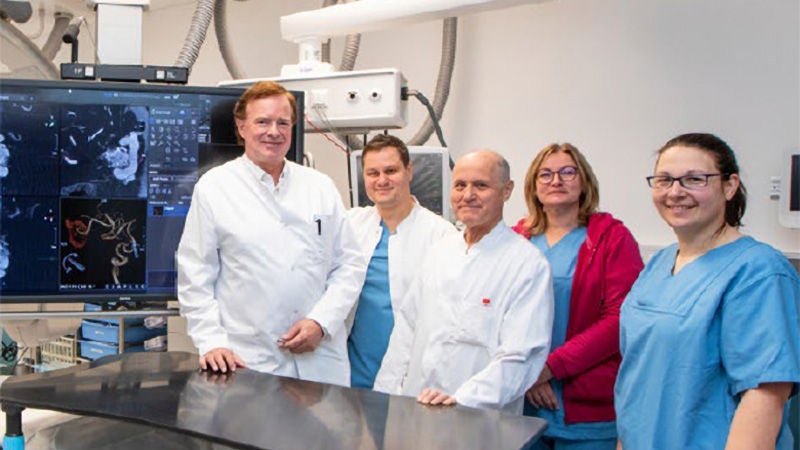
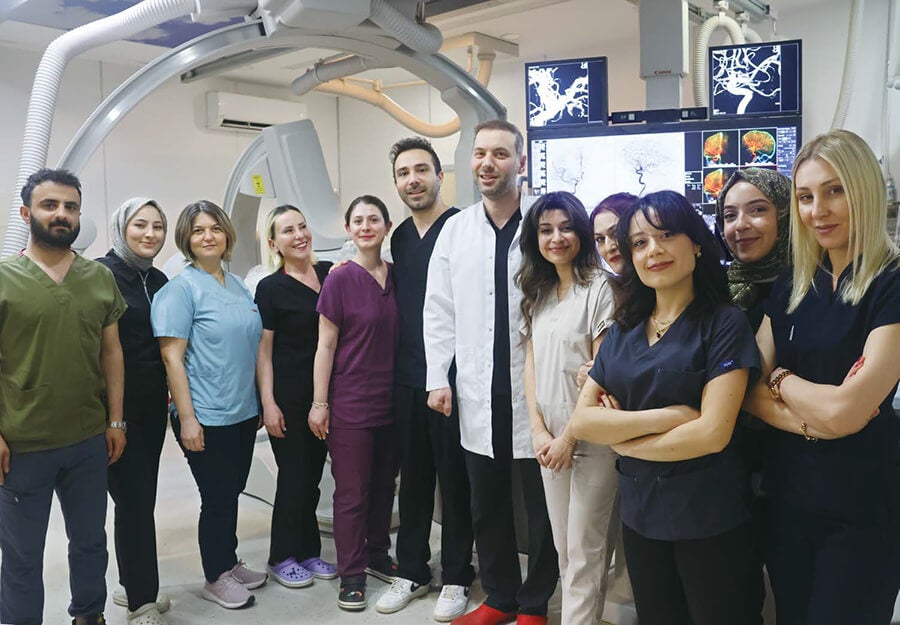 Prof. Yılmaz Önal and his team
Roadmap
Roadmap software is also very important for their work.
“Additionally, roadmap image quality is crucial for safe access to distal vessels during AVM treatments. Otherwise, very serious complications, such as vessel rupture can occur,” explained Professor Önal. “In this context, the quality of fluoroscopy and roadmap quality of the Alphenix is quite high. Through Alpha CT , we have very clear information in evaluating stent apposition in post-processing applications. In this sense, I would like to say that the system’s quality helps us a lot in evaluating both the success of the treatment itself in navigation and possible post-treatment complications.”
Post-processing capabilities
It is important to the team that all images required from the patient are acquired in one scan to avoid the need to take the patient back into scanning to detect a possible minor complication.
“In that sense, I am especially satisfied with the CT quality of the Alphenix, “ said Professor Önal. “Canon can offer many effective postprocessing capabilities. This is especially useful for work in a center like ours, in which intracranial stents are frequently required for use and where critical aneurysms are treated. We have to evaluate if the used materials could cause possible complications after treatment and assess their apposition to understand possible stent deformations.”
Support is a phone call away
As well as the high quality of the Alphenix system, Professor Önal is delighted with the service and support provided by Canon.
“The fact that they are just a phone call away makes me feel very safe. As a physician at the head of a busy clinic, for me it is very important to be able to reach support swiftly when I call,” he remarked. “Most of the times, we can solve a problem instantly. Even if engineers do not come themselves, they contribute to the solution of the problem many times by directing us from over the phone.”
“The system’s quality helps us a lot in evaluating both the success of the treatment itself in navigation and possible post-treatment complications.”
Prof. Yılmaz Önal,
Interventional Neuroradiologist, Fatih Sultan Mehmet Training, Türkiye
Sakarya University Faculty of Medicine in Sakarya, Türkiye, was established in 2007 to provide education, research, and health services. It is considered to be among the top 20 universities in Türkiye. Dr. Mustafa Özdemir has worked as an Academician in the Interventional Radiology Unit at the University’s Department of Radiology for the last five years. The interventional radiology focus of the Faculty of Medicine is broader than stroke alone.
The Unit also has two Angio systems, including an Alphenix acquired recently.
“Before we started to use the Alphenix, our Unit had one angiography system and one C-arm fluoroscopy system,” explained Dr. Özdemir. “Our angiography was a monoplane system, and it lacked neuroradiology software for neuro-interventional procedures. We carried out our procedures using these two systems.”
Biplane system and neuro software
“We have been using the Alphenix system for nearly two years now,” he continued. “It’s most important features for us are its advanced imaging technology, integrated neuro software, and being a biplane system. Additionally, the software tools, such as Alpha CT and Mask Select (Roadmap), are frequently used in advanced interventional radiology. The system makes many of our procedures much easier. With this aspect, we enjoy and actively use the system with great interest.”
Changes to daily practice
Working with Canon angiography systems has changed the practices at the Unit in terms of workflow and outcomes of cases.
“It has brought many changes to our daily clinical practice,” said Dr. Özdemir. “We are exposed to significantly less radiation with a biplane system. Taking two images simultaneously, speeds up our workflow. The advanced processing methods like Alpha CT and Mask Select, enable us to perform our daily procedures more efficiently and effectively.”
“The system is highly reliable, especially in critical situations,” he emphasized. “In Neuro-Interventional cases and geniculate artery embolization, the Alphenix provides extremely sharp image quality and effective 3D software tools that make complex procedures much easier and more practical. We feel more secure and confident by using it, knowing that even if we face a problem, we can easily overcome it.”
Dr. Özdemir recalls many examples of how the Alphenix has provided outstanding functionality.
“There are many striking cases that come to mind,” he said. “For instance, in a case where we placed an intracranial stent, we were initially unsure whether the stent was fully deployed and properly opposed to the vessel wall. By utilizing the Alpha CT feature of the device, we were able to confirm optimal deployment and vessel wall apposition, allowing us to complete the procedure with confidence.”
“In another case, we had difficulty locating a small selective branch feeding a tumor during a chemoembolization procedure. After performing an Alpha CT scan, we discovered that the branch originated more proximally than we had expected, and this enabled us to proceed and complete the procedure successfully,” he added.
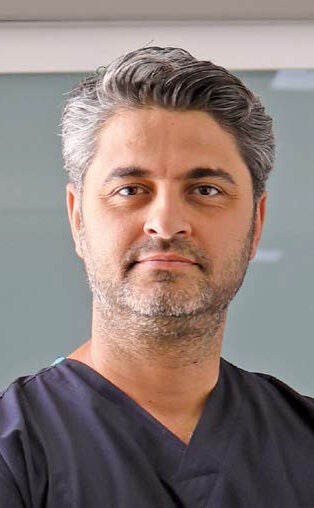
“The Alphenix provides extremely sharp image quality and effective 3D software tools that make complex procedures much easier and more practical. We feel more secure and confident by using it, knowing that even if we face a problem, we can easily overcome it.”
Dr. Mustafa Özdemir,
Academician at the Interventional Radiology Unit, Sakarya University, Sakarya, Türkiye
Sharp images make procedures easier
Dr. Özdemir considers Alphenix to have a superior image quality. Even when working in very small anatomical areas, he has found that the sharpness of the images makes procedures significantly easier.
“The system’s ease of use and modern software technologies are major advantages for us. Especially for neuro-interventional cases, both the 3D and Alpha CT features are minor features that provide great comfort and reliability during and after procedures,” he remarked. “Additionally, it is necessary to mention the very large 58-inch LCD monitor. It is a great advantage for us to be able to divide this 58-inch LCD monitor into segments as we wish, put the images that we want on the monitor and display different images live during the case. Most visitors are amazed by the image quality, which is sharp, clear, and detailed. They are also impressed by the customizable 58-inch monitor. The device’s ability to quickly generate high-quality 3D images by using features such as Alpha CT continues to impress both our team and visiting doctors during training sessions.”
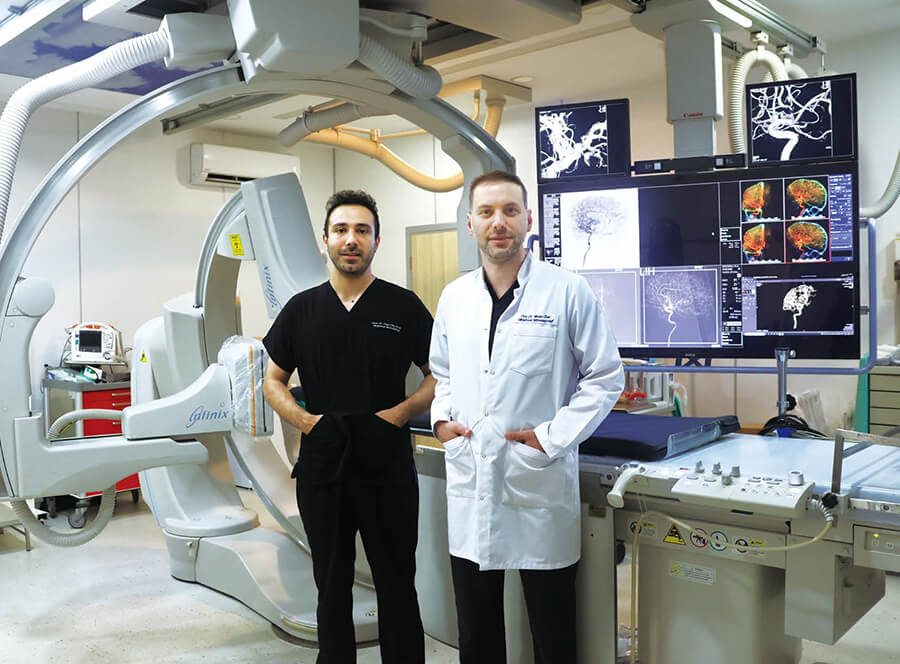
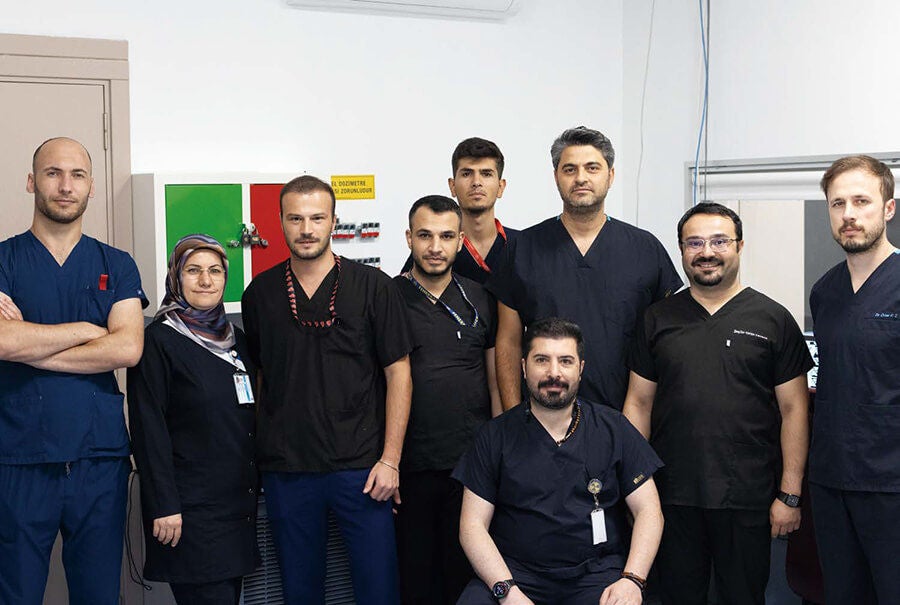 Dr. Mustafa Özdemir and his team
Strong Trust
Service and support from Canon complete the picture.
“The application support and accessibility Canon provides are truly impressive,” said Dr. Özdemir. “Whenever we need assistance, we have never had difficulty reaching a support staff member. The close attention and prompt solutions are among the top reasons for why we have developed a strong trust in Canon.”
A growing concern
Alongside the enhanced provision of experts in interventional neuroradiology in Türkiye and cutting-edge technology, like the Alpha CT, public awareness of stroke and the possibilities of diagnosis and treatment with Interventional equipment and techniques is rising. This could also be critical in early detection and intervention of stroke and other conditions. //
Social Media


