

Webinar
Unwrapping the Changes from
Fatty Liver to Steatotic Liver
Disease
Live Webinar | November 16, 2023 | 7 pm (CET) / 1 pm (EST)
Unwrapping the Changes from Fatty Liver to Steatotic Liver Disease
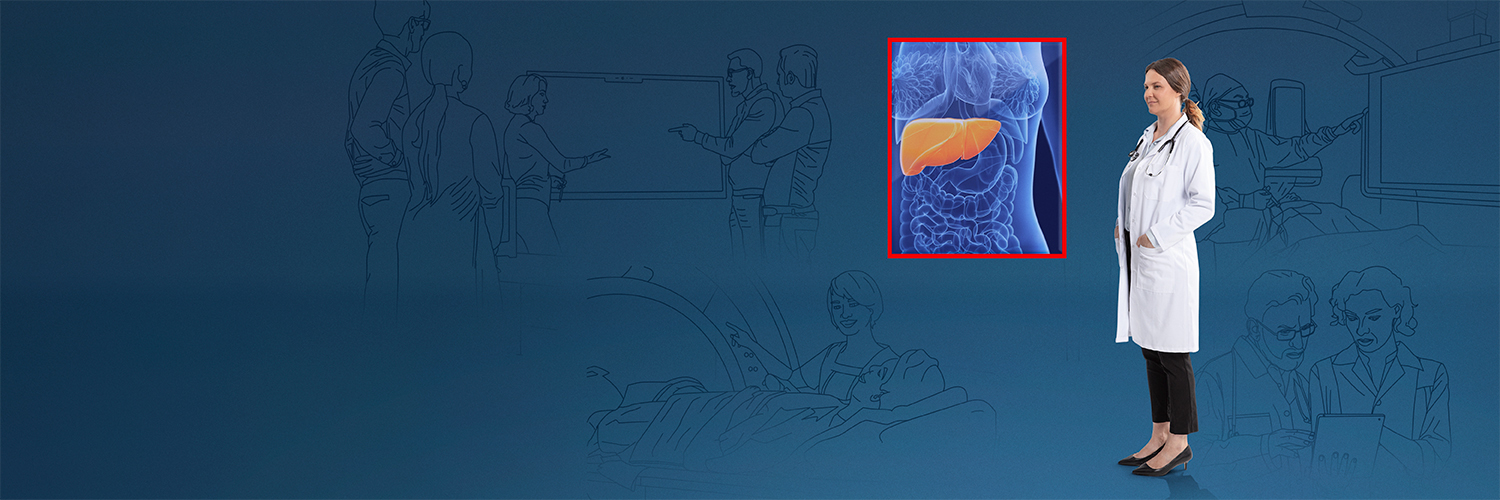
In June 2023, multiple liver societies gave consensus statement on new fatty liver disease nomenclature to rename non-alcoholic fatty liver disease (NAFLD) to steatotic liver disease (SLD) with various sub-classifications1. This is the global consensus for liver disease. This global consensus represents a significant step toward increasing disease awareness, driving policy change, identifying individuals at risk, and facilitating diagnosis and access to care.
Ultrasound has long contributed to assess liver disease through daily screening and innovative features like Shear Wave Elastography (SWE) and Attenuation Imaging (ATI). This evolution prompts us to reconsider what changes and what remains unchanged with this new nomenclature. It is an opportune moment to re-evaluate the contributions of ultrasound systems to this disease. We would like to have a global webinar to discuss this consensus from different points of view, recognizing that differences between countries, influenced by factors such as races, culture, and habits may bring unique perspective to the table. We look forward to the insights of two liver experts in this international webinar.
The recording is now available
The recording of this webinar is available through our on-demand Canon Medical webinar platform.
Create your personal account and join our live webinars, download your certificate of attendance and watch our past webinars on demand.
Watch On-Demand and receive your certificate of attendance.
Program:
- Steatotic Liver Diseases: What You Should Know – Assoc. Prof. Ryosuke Tateishi
- Quantification of liver fat content with ultrasound: why and where do we stand now - Dr. Giovanna Ferraioli
- Live Q&A
Learning Objectives
- To learn about steatotic liver disease (SLD) which was chosen as an overarching term to encompass the various aetiologies of steatosis by multinational liver societies
- Live discussion about SLD rom both the hepatologist and radiologist point of view
- Participate in the live Q&A to find answers to your own questions
Certificate*: All delegates will receive a certificate of attendance.
* Note: Full name entered by joining the live webinar will be used to generate your name on the attendance certificate.
INFORMATION ON SPEAKERS
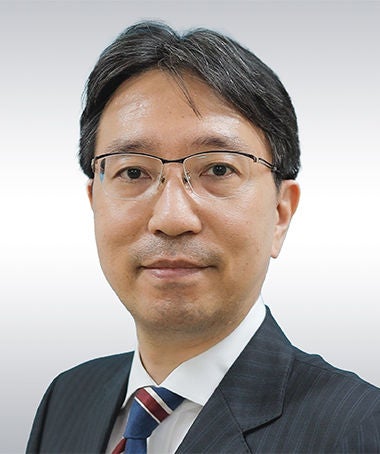
Speaker: Assoc. Prof. Ryosuke Tateishi, MD, PhD
Hepatologist and Gastroenterologist
The University of Tokyo Hospital
Tokyo, Japan
Dr. Ryosuke Tateishi is currently an associate professor and a Vice-Chair in the Department of Gastroenterology at the Graduate School of Medicine, the University of Tokyo. He is an Associate Editor for Hepatology Research and a member of the Editorial Board for Liver Cancer and Hepatology International. Dr. Tateishi's commitment to advancing the field of gastroenterology is further highlighted by his role as Vice-Chair of the Clinical Practice Guidelines for Primary Liver Cancer Committee at the Japan Society of Hepatology. He has received several honors and awards, including the Young Investigator Award and Encouragement Prize from the Japan Society of Gastroenterology, as well as the Top Peer Reviewer in Clinical Medicine from Web of Science and the Journal of Gastroenterology High Citation Award.
Steatotic Liver Diseases: What You Should Know
Steatotic liver disease (SLD) has been proposed by multinational liver societies as a new nomenclature for fatty liver disease. This change from the widely used term nonalcoholic fatty liver disease (NAFLD) aims to define the disease category by inclusion criteria rather than excluding several conditions, to focus on its pathophysiology related to metabolic dysfunction, and to defuse the stigma caused by the terms fatty and alcoholic. SLD has several subcategories: Metabolic-Associated Steatotic Liver Disease (MASLD) and Met-ALD, which bridges the gap between non-alcoholic and alcohol-associated liver disease (ALD). Ultrasound has historically contributed a lot to this disease that would remain the same. During this session, Dr. Tateishi will clarify as well as guide you through the future prospect of this new terminology, including the expectation to the ultrasound examination as a hepatologist.

Speaker: Dr. Giovanna Ferraioli, MD, PhD
Reference Doctor, Ultrasound Unit, Department of Clinical, Surgical, Diagnostic and Pediatric Sciences University of Pavia
Pavia, Italy
Dr. Ferraioli is a researcher at Department of Clinical, Surgical, Diagnostic and Pediatric Sciences, University of Pavia, (Italy). She is member of the Education Committee of the World Federation for Ultrasound in Medicine and Biology (WFUMB) and Chair of the WFUMB Steering Committee for “Multiparametric Ultrasound: Update to WFUMB 2018 elastography guidelines and consensus on fat quantification”. She is also member of the AIUM-RSNA QIBA Pulse Echo Quantitative Ultrasound (PEQUS) Biomarker and Committee and co-chair of the attenuation working group and member of the ACR LIRADS Quantitative Imaging Work Group. She is head of the Ultrasound section of the Scientific Editorial Board of European Radiology; subspecialty Editor of Journal of Ultrasound in Medicine, and member of the Editorial Board of World Journal of Gastroenterology, Ultrasound in Medicine and Biology, Diagnostics, Journal of Ultrasound.
Multiparametric US for the evaluation of MASLD
An early and accurate detection of liver steatosis is important because metabolic dysfunction-associated steatotic liver (MASLD) is associated with several metabolic comorbidities that are the risk factors for cardiovascular diseases. Moreover, the literature suggests that fibrosis progression may occur not only in patients with metabolic disfunction-associated steatotic hepatitis (MASH) but also in those with “benign” liver steatosis. Therefore, tools that non-invasively assess liver fat content and liver fibrosis are of great interest not only for the diagnosis but also for follow up and prognostication. Algorithms for a quantitative estimation of liver fat content are commercially available and most of them are based on the evaluation of the US attenuation coefficient. Multiple clinical studies, mostly performed with ATI (Canon Medical Systems), have demonstrated good accuracy and reproducibility of these new algorithms for fat quantification. Since a few years, liver stiffness assessment with the shear wave elastography (SWE) techniques is considered a reliable substitute of liver biopsy in several clinical scenarios, including MASLD. Guidelines regarding the use of the SWE techniques for the staging of liver fibrosis have been released. For the US evaluation of MASLD, scores that combine US parameters have also been recently proposed.
- References
- 1: Mary E Rinella et al. | A multi-society Delphi consensus statement on new fatty liver disease nomenclature | J Hepatol (June 2023) https://pubmed.ncbi.nlm.nih.gov/37364790/
- Disclaimers
- The opinions expressed in this material are solely those of the presenter and not necessarily those of Canon Medical Systems. Canon Medical Systems does not guarantee the accuracy or reliability of the information provided herein.
- The clinical results, performance and views described in this video/webinar are the experience of the clinician. Results may vary due to clinical setting, patient presentation and other factors. Many factors could cause the actual results and performance of Canon’s products to be materially different from any of the aforementioned.
- Some products shown might not be available in all regulatory jurisdictions, please consult with your local Canon sales office for availability in your region.
Social Media


