

Why Sapporo Heart Center, One of the Leading PCI Centers in Japan, Chose Alphenix
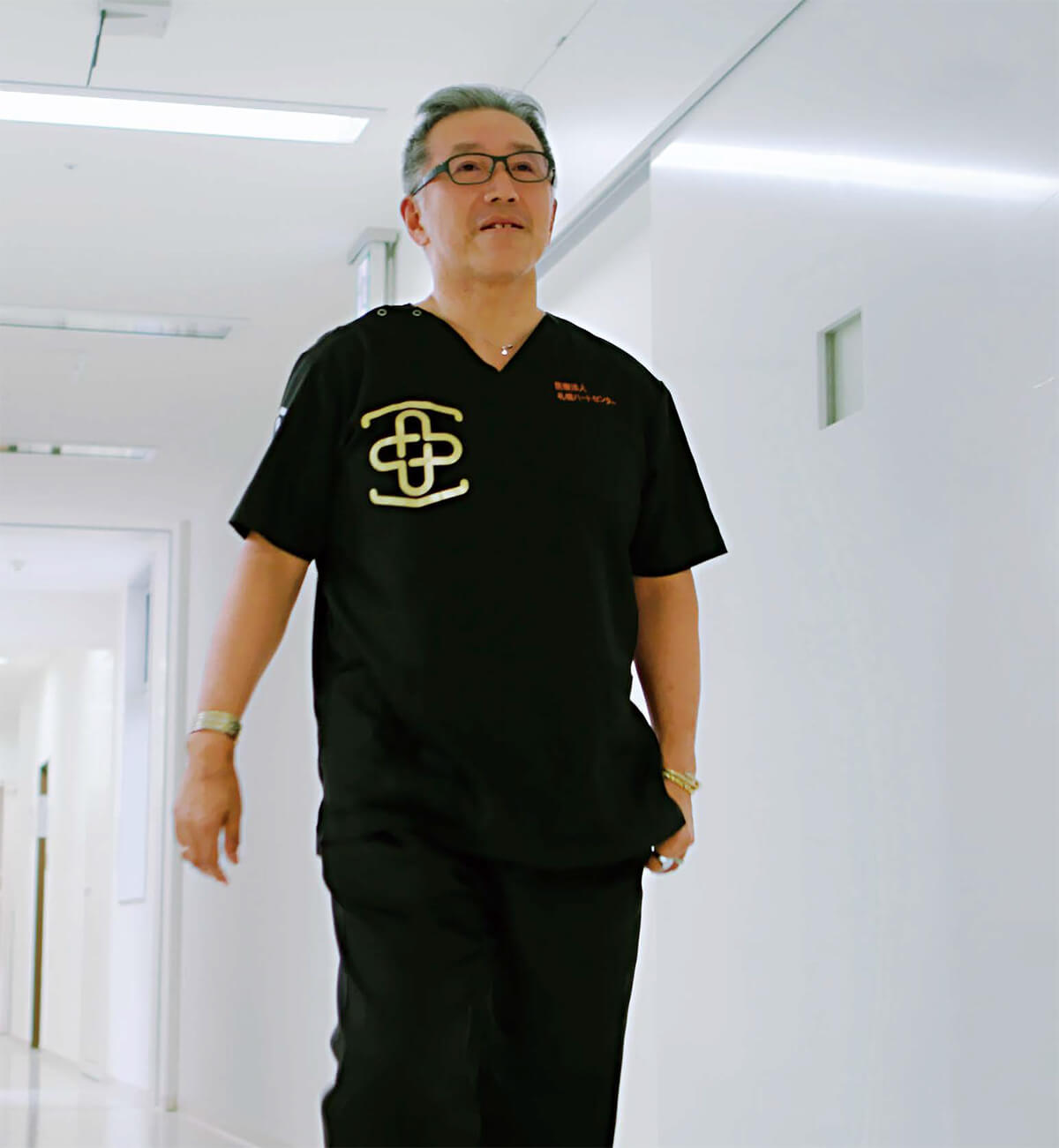 Tsutomu Fujita, M.D. Honorary Chairman, Medical Corporation Sapporo Heart Center
Sapporo Cardiovascular Clinic is one of the leading high-volume PCI centers in Japan, performing more than 2,000 procedures every year. Dr. Tsutomu Fujita is the founder and Honorary Chairman of Sapporo Heart Center (currently serving at Bali International Hospital in Indonesia). We interviewed Dr. Fujita, who considers Alphenix to be the best angiography system for performing CTO procedures, and asked him to describe how they introduced their Alphenix system and to discuss what they are currently focusing on at Sapporo Heart Center.
Aspiring to becoming a cardiologist at the dawn of catheterization
When I graduated from Asahikawa Medical University, there was no residency system as there is today, so students had to select a specific clinical department immediately after graduation. However, because I wanted to gain experience in a variety of clinical departments, including the emergency department, I decided to move to Sapporo Tokushukai Hospital after leaving university.
I became interested in cardiology around that time. Catheterization had just been introduced, and I decided to become a cardiologist. Back then, there were very few physicians who could perform open heart surgery for myocardial infarction, and there were also very few hospitals in Hokkaido where coronary artery bypass surgery was available. In addition, early therapeutic catheterization procedures took four or five hours and were performed via a large tube placed in the leg. Angiography systems were analog, and the acquired images had to be printed out on film, which meant that the images couldn't be reviewed until the film was developed. The first angiographic system I used in those days was a left-side access system manufactured by Toshiba Medical Systems (currently Canon Medical Systems). I remember how challenging it was to perform catheterization procedures using that system.
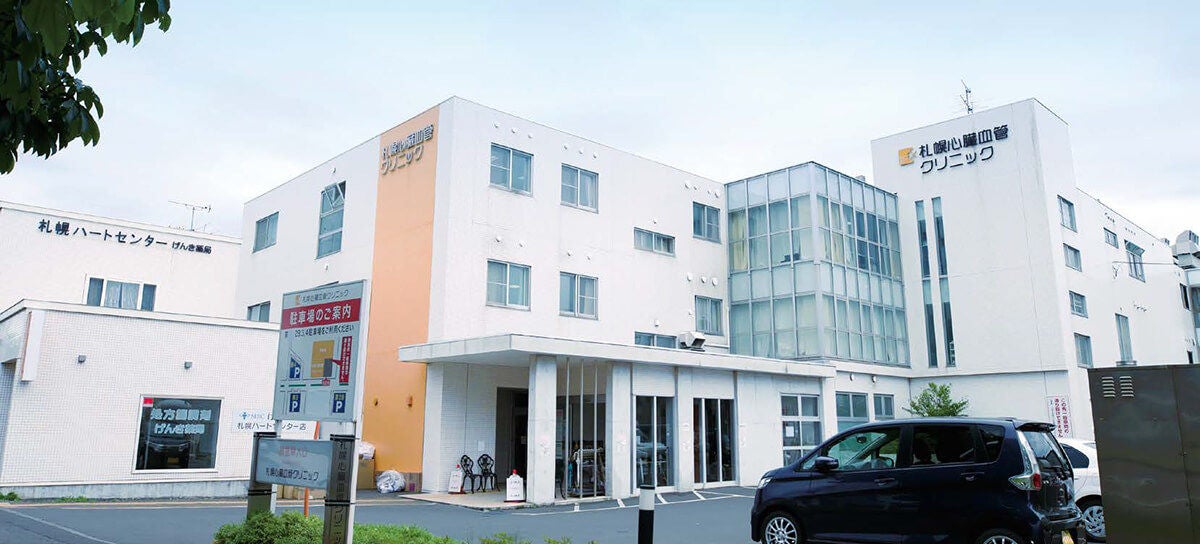 Sapporo Heart Center in Sapporo, Japan, is a high-volume PCI center that performs more than 2,000 procedures per year.
1,600 PCI cases treated in the first year of operation
I left Sapporo Higashi Tokushukai Hospital, which at that time was performing the most catheterization procedures in Hokkaido, and established Sapporo Cardiovascular Clinic. We initially planned to focus solely on catheterization, and our team consisted of only four physicians, including myself. In the following year, we handled about 1,600 cases, a number that no facility had ever achieved before. When I was at Sapporo Higashi Tokushukai Hospital, no matter how hard we tried, it was difficult for us to handle more than 500 cases a year, so I never imagined that our clinic would be able to handle more than 1,600 cases.
When these outstanding figures were made public, some people took a critical view, suggesting that we were treating lesions that weren't clinically significant and didn't really require intervention. Dr. Osamu Kato really helped us deal with this situation. About two years after our clinic opened, he started visiting Sapporo once a month to teach us and to help us handle these unfounded rumors. We've enjoyed a long relationship since then, and I can say that he was truly our savior.
We established a cardiac surgery department and introduced treatment using Rotablators as well as excimer lasers, which can be mounted to the tip of a catheter and used to vaporize plaque and thrombus in the coronary arteries.
Sapporo Heart Center's workflow: everything is in another dimension
We currently receive more than 10,000 patient referrals per year, which is about 30 to 40 referrals per day. To make sure we don't overlook any lesions, all our patients undergo a CT scan every one or two years. In addition, instead of searching through medical records each time, we've adopted a system in which we check the information reported by the staff, which allows us to examine patients very quickly. Of course, any abnormal findings are carefully investigated.
In the catheterization room, medical engineers confirm all the patient treatment details in advance, and physicians are assigned to handle particular cases every morning. At most institutions, patients have an attending physician, and that physician usually performs the catheterization procedure. But with that approach, it's difficult for a physician to handle more than 10 cases a day within their working hours. So in order to operate the catheterization room more efficiently, we've adopted a system in which any physician who's available (even if they aren't the patient's attending physician) can perform the procedure and complete treatment in a timely manner. However if the case is expected to be particularly challenging (such as CTO) or if the patient strongly requests my involvement, they're assigned to either catheterization room 2 (with our Canon Alphenix) or catheterization room 1, so I can quickly jump in as needed during my outpatient clinic hours.
“There is a truth that comes to light when you focus on how easily we can perform CTO-PCI.”
Tsutomu Fujita, M.D.
Honorary Chairman, Medical Corporation Sapporo Heart Center, Japan
Adopting all the challenging techniques of outstanding teachers
I'm lucky to have observed many surgical procedures performed by physicians who are very skilled at catheterization. Whenever I heard that live demonstrations were going to be conducted by Dr. Osamu Kato, the late Dr. Hideo Tamai, Dr. Takahiko Suzuki, Dr. Shigeru Saito, or the late Dr. Kazuaki Mitsudo, I'd be sure to go and see all of them. The experience I gained by attending these demonstrations has been an invaluable asset to me. The skill and aggressiveness of these five experts back then is just incredible. It's amazing how they could maintain such intense concentration during long procedures, such as treatment using a directional coronary atherectomy catheter (DCA catheter, a device used to ablate atherosclerotic plaques in the coronary arteries) after carefully crossing the guidewires. Their live demonstrations taught me how far physicians could push themselves for their patients.
The essence of angiography procedures can be learned by first carefully observing the techniques of skilled experts and then imitating them. So I imitated everything I saw and digested what I learned to develop my own skills. And I was finally able to get a clear idea of how to complete procedures in an easy, simple, and safe manner. During the course of my studies in catheterization, many new devices have been introduced, including the balloon catheter, the bare metal stent (BMS, a metal mesh device implanted using a catheter to treat coronary artery stenosis), the drug eluting stent (DES, a stent coated with a drug to prevent restenosis), the Rotablator, and the DCA catheter. I was able to become familiar with these devices one by one as they were introduced, and I could take my time. That allowed me to keep up with all the new technologies. But it's a lot different now. Physicians need to quickly reach a level of competence with all these devices at the same time. It's hard for young physicians to achieve this without first emulating experienced physicians who've already gained proficiency in the use of these devices.
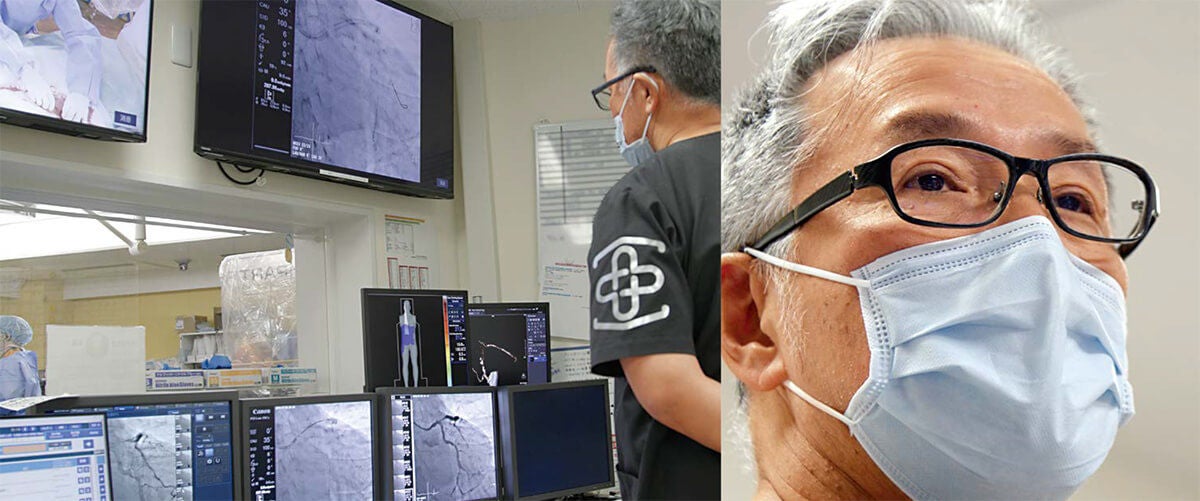
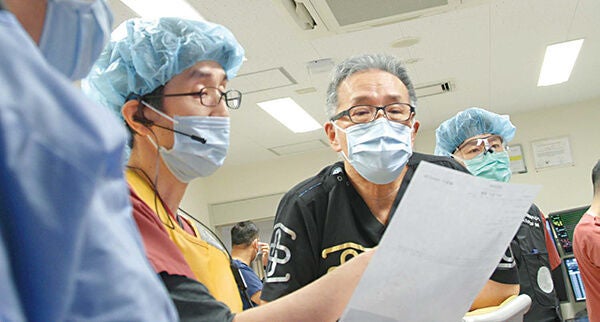
“Alphenix is an especially effective system for CTO procedures!”
Tsutomu Fujita, M.D.
Honorary Chairman, Medical Corporation Sapporo Heart Center, Japan
An impressive evolution: Canon’s angiography system has continually developed over the years
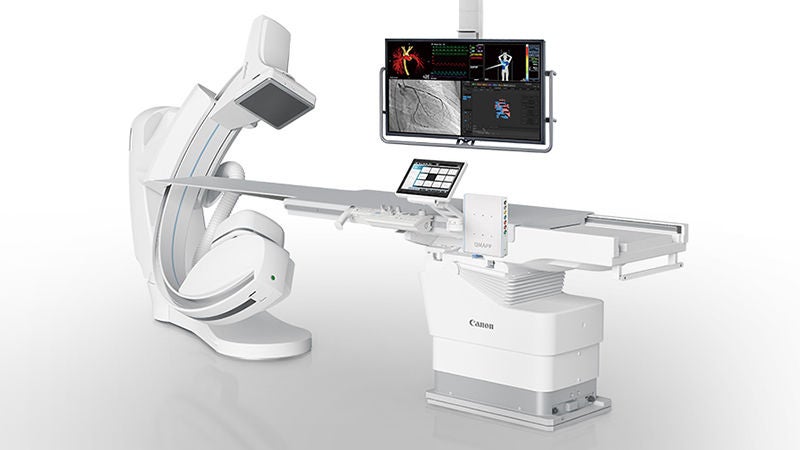
When catheterization procedures were first introduced, we were using an analog angiography system produced by Toshiba Medical Systems. However when digital angiography systems were developed by manufacturers from other countries, we switched to a system from a different company and used it continuously for many years. We ultimately made the decision to switch to Canon's new angiography system Alphenix after we attended various live demonstrations presented by other facilities. We clearly saw that the image quality of Alphenix was superior to that of our system.
With regard to image quality, another outstanding feature of Alphenix is that it has more "room” for image quality adjustment and optimization than systems from other manufacturers. For example, when we consulted with Canon service engineers about adjusting the image quality to ensure clear visualization of wires, they immediately adjusted the image quality to meet our requirements.
The applications are also quite comprehensive. For example, I really like the Dose Tracking System (DTS) function, which allows us to manage the patient exposure dose in real time during the procedure. X-ray exposure is unavoidable in angiography, and DTS is a very useful function for clearly seeing how much dose the patient has received. I think that carefully managing the patient exposure dose is an essential part of our job, and DTS has been very helpful to us.
The most important expectation we have for an angiography system is that it should help us maximize our performance.
Since our new Alphenix system differed in so many ways from the previous system that we'd become accustomed to over the years, we requested a number of adjustments to optimize its operation to suit our preferences. Canon service engineers did exactly as we requested, and now that we've used our Alphenix to perform more procedures, we've become very comfortable with it. I think that Alphenix provides the best quality of any angiography system and is ideal for performing CTO procedures. The exposure dose is also very low, and we now actually use our Alphenix to perform all CTO procedures. Alphenix provides images that are clearer than we expected, and even in general diagnostic catheterization, the system allows us to clearly visualize devices, blood vessels, and other structures. The system has also proven itself to be quite reliable and is tough enough to handle the high workload at Sapporo Heart Center. //
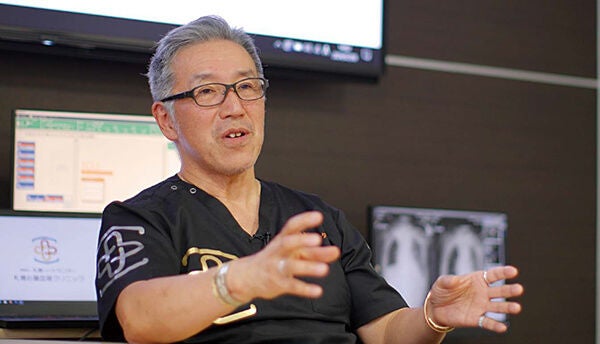 Dr. Fujita says it's essential for an angiography system to help operators maximize their performance. Our service engineers made careful adjustments so that the operational characteristics of Alphenix closely matched those of the user's previous system, leading to the positive evaluation that “Alphenix is the system of choice when we perform CTO procedures.”
“Currently, the system of choice for CTO is our Alphenix from Canon. That's because it provides the best performance of any angiography system for performing CTO procedures, with excellent image quality and extremely low exposure dose. Moreover, Alphenix has proven itself to be tough enough to handle the high workload at Sapporo Heart Center.”
Tsutomu Fujita, M.D.
Honorary Chairman, Medical Corporation Sapporo Heart Center, Japan
TSUTOMU FUJITA
Honorary Chairman,
Sapporo Heart Center Medical Corporation
[Career summary]
1986 Graduated from Asahikawa Medical University
1986 Joined the Department of Cardiology, Sapporo Tokushukai Hospital
1989 Joined the Department of Cardiology (CCU), National Cerebral and Cardiovascular Center
1990 Joined Sapporo Higashi Tokushukai Hospital Appointed Vice President of the hospital and Director of the Cardiovascular Center
2008 Established Sapporo Cardiovascular Clinic
2011 Appointed Chief Medical Officer of Medical Corporation Sapporo Heart Center
2019 Appointed to serve concurrently as Director of Sapporo Cardiovascular Clinic
2025 Appointed Honorary Chairman of Medical Corporation Sapporo Heart Center
*Currently serving at Bali International Hospital, Indonesia
The content reflects information available at the time of publication and may differ from current information.
Social Media


